News & Ideas is a daily letter for anyone who wants the day's science in one place, not a feed. Each day is 4 news items and 3 ideas across AI & Tech, Physics & Engineering, Biology & Nature, and Mind & Society, and every story names a primary source you can check. The Shorts use a declared synthetic voice.
One email a day. 4 science stories, 5 quick results, 1 idea. 3 minutes.
Plus a daily quiz: Answer & Learn. Free, unsubscribe anytime.
Issue
28 November 2026
2 min read · 1 Short
Physics & Engineering: possibly the faintest supernova yet, the crater DART left, a tiny quake that broke twice, a hidden planet beyond Neptune. Then the Phillips relation, rubble-pile asteroids, the Gutenberg-Richter law.
One email a day. 4 science stories, 5 quick results, 1 idea. 3 minutes.
Plus a daily quiz: Answer & Learn. Free, unsubscribe anytime.
Physics & Engineering
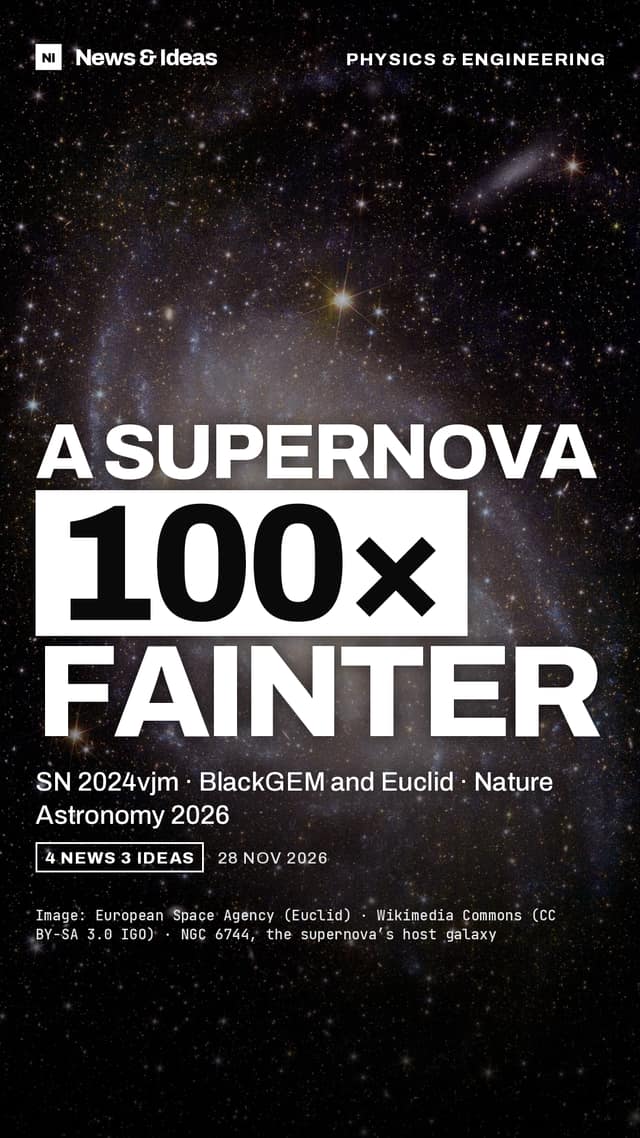
A Supernova 100× Fainter Than Usual
Physics & Engineering: possibly the faintest supernova yet, the crater DART left, a tiny quake that broke twice, a hidden planet beyond Neptune. Then the Phillips relation, rubble-pile asteroids, the Gutenberg-Richter law.
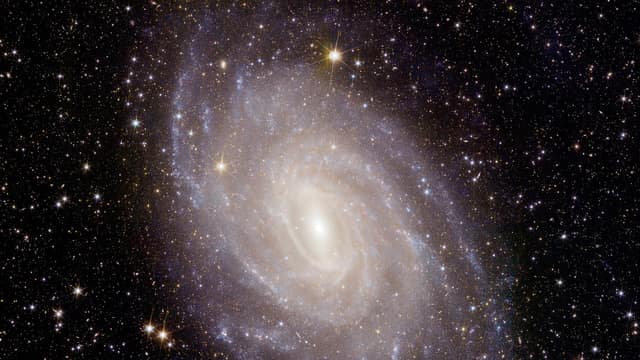
In 2024, telescopes in Chile spotted a new point of light in a spiral galaxy about 30 million light-years away. It was a supernova 100 to 300 times fainter than usual, possibly the faintest ever seen. A Euclid image from before the blast points to a faint white dwarf system.
Image: European Space Agency (Euclid) · Wikimedia Commons (CC BY-SA 3.0 IGO) · NGC 6744, the supernova’s host galaxy
One email a day. 4 science stories, 5 quick results, 1 idea. 3 minutes.
Plus a daily quiz: Answer & Learn. Free, unsubscribe anytime.
Space · Planetary defense
The Crater DART Left
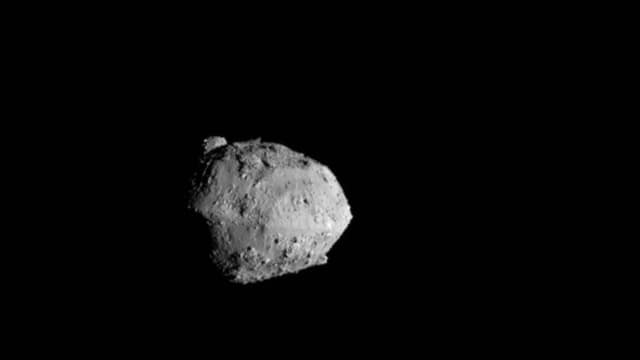
In 2022, NASA's DART spacecraft hit the asteroid Dimorphos and shortened its orbit by 33 minutes. Now Europe's Hera spacecraft has arrived. The face DART hit is a stadium-sized crater spanning the asteroid's whole width. Dimorphos is tumbling, and hundreds of boulders orbit the pair.
Image: ESA Operations · Wikimedia Commons (CC BY-SA 3.0 IGO) · Didymos with Dimorphos peeking out, an early Hera view
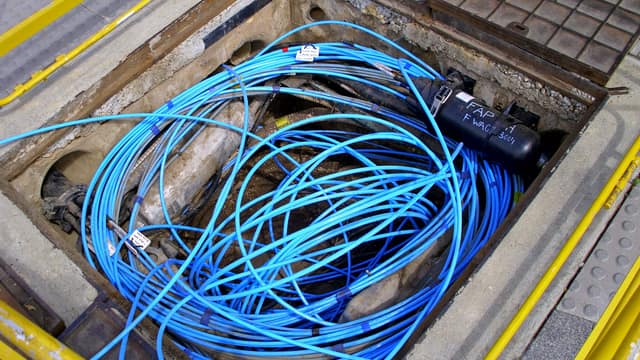
Small earthquakes are usually modeled as one simple rupture. Using a 28-kilometer fiber-optic cable along a California fault, a Rice and Seoul National University team imaged a magnitude 2 quake. It broke in two episodes, 42 milliseconds apart, the first likely triggering the second.
Photo: Bidgee · Wikimedia Commons (CC BY-SA 2.5 AU) · a fibre-optic cable in a pit, illustrative
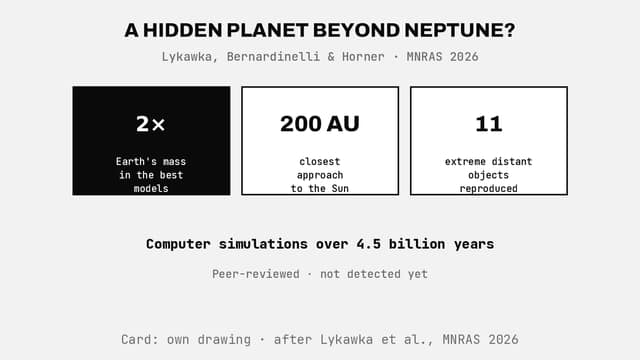
Some icy bodies beyond Neptune, like Sedna, never come near the giant planets. A team led from Japan simulated 4.5 billion years of Solar System history. A planet about twice Earth's mass, never closer than 200 times the Earth-Sun distance, reproduced all 11 extreme objects studied. It hasn't been detected.
Card: own drawing · after Lykawka et al., MNRAS 2026
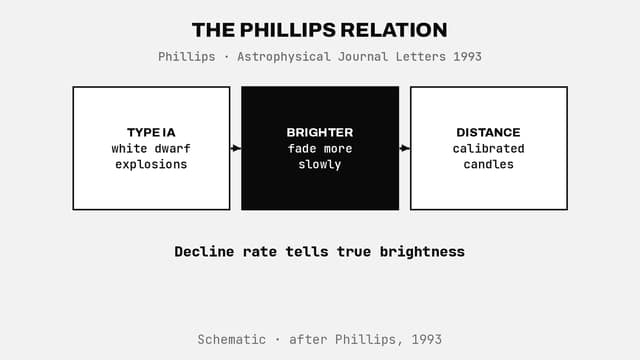
The Phillips relation. In 1993, Mark Phillips showed that type one A supernovae aren't all equally bright, but the brighter ones fade more slowly. Measure the decline, and you know the true brightness, which makes them distance markers. The new faint supernova fades slowly too, the opposite of that pattern.
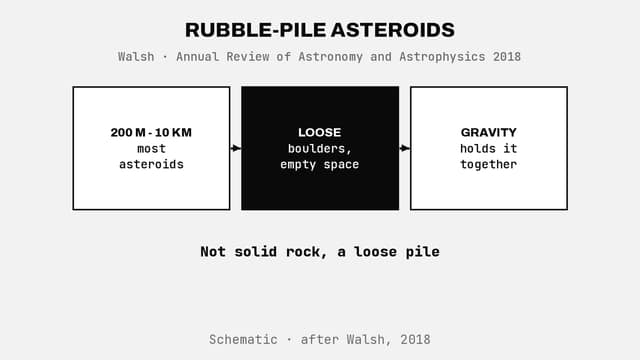
Rubble-pile asteroids. In a 2018 review, Kevin Walsh described how most asteroids between about 200 meters and 10 kilometers across aren't solid rock, but loose piles of boulders held together by their own weak gravity, with lots of empty space inside. Hit one hard, and it can change shape.
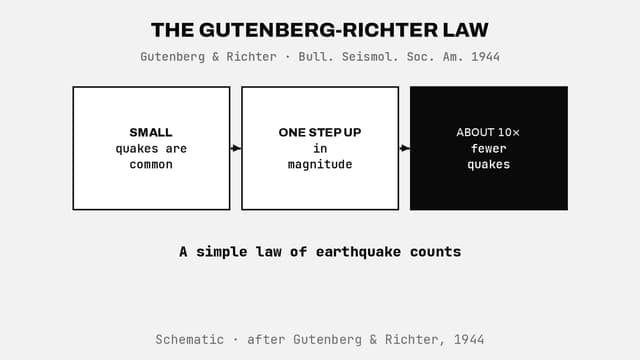
The Gutenberg-Richter law. In 1944, Beno Gutenberg and Charles Richter counted California's earthquakes and found small quakes are far more common than big ones, roughly ten times more for each step down in magnitude. Fiber cables can now catch the tiniest.
Gutenberg & Richter · BSSA 1944
Schematic · after Gutenberg & Richter, 1944
Frequency of earthquakes in CaliforniaBulletin of the Seismological Society of America · 1 Oct 1944 · Primary · Gutenberg & Richter, Bull. Seismol. Soc. Am. 34, 185 (1944)
Credits
Image: European Space Agency (Euclid) · Wikimedia Commons (CC BY-SA 3.0 IGO) · NGC 6744, the supernova’s host galaxy
Image: ESA Operations · Wikimedia Commons (CC BY-SA 3.0 IGO) · Didymos with Dimorphos peeking out, an early Hera view
Photo: Bidgee · Wikimedia Commons (CC BY-SA 2.5 AU) · a fibre-optic cable in a pit, illustrative
Card: own drawing · after Lykawka et al., MNRAS 2026