News & Ideas is a daily letter for anyone who wants the day's science in one place, not a feed. Each day is 4 news items and 3 ideas across AI & Tech, Physics & Engineering, Biology & Nature, and Mind & Society, and every story names a primary source you can check. The Shorts use a declared synthetic voice.
One email a day. 4 science stories, 5 quick results, 1 idea. 3 minutes.
Plus a daily quiz: Answer & Learn. Free, unsubscribe anytime.
Issue
15 November 2026
3 min read · 1 Short
Physics & Engineering: a white dwarf pulsing beside a Sun-like star, lecithin rocket gel, the orbital Nernst effect, 9,000 photons counted. Then common envelopes, shear thinning, the spin Hall effect.
One email a day. 4 science stories, 5 quick results, 1 idea. 3 minutes.
Plus a daily quiz: Answer & Learn. Free, unsubscribe anytime.
Physics & Engineering
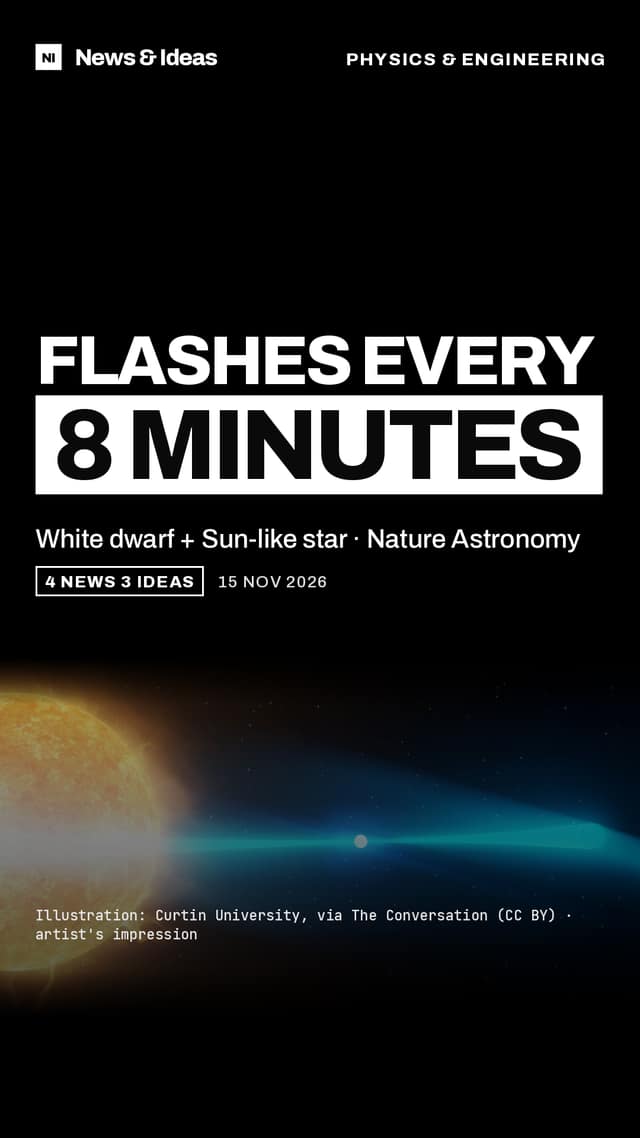
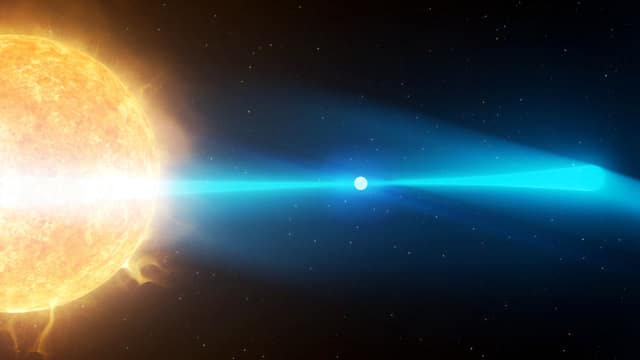
A Dead Star Pulsing Beside a Sun-Like Star
Physics & Engineering: a white dwarf pulsing beside a Sun-like star, lecithin rocket gel, the orbital Nernst effect, 9,000 photons counted. Then common envelopes, shear thinning, the spin Hall effect.
Astronomers led from Curtin University found GPM J071507−114153, a long-period radio transient that pulses every 7.9 minutes, with the Murchison Widefield Array; MeerKAT pinpointed it and Keck spectroscopy identified the companion as a G-type star much like the Sun. The pulses are modulated over about 1.3 days, read as the orbital period. Timing and spectra give the pulsing object about two-thirds of a solar mass, too light for a neutron star, so the team concludes it is most likely a white dwarf. Nature Astronomy.
Illustration: Curtin University · via The Conversation (CC BY) · artist's impression
One email a day. 4 science stories, 5 quick results, 1 idea. 3 minutes.
Plus a daily quiz: Answer & Learn. Free, unsubscribe anytime.
Engineering · Propulsion
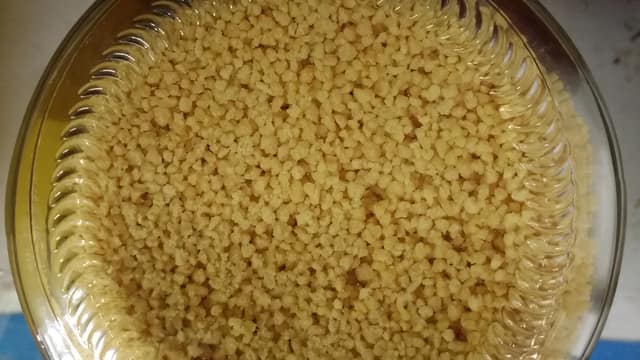
A Food Emulsifier Turns Rocket Fuel Into Gel
Concordia University researchers gelled kerosene with lecithin, a naturally derived food emulsifier, and a low concentration of calcium chloride, which makes lecithin self-assemble into long worm-like micelles that trap the fuel. The result is fully combustible and optically transparent. Viscosity drops by two orders of magnitude when the shear rate rises from 1 to 100 per second, enabling atomization; the gel melts to a liquid between 59 and 68 °C depending on gellant concentration, and liquefies almost instantly when ethanol is added. Bench-top rheology only: not yet tested in high-pressure injectors or launch conditions. Langmuir.
Physicists at National Taiwan University report the first experimental evidence for the orbital Nernst effect, in which a temperature gradient drives a transverse flow of electrons' orbital angular momentum. They built YIG/Pt/CuOx stacks: naturally oxidised copper generates the orbital current, platinum converts it into spin, and the magnetic insulator YIG makes it measurable. Compared with YIG/Pt and YIG/CuOx, the combined stack showed a sign reversal and a markedly enhanced thermal signal; the team estimates the orbital Nernst response of CuOx at about four times the spin Nernst response of Pt. The voltages are detection signals, not usable power. Nature Communications, open access (CC BY 4.0).
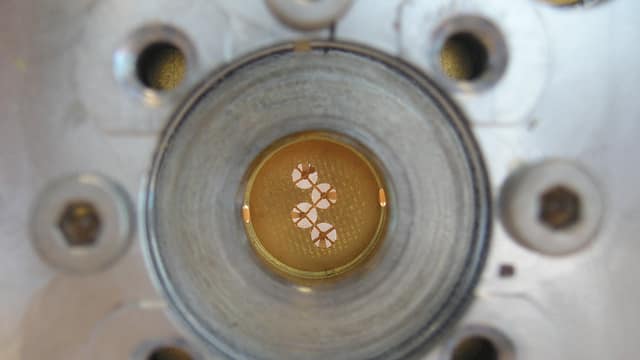
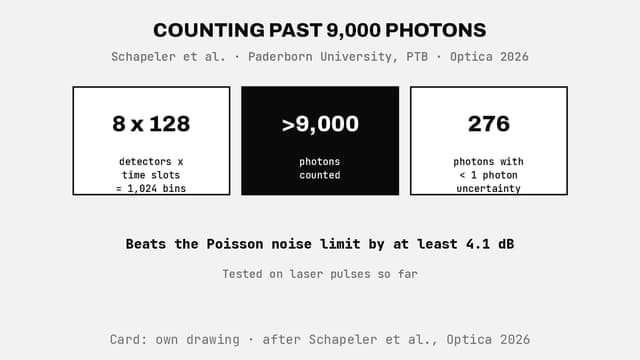
A Paderborn University team, with PTB, multiplexed eight intrinsically photon-number-resolving superconducting nanowire single-photon detectors across 128 time slots, giving 1,024 detection bins, each characterised with a detector model. The system counts from 0 to over 9,000 photons while beating the Poisson noise limit by at least 4.1 dB, with sub-single-photon precision up to 276 photons per pulse. The researchers say a conventional multiplexed system would need about 37,000 detector elements for the same precision. Tested on laser pulses so far. Optica, open access.
Card: own drawing · after Schapeler et al., Optica 2026
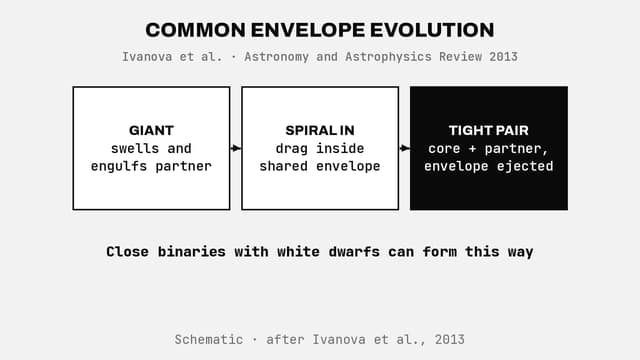
When a star in a close binary expands into a giant, it can engulf its companion. Friction inside the shared envelope makes the companion spiral in, releasing orbital energy that can eject the envelope and leave a much tighter pair: the giant's core plus the companion. Ivanova and colleagues review how this phase shapes compact binaries; the authors of today's paper propose a similar history for their white dwarf and Sun-like star.
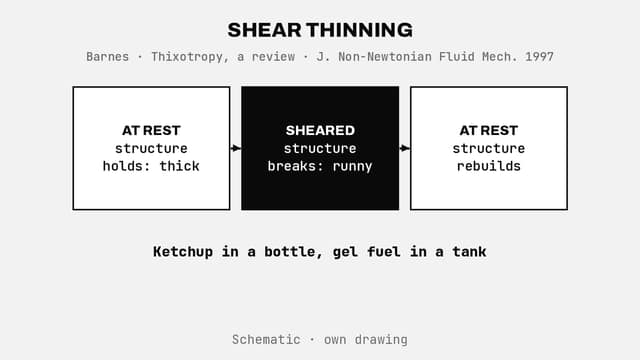
Many structured fluids, from ketchup to paint, lose viscosity when they are sheared and regain it at rest; when the recovery takes time it is called thixotropy. Barnes's classic review explains how shear breaks up the internal structure and how it rebuilds. Today's lecithin gel shows the same behaviour: a hundredfold viscosity drop under shear, which is what makes a gel propellant pumpable.
Barnes · J. Non-Newtonian Fluid Mech. 1997
Schematic · own drawing
Thixotropy—a reviewJournal of Non-Newtonian Fluid Mechanics · May 1997 · Primary · Barnes, J. Non-Newton. Fluid Mech. 70, 1 (1997)
Idea · Condensed matter
The Spin Hall Effect
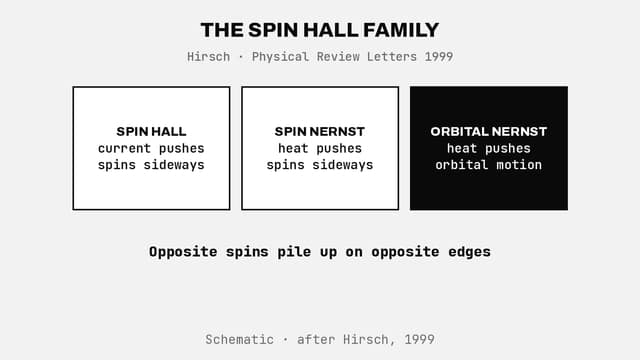
In a metal with spin-orbit coupling, an electric current deflects electrons of opposite spin towards opposite edges, producing a transverse spin current without a net charge current. Hirsch proposed this spin Hall effect in 1999. Its relatives replace the driving current with a temperature gradient (Nernst effects) or spin with orbital angular momentum (orbital Hall), which is the family today's orbital Nernst result belongs to.
Hirsch · Phys. Rev. Lett. 1999
Schematic · after Hirsch, 1999
Spin Hall EffectPhysical Review Letters · 30 Aug 1999 · Primary · Hirsch, Phys. Rev. Lett. 83, 1834 (1999)
Credits
Illustration: Curtin University · via The Conversation (CC BY) · artist's impression