News & Ideas is a daily letter for anyone who wants the day's science in one place, not a feed. Each day is 4 news items and 3 ideas across AI & Tech, Physics & Engineering, Biology & Nature, and Mind & Society, and every story names a primary source you can check. The Shorts use a declared synthetic voice.
One email a day. 4 science stories, 5 quick results, 1 idea. 3 minutes.
Plus a daily quiz: Answer & Learn. Free, unsubscribe anytime.
Issue
15 November 2026
3 min read · 1 Short
Biology & Nature: a 400 kg young dinosaur, fever by choice in frogs and lizards, a primate DNA switch for brain stem cells, twelve corals restored. Then sauropod growth, behavioural fever, cryptic species.
One email a day. 4 science stories, 5 quick results, 1 idea. 3 minutes.
Plus a daily quiz: Answer & Learn. Free, unsubscribe anytime.
Biology & Nature
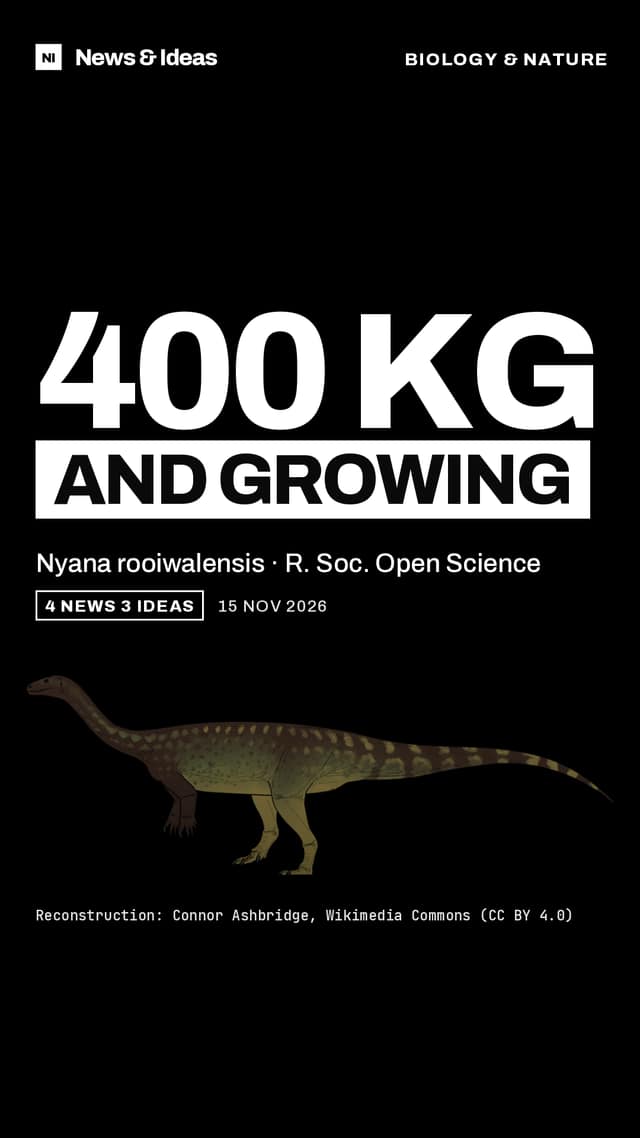
A 400 kg Dinosaur That Was Still a Youngster
Biology & Nature: a 400 kg young dinosaur, fever by choice in frogs and lizards, a primate DNA switch for brain stem cells, twelve corals restored. Then sauropod growth, behavioural fever, cryptic species.
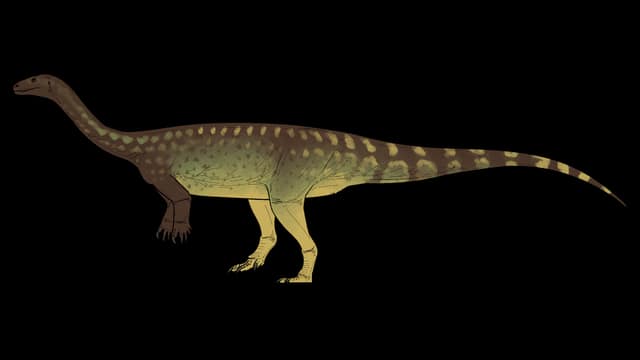
Researchers led from the University of the Witwatersrand describe Nyana rooiwalensis, an early-branching sauropodomorph from the Upper Triassic lower Elliot Formation of South Africa, known from the first well-preserved, near-complete skull from that unit, plus postcranial bones. Body-mass estimates give about 400 kg, yet bone histology shows at most two lines of arrested growth and a surface typical of a growing animal, so it was young. The authors say this supports the early evolution of rapid growth in sauropodomorphs, foreshadowing sauropod gigantism, and suggests a biogeographic link to North America. Royal Society Open Science, open access (CC BY 4.0).
Reconstruction: Connor Ashbridge · Wikimedia Commons (CC BY 4.0)
One email a day. 4 science stories, 5 quick results, 1 idea. 3 minutes.
Plus a daily quiz: Answer & Learn. Free, unsubscribe anytime.
Biology · Fever
Sick Frogs and Lizards Seek Heat
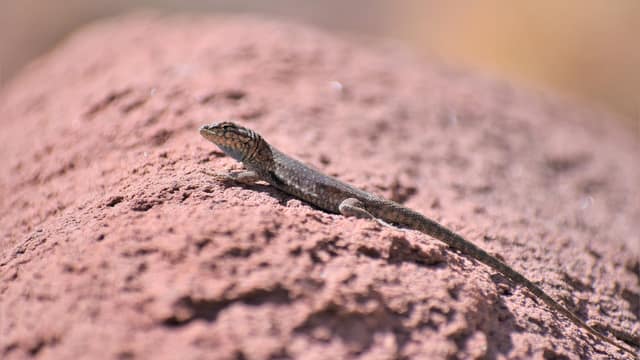
Researchers at the University of São Paulo and São Paulo State University ran a phylogenetically informed meta-analysis of 47 studies (101 effect sizes) on behavioural fever, when infected ectotherms choose warmer spots. Fever was widespread but context-dependent: strongest in species from thermally variable habitats, larger after bacterial than fungal or viral challenges, and, against the authors' prediction, stronger in amphibians than reptiles, possibly a methodological artefact. The analysis did not test whether fever improved survival. Proceedings of the Royal Society B, open access (CC BY 4.0).
Photo: NPS/Marty Tow · Arches National Park, Wikimedia Commons (public domain) · illustrative
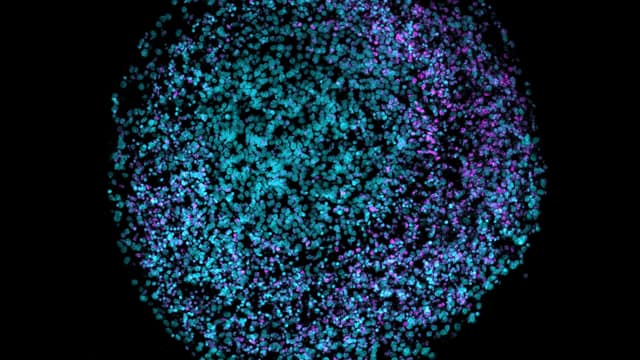
Researchers at National Yang Ming Chiao Tung University, Academia Sinica and Kyoto University found that the transcription factor DACH1, enriched in human neurogenic radial glia, drives production of basal radial glia (bRG), progenitors abundant in primates but rare in mice. DACH1 is regulated by LHX2 through a primate-evolved enhancer: putting the enhancer into mice promoted bRG generation, removing it in primate organoids impaired it. In live imaging, extra DACH1 raised the share of daughter cells becoming bRG-like from about 4% to nearly 15% (release figures). Organoid and mouse work; it does not explain intelligence. Science Advances.
Image: Nreis1 · Wikimedia Commons (CC BY 4.0) · human brain organoid; illustrative
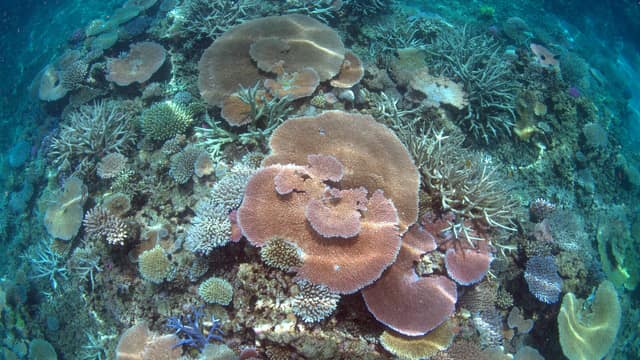
A team led by James Cook University and Queensland Museum (CoralBank) reassessed 53 nominal species of the reef-building coral Acropora, 40 with type localities in eastern Australia, using ultraconserved elements and exonic loci from 369 specimens, including four sequenced holotypes and 49 topotypes collected where species were first described. Forty-seven species were supported, twelve were removed from synonymy and four previously unresolved species were recognised as valid. The authors note that a coral that seems common and widespread may be several species with smaller ranges, which matters for extinction-risk assessments. Invertebrate Systematics, open access (CC BY-NC-ND 4.0).
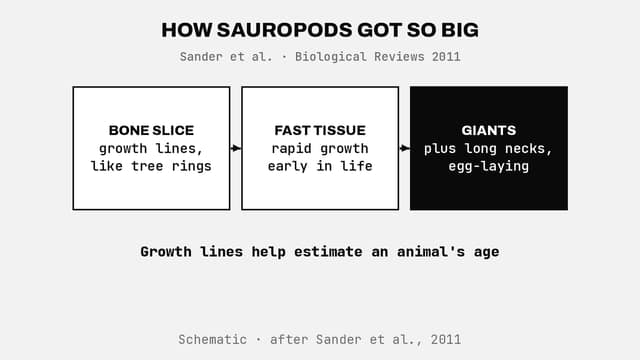
Sauropods were the largest land animals ever. Sander and colleagues review the traits that made this possible, including a long neck, no chewing, egg-laying with many small offspring, a bird-like respiratory system and high growth rates read from bone histology. Lines of arrested growth in bone, like tree rings, help age an animal: Nyana's at most two lines at about 400 kg point to the same fast growth early in the lineage.
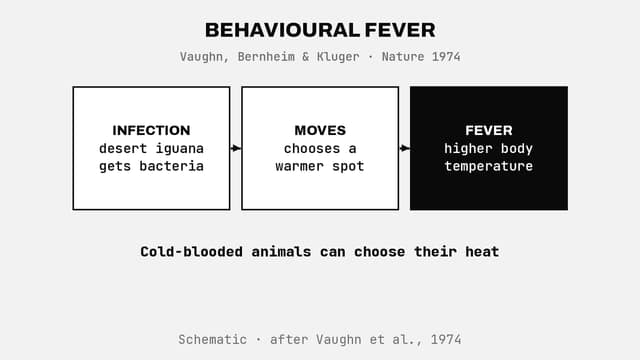
Ectotherms cannot raise their temperature much by metabolism, but they can move to warmer places. In 1974 Vaughn, Bernheim and Kluger showed that desert iguanas (Dipsosaurus dorsalis) injected with killed bacteria selected warmer temperatures and developed a fever. Behavioural fever has since been studied in many amphibians, reptiles and fish; today's meta-analysis pools 47 such studies.
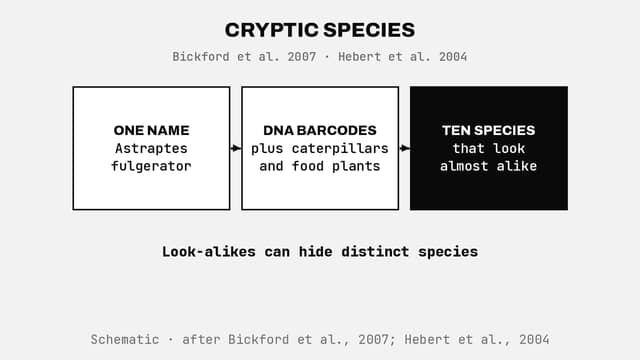
Cryptic species are distinct species classified as one because they look alike. Bickford and colleagues review how DNA has revealed many of them and why it matters for conservation. A famous example: Hebert and colleagues used DNA barcodes to show that the skipper butterfly Astraptes fulgerator in Costa Rica is a complex of ten species. Today's Acropora study restores twelve coral species that had been merged into others.
Bickford et al. · TREE 2007 · Hebert et al. · PNAS 2004