News & Ideas is a daily letter for anyone who wants the day's science in one place, not a feed. Each day is 4 news items and 3 ideas across AI & Tech, Physics & Engineering, Biology & Nature, and Mind & Society, and every story names a primary source you can check. The Shorts use a declared synthetic voice.
One email a day. 4 science stories, 5 quick results, 1 idea. 3 minutes.
Plus a daily quiz: Answer & Learn. Free, unsubscribe anytime.
Issue
24 November 2026
2 min read · 1 Short
Biology & Nature: wasps that know faces, a flower the size of a rice grain, a gene block for wingless queens, inside the poxvirus core. Then wasps that learn faces, the abominable mystery, a social chromosome.
One email a day. 4 science stories, 5 quick results, 1 idea. 3 minutes.
Plus a daily quiz: Answer & Learn. Free, unsubscribe anytime.
Biology & Nature
Wasps That Know Faces
Biology & Nature: wasps that know faces, a flower the size of a rice grain, a gene block for wingless queens, inside the poxvirus core. Then wasps that learn faces, the abominable mystery, a social chromosome.
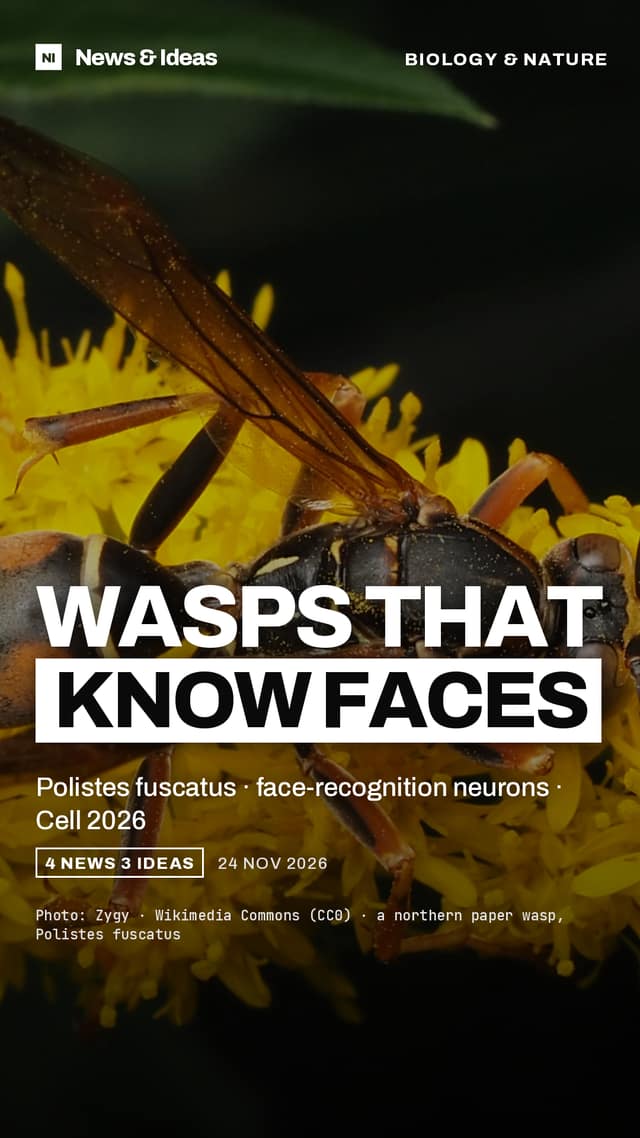
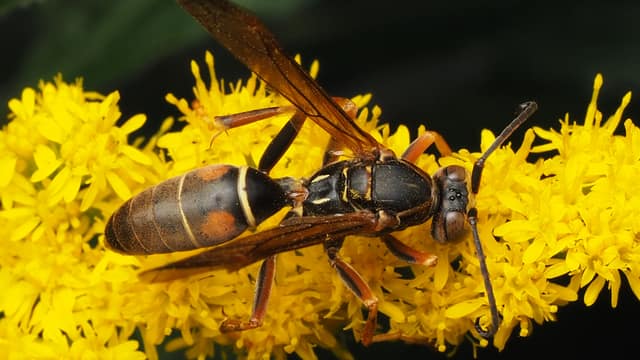
Female northern paper wasps remember nestmates by their faces, which keeps the nest's pecking order without constant fights. Wake Forest and Cornell researchers found neurons that respond to images of other wasps, each cell preferring slightly different faces, much like face cells in primates. Published in Cell.
Photo: Zygy · Wikimedia Commons (CC0) · a northern paper wasp, Polistes fuscatus
One email a day. 4 science stories, 5 quick results, 1 idea. 3 minutes.
Plus a daily quiz: Answer & Learn. Free, unsubscribe anytime.
Paleobotany · Fossils
A Flower the Size of a Rice Grain
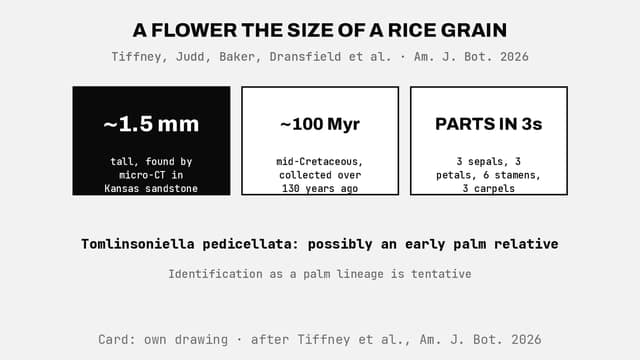
A flower no bigger than a grain of rice hid in a museum rock for over 130 years. A micro-CT scan of Kansas sandstone revealed it: about 100 million years old, with its parts in threes, like many monocots. Named Tomlinsoniella, it may be an early relative of palms. American Journal of Botany.
Card: own drawing · after Tiffney et al., Am. J. Bot. 2026
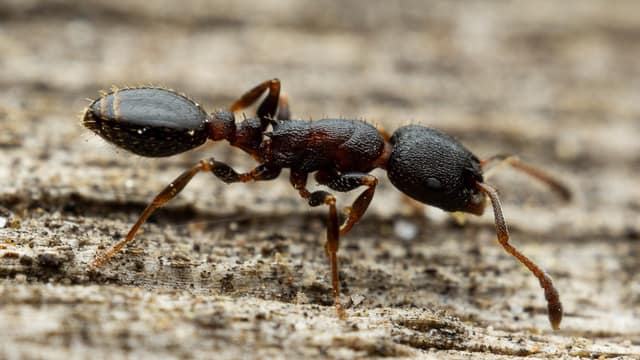
Some moss ant queens have wings, others don't. Harvard and University of Georgia researchers sampled 173 colonies and found a single supergene, 6.5 million DNA letters long, that turns queen-destined larvae into wingless queens, part worker, part queen. Altered hormone signaling seems to be how. Science Advances.
Photo: Jake Nitta · Wikimedia Commons (CC BY 4.0) · a Leptothorax moss ant, illustrative
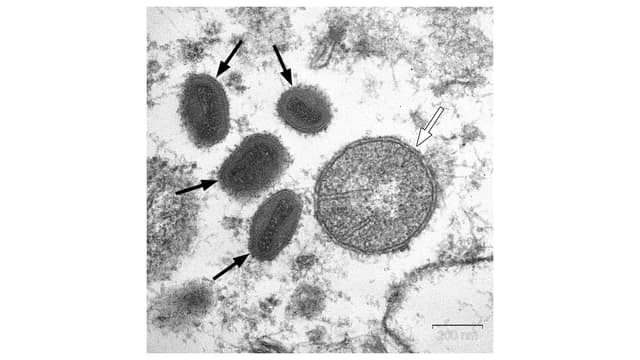
Researchers at the Institute of Science and Technology Austria looked inside vaccinia, the poxvirus behind the smallpox vaccine, with electron tomography. Its gene-copying machines sit parked in pairs, and flower-shaped portals in the core wall likely push viral messages into the cell. Possible new drug targets. Nature.
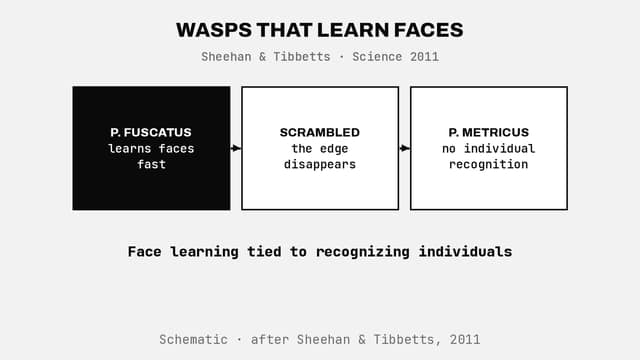
Wasps that learn faces. In 2011, Michael Sheehan and Elizabeth Tibbetts showed that northern paper wasps learn faces faster than other patterns, an edge lost when faces are scrambled. A related wasp that doesn't recognize individuals showed no such skill.
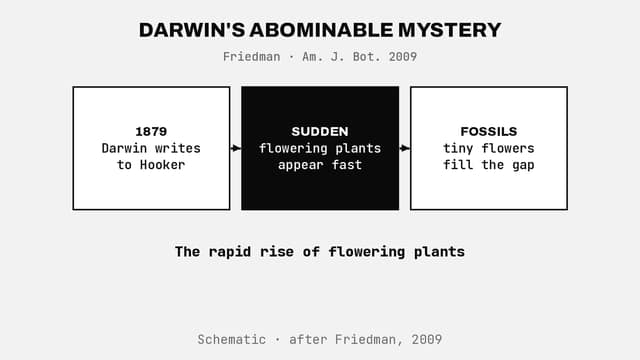
Darwin's abominable mystery. In 1879, Charles Darwin called the sudden rise of flowering plants in the fossil record an abominable mystery. In 2009, William Friedman traced what he meant. Tiny fossil flowers keep filling that gap.
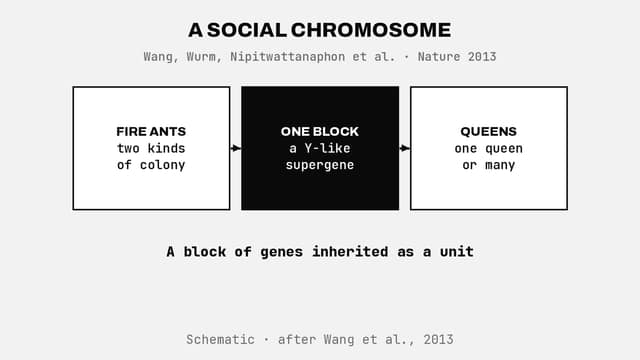
A social chromosome. In 2013, John Wang and colleagues found a Y-like chromosome in fire ants: one block of genes decides whether a colony has one queen or many. Moss ants show such supergenes can even make a new caste.