News & Ideas is a daily letter for anyone who wants the day's science in one place, not a feed. Each day is 4 news items and 3 ideas across AI & Tech, Physics & Engineering, Biology & Nature, and Mind & Society, and every story names a primary source you can check. The Shorts use a declared synthetic voice.
One email a day. 4 science stories, 5 quick results, 1 idea. 3 minutes.
Plus a daily quiz: Answer & Learn. Free, unsubscribe anytime.
Issue
3 November 2026
3 min read · 1 Short
Biology & Nature: heme in a 115-million-year-old dinosaur bone, deep-sea mining scars still visible after 44 years, tame foxes with fewer aggression neurons, a liverwort that pumps water uphill. Then blood colours, molecules in deep time, the domestication syndrome.
One email a day. 4 science stories, 5 quick results, 1 idea. 3 minutes.
Plus a daily quiz: Answer & Learn. Free, unsubscribe anytime.
Biology & Nature
Traces of blood found in a 115-million-year-old dinosaur bone
Biology & Nature: heme in a 115-million-year-old dinosaur bone, deep-sea mining scars still visible after 44 years, tame foxes with fewer aggression neurons, a liverwort that pumps water uphill. Then blood colours, molecules in deep time, the domestication syndrome.
Traces of blood found in a 115-million-year-old dinosaur bone
Heme traces in mineralised blood cells of a 115-million-year-old dinosaur
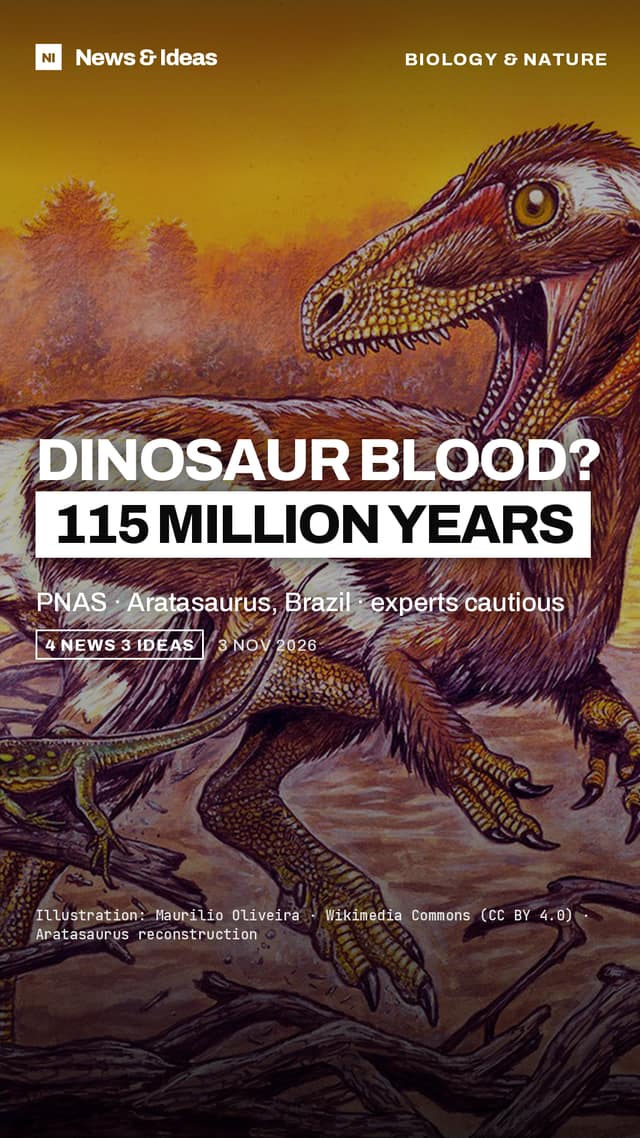
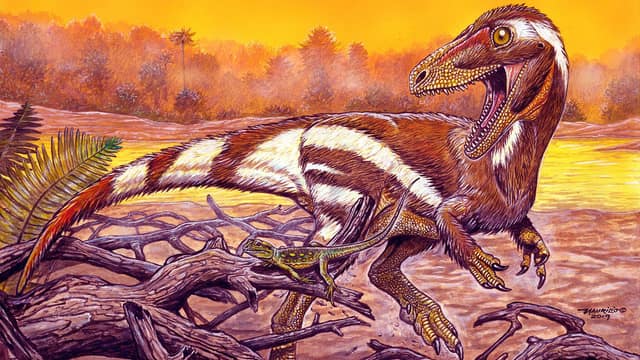
In PNAS, a Curtin University team with Brazilian colleagues studied leg bones of Aratasaurus museunacionali, a young theropod from northeastern Brazil, 115 million years old, found in a mine in 2008. Inside vascular canals they found ellipsoidal structures they interpret as red blood cells, mineralised in manganese oxide. Mass spectrometry identified heme, while the surrounding rock held chlorophyll and bacteriochlorophyll signatures instead; Raman and electron microscopy placed heme porphyrins and iron inside the structures, and collagen amino acids were found too. DNA tests were negative. The team proposes rapid burial on low-oxygen microbial mats. Some experts accept the heme but doubt the structures are red blood cells: at about 15 micrometres they are smaller than nearly all non-mammal red cells.
One email a day. 4 science stories, 5 quick results, 1 idea. 3 minutes.
Plus a daily quiz: Answer & Learn. Free, unsubscribe anytime.
Nature · Deep sea
Deep-sea mining scars still visible 44 years later
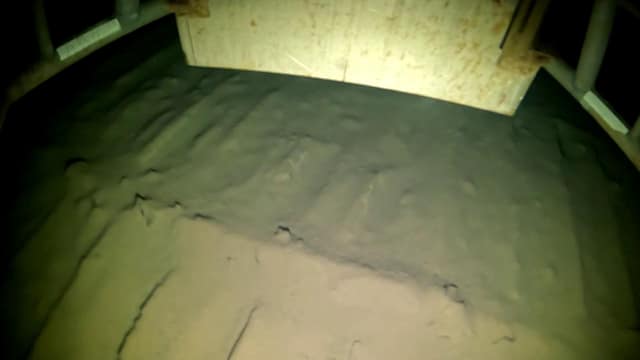
Researchers from the University of Liverpool, the National Oceanography Centre and the Natural History Museum returned in 2023 to a deep-sea mining test site in the Clarion-Clipperton Zone of the Pacific, dug in 1979 at about 4,800 metres. The tracks of the 100-tonne machine are still visible. Inside them the sediment held less organic matter, of lower quality and more patchily spread, than around them and at a control site about 2 kilometres away, and megafauna and single-celled organisms were less abundant where food was poorer. Published in Elementa: Science of the Anthropocene.
Photo: Florian Besson / Ifremer · Wikimedia Commons (CC BY 4.0) · 2021 robot tracks, not the 1979 site
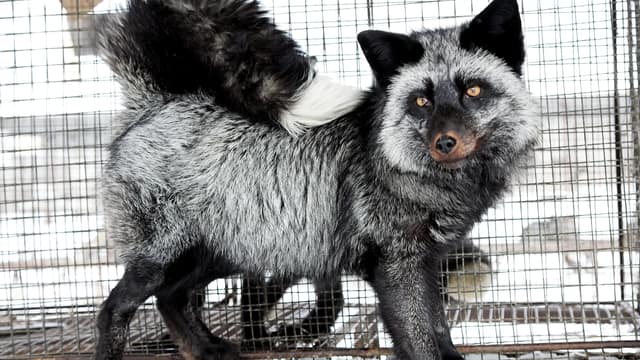
Using the Siberian experiment that has bred silver foxes for tameness or aggression for decades, a Cornell-led team mapped cell types in the ventromedial hypothalamus of 9 brains: 3 tame, 3 aggressive and 3 wild-type. Tame foxes had fewer neurons expressing oestrogen receptor alpha, a cell type linked to aggression. The sample is small. Published in Current Biology.
Photo: Maryasova · Wikimedia Commons (CC BY-SA 4.0) · a domesticated silver fox
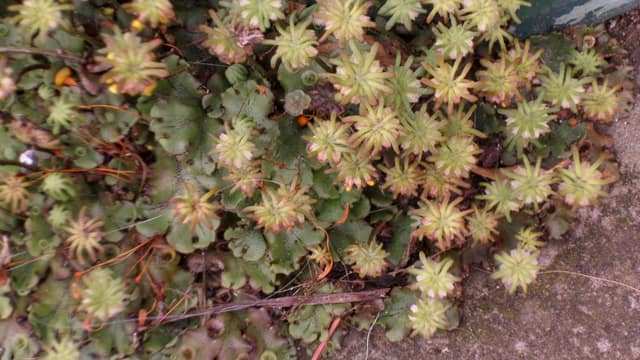
A liverwort moves water uphill to bring sperm to the eggs
Researchers at the Chinese Academy of Sciences found that the female stalk of the liverwort Marchantia polymorpha has surface structures that move water in one direction, even uphill, carrying swimming sperm up to the eggs. A single transcription factor, MpLAS, coordinates these structures, while the stalk itself depends on MpGRAS10. A comparison across 55 species suggests the stalk evolved first, for spore dispersal, and the water system later solved the problem that height created. Published in Nature Plants.
The colour of blood depends on the molecule that carries oxygen. Haemoglobin, with the iron of heme, is red. Haemocyanin uses copper and turns blue when it carries oxygen, in octopuses, crabs and horseshoe crabs. Hemerythrin has iron but no heme and is violet, in brachiopods and peanut worms. Some New Guinea skinks have green blood from biliverdin, and Antarctic icefish, with no haemoglobin, have almost clear blood. Heme is the molecule reported in today's dinosaur bone.
Fossils usually keep shape but not chemistry. Under rare conditions, such as rapid burial, little oxygen and minerals that seal the tissue, fragments of soft tissue and molecules like collagen and heme may survive. In 2005 Mary Schweitzer's team described flexible vessels and cell-like structures in a 68-million-year-old Tyrannosaurus rex. In 2015 Sergio Bertazzo's team saw structures resembling red blood cells in 75-million-year-old dinosaur bones. Whether such finds are original biomolecules, contamination or biofilm is still debated.
Schweitzer et al., Science 2005 · Bertazzo et al., Nat. Commun. 2015
Domestic mammals, from dogs to pigs, share a set of traits: tameness, floppy ears, shorter snouts, white patches in the coat and smaller brains. Wilkins, Wrangham and Fitch proposed that selecting for tameness reduces neural crest cells in the embryo, and with them all these traits together. The tame Siberian foxes developed floppy ears and shorter snouts within a few generations, without anyone selecting for them.