News & Ideas is a daily letter for anyone who wants the day's science in one place, not a feed. Each day is 4 news items and 3 ideas across AI & Tech, Physics & Engineering, Biology & Nature, and Mind & Society, and every story names a primary source you can check. The Shorts use a declared synthetic voice.
One email a day. 4 science stories, 5 quick results, 1 idea. 3 minutes.
Plus a daily quiz: Answer & Learn. Free, unsubscribe anytime.
Issue
7 November 2026
2 min read · 1 Short
Biology & Nature: a cholera biofilm peptide glues wet surfaces, smartwatch signals flag hypertension in a research study, symbiogenesis and oxygen in the origin of eukaryotes, an orexin pathway that interrupts hunger in mice. Then pathogen-inspired materials, opportunistic sensing, symbiogenesis.
One email a day. 4 science stories, 5 quick results, 1 idea. 3 minutes.
Plus a daily quiz: Answer & Learn. Free, unsubscribe anytime.
Biology & Nature
Cholera Biofilm Peptide Glues Surfaces Underwater
Biology & Nature: a cholera biofilm peptide glues wet surfaces, smartwatch signals flag hypertension in a research study, symbiogenesis and oxygen in the origin of eukaryotes, an orexin pathway that interrupts hunger in mice. Then pathogen-inspired materials, opportunistic sensing, symbiogenesis.
A biofilm-derived peptide as an underwater adhesive
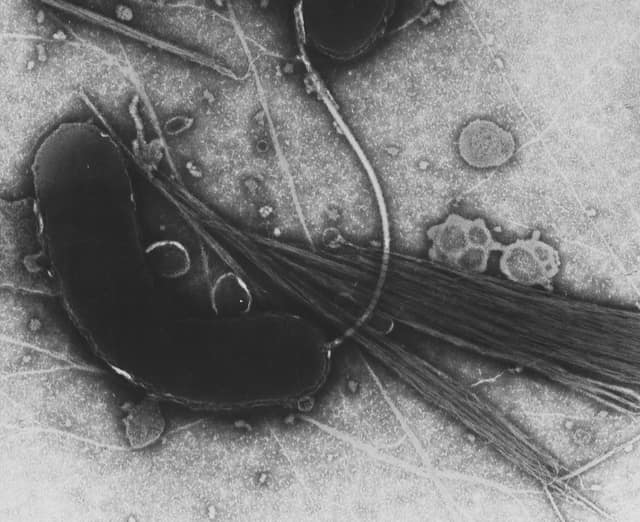
Huang, Liszczyk, Prasad and colleagues propose bacterial biofilms as inspiration for underwater adhesives, instead of mussels and barnacles. A peptide from Vibrio cholerae biofilms adsorbs onto various surfaces, glues wet surfaces in lap shear tests and acts as a flocculant with microspheres, characterised by confocal microscopy, molecular dynamics, atomic force microscopy and spectroscopy. Peer-reviewed in Science Advances.
Image: Tom Kirn, Ron Taylor, Louisa Howard, Dartmouth EM Facility (public domain)
One email a day. 4 science stories, 5 quick results, 1 idea. 3 minutes.
Plus a daily quiz: Answer & Learn. Free, unsubscribe anytime.
Health · Wearables (research)
Smartwatch signals flag hypertension in a research study
An AI model reads photoplethysmography and accelerometer signals from a consumer smartwatch, without cuff calibration, to flag signs of hypertension. In a prospective multicentre study of 196 people compared with 24-hour ambulatory blood pressure over seven days of daily life, accuracy was comparable to cuff devices in the existing clinical framework. Peer-reviewed in Nature. Research, not medical advice.
Speijer argues against seeing eukaryotes as specialised Asgard archaea, and puts the alpha-proteobacterial endosymbiont, the future mitochondrion, and oxygen-derived reactive species at the centre of the transition to the last eukaryotic common ancestor. Peer-reviewed perspective in PNAS.
An orexin pathway interrupts fasting hunger in mice
Kosar, Burdakov and colleagues show orexin neurons rapidly suppress hunger-promoting AgRP neurons, linked with pupil dilation; sensory stimuli in fasted mice recruit the pathway and reduce eating. Animal research in PNAS, not dieting advice.
Pathogens make adhesion peptides and polymers to build biofilms. Those molecules can become design principles for materials, as the Vibrio cholerae peptide glue shows.
Eukaryote origins may hinge less on the archaeal host alone and more on what the mitochondrial ancestor brought: an electron transport chain and the oxygen chemistry around it.