News & Ideas is a daily letter for anyone who wants the day's science in one place, not a feed. Each day is 4 news items and 3 ideas across AI & Tech, Physics & Engineering, Biology & Nature, and Mind & Society, and every story names a primary source you can check. The Shorts use a declared synthetic voice.
One email a day. 4 science stories, 5 quick results, 1 idea. 3 minutes.
Plus a daily quiz: Answer & Learn. Free, unsubscribe anytime.
Issue
25 November 2026
2 min read · 1 Short
Biology & Nature: the longest hummingbird track, a clam in an urchin’s throat, why leaves stay simple, social dolphins live longer. Then animal tracking, developmental bias, social selectivity.
One email a day. 4 science stories, 5 quick results, 1 idea. 3 minutes.
Plus a daily quiz: Answer & Learn. Free, unsubscribe anytime.
Biology & Nature
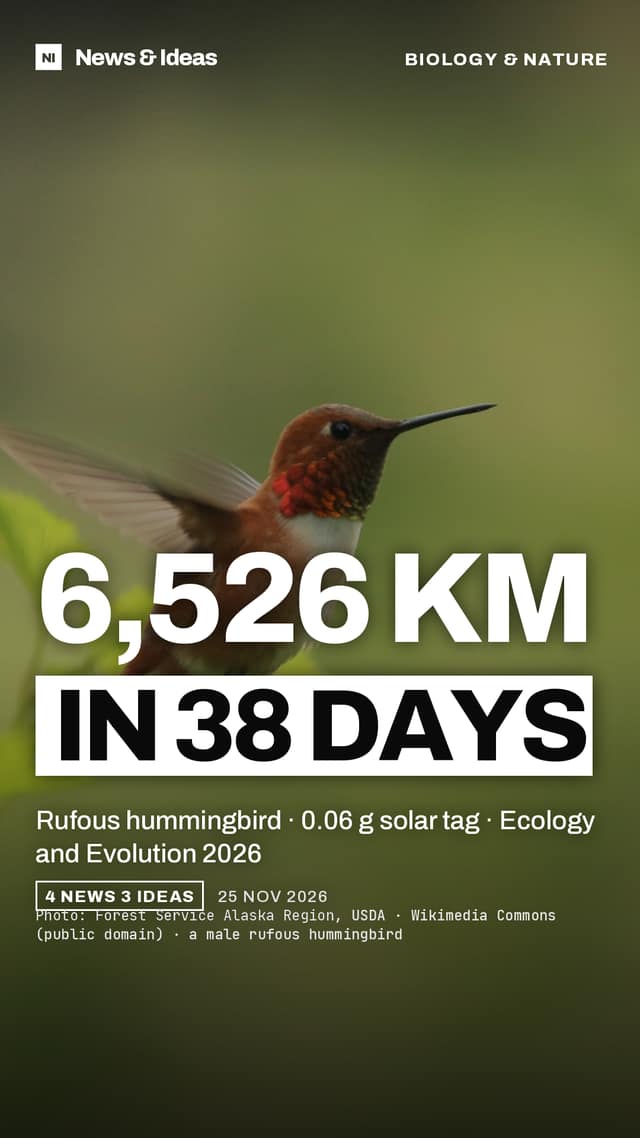
A Hummingbird Flew 6,526 km in 38 Days
Biology & Nature: the longest hummingbird track, a clam in an urchin’s throat, why leaves stay simple, social dolphins live longer. Then animal tracking, developmental bias, social selectivity.
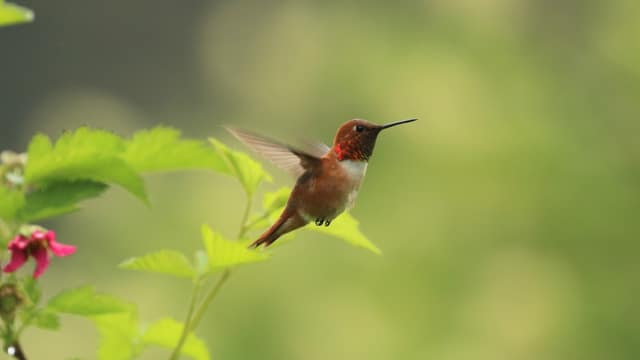
The longest hummingbird journey ever tracked. Researchers fitted 11 hummingbirds with a solar Bluetooth tag weighing just 0.06 grams, relayed by nearby phones. One male rufous hummingbird logged 6,526 kilometers in 38 days, from Alabama to Alaska. Another flew a big loop before heading east. Ecology and Evolution.
Photo: Forest Service Alaska Region, USDA · Wikimedia Commons (public domain) · a male rufous hummingbird
One email a day. 4 science stories, 5 quick results, 1 idea. 3 minutes.
Plus a daily quiz: Answer & Learn. Free, unsubscribe anytime.
Ocean · Deep sea
A Clam in an Urchin's Throat
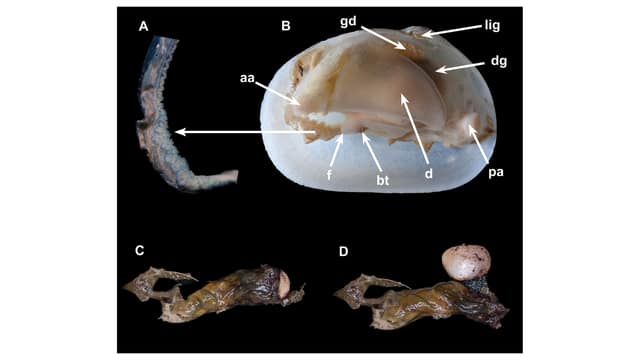
A clam that lives in a sea urchin's throat. Off southern Australia, 4,000 to 5,000 meters deep, scientists found a new clam species inside the esophagus of a deep-sea urchin. A related clam sat unnoticed for about 150 years in an urchin from the Challenger expedition.
Figure: Valentich-Scott, MacIntosh & Goto, ZooKeys 2026 (CC BY 4.0) · the clam in the urchin esophagus
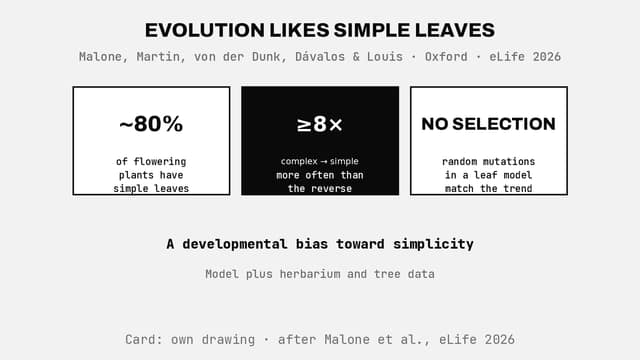
Why are most leaves simple? About 80 percent of flowering plants have plain, single-lobed leaves. Oxford researchers found complex leaves turned simple at least eight times more often than the reverse. A leaf-growth model with random mutations and no selection matched that trend: a developmental bias.
Card: own drawing · after Malone et al., eLife 2026
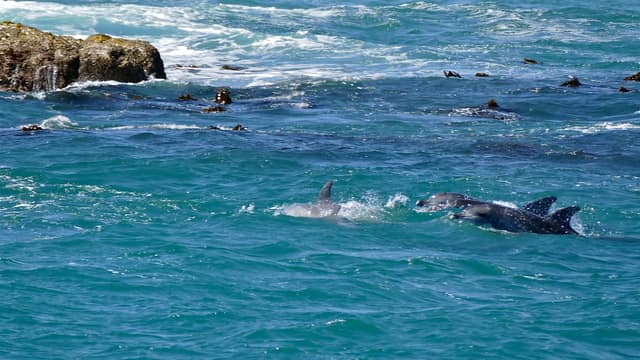
Social dolphins may live longer. Using 40 years of data on 457 bottlenose dolphins in Shark Bay, Australia, researchers found group size rises, then falls with age, more so in males. Dolphins in larger, more predictable groups tended to live longer. PLOS Biology.
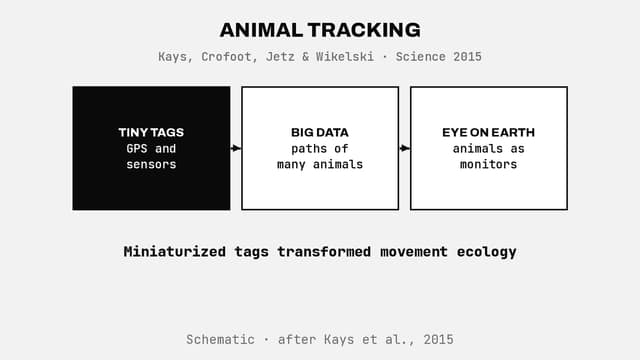
Animals as sensors. In 2015, Roland Kays and colleagues described how miniaturized GPS tags and sensors turned animal tracking into a big-data science, linking movement to whole ecosystems. A 0.06 gram tag now brings the smallest birds in.
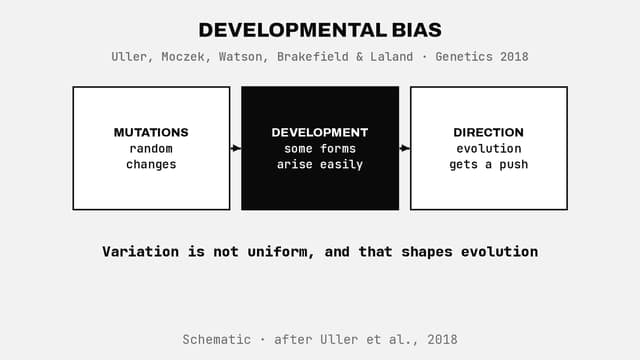
Developmental bias. In 2018, Tobias Uller and colleagues argued that development makes some variants arise more easily than others, so evolution is not shaped by selection alone. Simple leaves look like a textbook case.
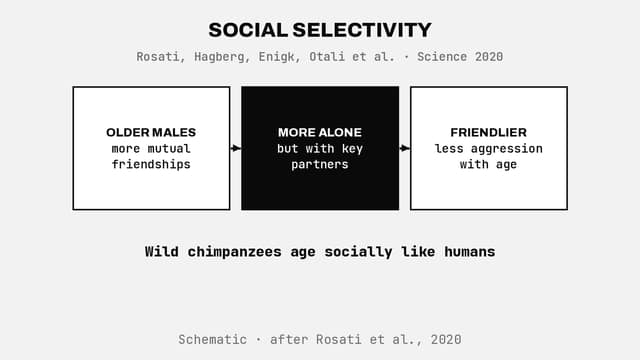
Social selectivity. In 2020, Alexandra Rosati and colleagues found that aging male chimpanzees have more mutual friendships, spend more time alone, and turn friendlier. Like humans, they grow choosier with age. Dolphins show their own social aging.