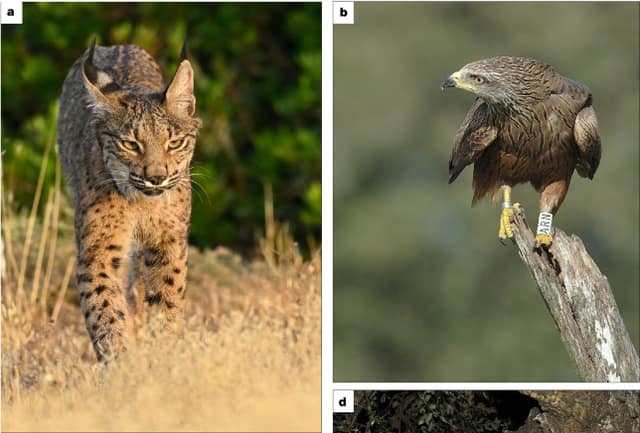
For three decades, Spain's Doñana Biological Station followed lynx and black kites. After a virus crashed the rabbits both hunt, lynx raided kite nests in drought years, taking up to 46 percent of nearly fledged chicks. The study is in Nature.
Three decades of field data show how disease and drought together can rewire who eats whom among top predators.
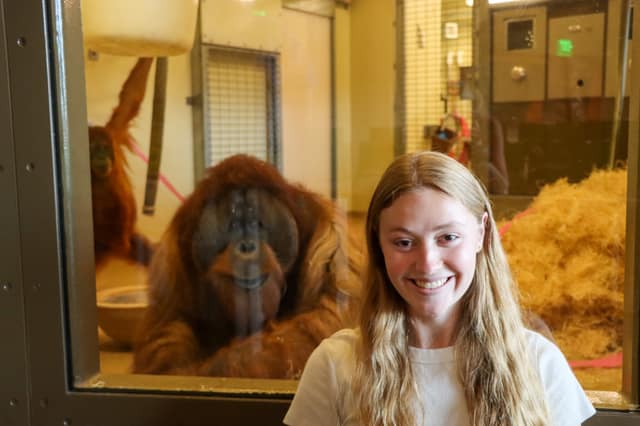
At Indiana University, six zoo orangutans heard recordings of orangutan laughter while digging for treats in one material, and a control sound for another. Later, given the choice, four of the six preferred the laughter material. The study is in Biology Letters.
A small but controlled test that emotion can bias reward learning in another great ape, not just in humans.
Prochlorococcus, the most abundant photosynthetic organism in the sea, was thought to drift alone. MIT's Chisholm lab shows in Nature Communications that every strain they tested can also form biofilms, and attached cells release almost twice as much organic carbon.
If the most abundant photosynthesiser also lives on sinking particles, estimates of ocean carbon export may need revising.
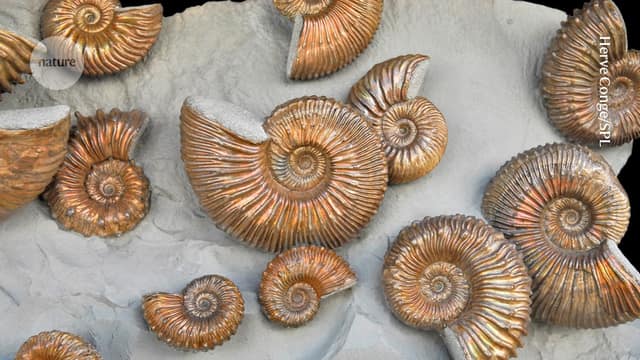
At the Geological Society of America meeting, Shuzhong Shen's team presented OneStrata, an AI trained on over 2.8 million fossil occurrences. Only two of the Big Five mass extinctions look like sharp global collapses. It's not yet peer reviewed.
A finer-grained fossil timeline could change how we read past mass extinctions; it is a conference abstract, not yet peer reviewed.
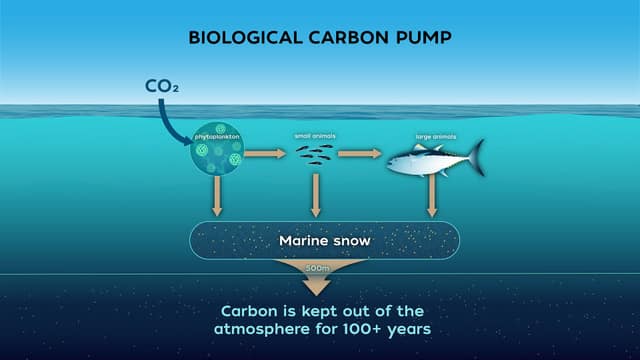
The biological carbon pump. In sunlit water, phytoplankton take up carbon dioxide as they grow, and animals eat them. Most of that carbon is recycled near the surface, but some sinks as marine snow: dead cells, fecal pellets and scraps of messy feeding. Below about five hundred meters, it can stay out of the atmosphere for a century or more. That's why Prochlorococcus riding sinking particles could matter for climate.
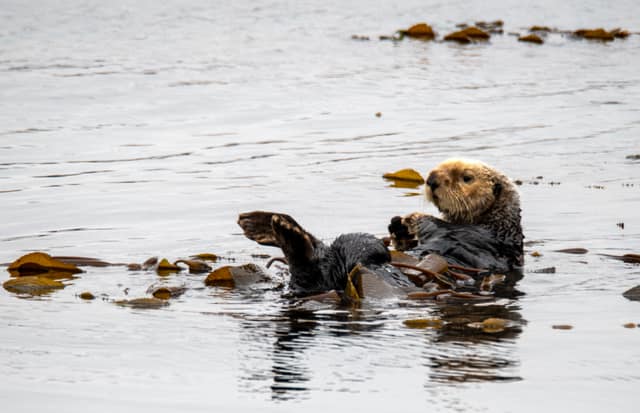
Trophic cascades. A predator can shape plants it never eats. In the 1970s, Jim Estes dove around Alaska's Aleutian Islands. Where sea otters lived, kelp forests thrived. Where otters were missing, urchins covered the seafloor and little kelp was left. Otters eat urchins, urchins eat kelp, so losing the top link flips the system. Today's lynx and kites follow the same logic, rippling down the food web.
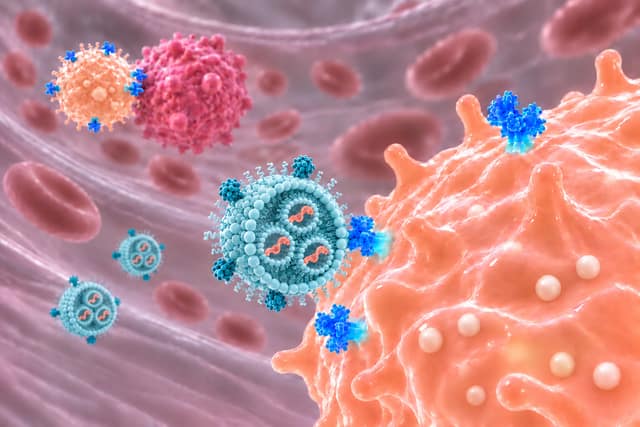
Programming cells from within. CAR cells are immune cells given a new receptor that recognises one target. Today they are usually engineered outside the body. An MIT team instead packed CAR instructions as messenger RNA into lipid nanoparticles aimed at natural killer cells. Inside the cell, ribosomes translate that RNA into the receptor. In mice, up to about 80 percent of NK cells took up the particles. It's preclinical research, not a therapy.