Mind & Society: the fog of war, a testosterone retest, Italians hearing Spanish, philosophy's new AI hubs. Then focal points, explanatory depth, memory as imagination.
Mind & Society
The fog of war, a testosterone retest, focal points
Mind & Society: the fog of war, a testosterone retest, Italians hearing Spanish, philosophy's new AI hubs. Then focal points, explanatory depth, memory as imagination.
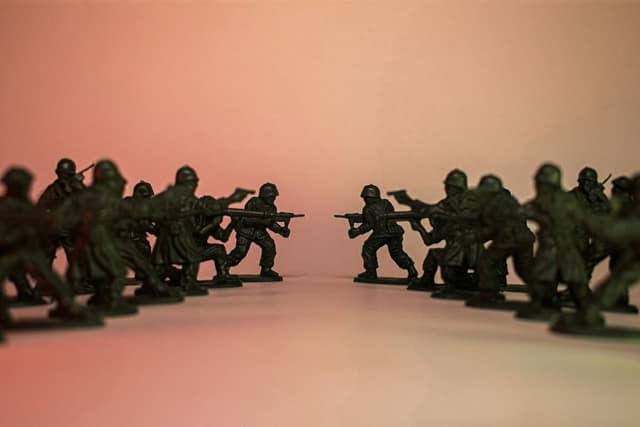
UCLA cognitive scientist Tao Gao built a silent two-player territory game. Players often read defensive moves as threats, and fights escalated. Just colouring the board into two regions, with no rules attached, meant fewer battles and longer peace.
A controlled test of the security dilemma: shared, even arbitrary, boundaries make intentions readable and reduce escalation.
Image: Saifee Art / Unsplash · UCLA Newsroom
Breaking through the 'fog of war' to find peaceUCLA Newsroom (University of California, Los Angeles) · 20 Oct 2026 · Primary · Gao & Li, Journal of Experimental Psychology: General, 20 Oct 2026
Psychology · Replication
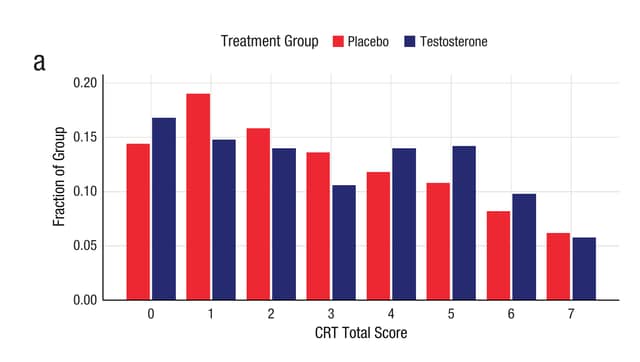
Testosterone and gut answers: a big retest says no
A 2017 study of 243 men suggested one dose of testosterone pushed people toward gut answers on the cognitive reflection test. Rival teams retested it together: 1,000 men, double-blind, in Psychological Science. No effect on the score.
An adversarial collaboration with 1,000 participants fails to replicate a widely cited hormone effect on reasoning.
Italians hearing Spanish overrate how much they get
University of Chicago researchers had Italians listen to Spanish and pick, out of four options, what the speaker meant. They were right 40 percent of the time, but believed they were right 80 percent. A close language inflates confidence.
Similar languages make people feel they understand more than they do, a hidden risk in international communication.
Image: Multilingualism and Decision-Making Lab · UChicago
LSE has launched the Global Priorities Research Group, funded by Good Ventures, to study transformative AI and how to weigh the interests of humans, animals and other minds. In Toronto, a new initiative studies artificial consciousness, without assuming machines have it.
Two new research centres put philosophers to work on AI priorities, the welfare of other minds and artificial consciousness.
Focal points. In 1960 the economist Thomas Schelling asked people where and when they would meet a friend in New York, with no way to agree in advance. Most chose noon at Grand Central Station. When we can't communicate, we coordinate on what stands out. The philosopher David Lewis built a theory of conventions on this salience. It's the coloured border in the UCLA game: a line that means nothing, until both sides know the other sees it too.
Schelling 1960 · SEP: Convention
Photo: Vintage Fan 5678 · Wikimedia Commons · CC BY-SA 4.0
ConventionStanford Encyclopedia of Philosophy · 2024 · Rescorla (2024), on Schelling's focal points (The Strategy of Conflict, 1960) and Lewis's Convention (1969)
Idea · Psychology
The illusion of explanatory depth
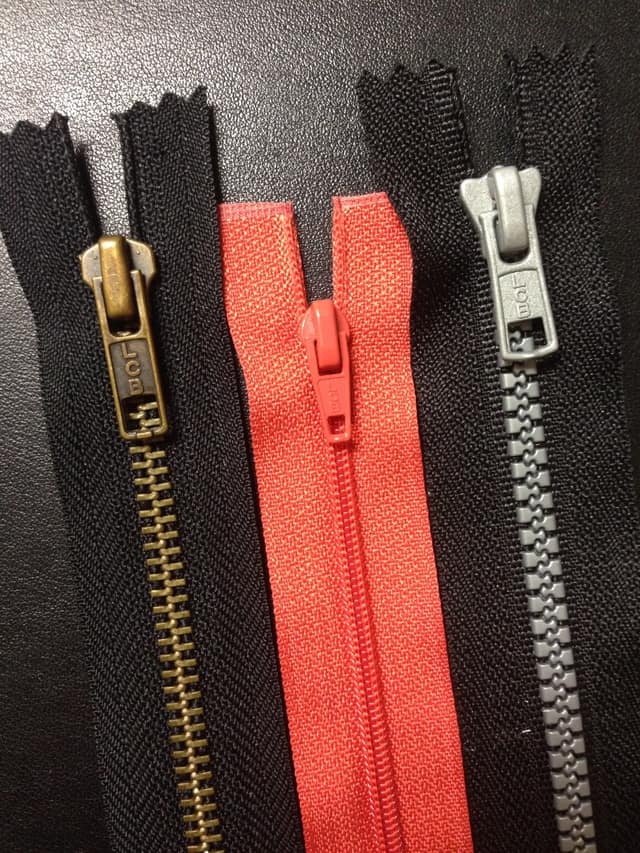
The illusion of explanatory depth. At Yale, Leonid Rozenblit and Frank Keil asked people how well they understood everyday things, like a zipper or a flush toilet. Then they had to write a step by step explanation, and their ratings dropped. The gap was large for devices and natural phenomena, smaller for facts like capital cities, and absent for procedures. Try it: explain how a zipper locks. Familiarity feels like understanding, just like Spanish for an Italian.
Rozenblit & Keil, Cognitive Science 2002
Photo: Woodbine9 · Wikimedia Commons · CC BY-SA 4.0
Is remembering a kind of imagining? The causal theory says a memory counts only if it is causally linked to what you lived. Simulation theories disagree: one system imagines the future and rebuilds the past, and the causal link is at best incidental. Duke philosopher Felipe De Brigard, a 2026 MacArthur Fellow, found that imagining how a past event could have gone differently uses largely the same brain regions as remembering it. Memory errors become the price of a flexible mind.
SEP: Memory · MacArthur Foundation 2026
Painting: D. G. Rossetti, Mnemosyne · public domain
MemoryStanford Encyclopedia of Philosophy · Michaelian & Sutton, section 4.2.4: the simulation theory
Credits
Image: Saifee Art / Unsplash · UCLA Newsroom
Fig. 1a: Knight et al. 2026 · CC BY-NC 4.0
Image: Multilingualism and Decision-Making Lab · UChicago
Image: LSE Global Priorities Research Group
Photo: Vintage Fan 5678 · Wikimedia Commons · CC BY-SA 4.0
Photo: Woodbine9 · Wikimedia Commons · CC BY-SA 4.0
Painting: D. G. Rossetti, Mnemosyne · public domain
Voice: synthetic (neural text-to-speech).
Scripts written from the linked sources.
4 News 3 IdeasNews and IdeasMind and Societypsychologyphilosophysecurity dilemmafog of wartestosteronecognitive reflection testreplicationillusion of understandinglanguagephilosophy of AIartificial consciousnessglobal prioritiesfocal pointsSchellinggame theoryconventionsillusion of explanatory depthphilosophy of memorysimulation theoryFelipe De Brigard