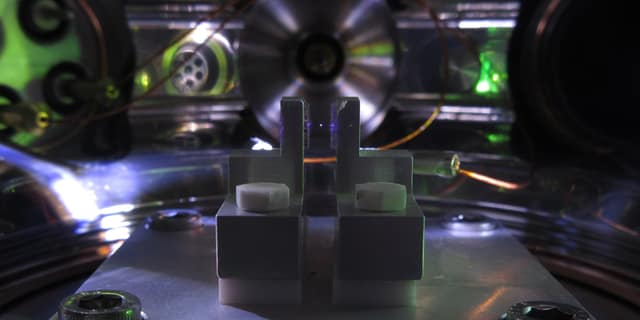
Northwestern physicists have trapped a single positron, the electron's antimatter twin, and held it for months, cooled to about zero point three kelvin, in its quantum ground state. It could enable the most precise matter and antimatter test yet.
At Yale, a laser-levitated glass nanosphere in vacuum felt single gas molecules hit it, one kick at a time, down to ten to the minus twenty three newton seconds. Counting the kicks becomes a pressure gauge.
SLAC's X-ray laser, LCLS, has produced the shortest high energy X-ray pulses ever measured at a free electron laser: 100 to 400 attoseconds. Energetic enough to see deep into atoms, fast enough to freeze electron motion.
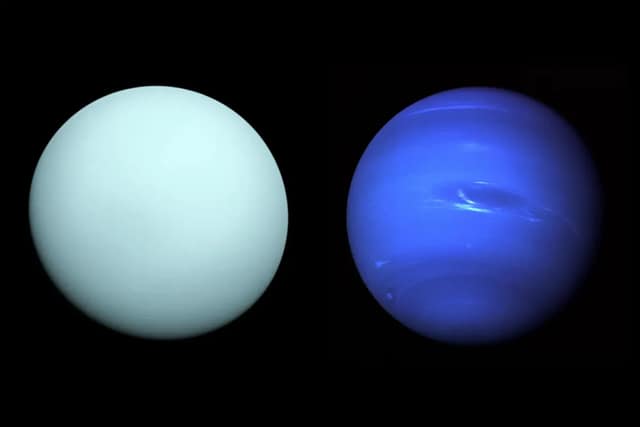
UNLV physicists squeezed water ice between diamonds past 222 gigapascals. Instead of getting more symmetric, the ice switched to a lower symmetry structure, closer to conditions inside Uranus and Neptune. Published in Communications Chemistry.
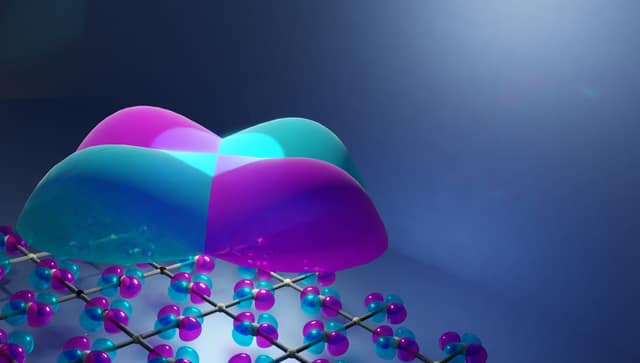
Altermagnetism, a third kind of magnetism. In an antiferromagnet, neighbouring spins point opposite ways and cancel. Altermagnets cancel too, but the two opposite sublattices are related by a rotation of the crystal. So electrons moving in different directions see opposite spin splitting: zero net magnetization, yet spin polarized currents, like a ferromagnet. Predicted in 2022, seen in manganese telluride in 2024, and awarded the 2026 Europhysics Prize.
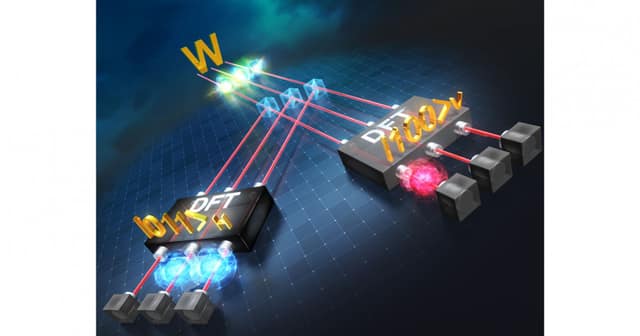
GHZ versus W: two ways for three photons to share one quantum state. In GHZ, all three are zero or all three are one; lose one photon and the rest are no longer entangled. In W, a single one is spread over all three; lose one and two stay entangled. In 2025, Kyoto and Hiroshima physicists built the first one-shot measurement for W states, an optical Fourier circuit, right about 87 percent of the time.
Carnot's limit. In 1824 the engineer Sadi Carnot asked how efficient a heat engine can possibly be. The answer depends only on two temperatures, not on the fluid or the design: one minus cold over hot, in kelvin. With the cold side at three hundred kelvin, a hot side at four hundred kelvin caps you at 25 percent. At six hundred kelvin, 50 percent. At nine hundred kelvin, about 67 percent. That is why engineers keep pushing for hotter engines.
Feynman Lectures, Vol. I, ch. 44
Max efficiency %, cold side 300 K
Hot 400 K
25
Hot 600 K
50
Hot 900 K
67
Chart: own drawing from Carnot's formula
Hotter side, higher ceiling
The Laws of ThermodynamicsThe Feynman Lectures on Physics, Vol. I, ch. 44 · 1963 · Primary · Feynman, Leighton & Sands (1963)