Issue

19 October 2026

2 min read · 1 Short

Quantum errors, a chemistry Nobel, fungi that trade, AI benchmarks. Then Newton, superposition and retrieval practice.

Physics & Engineering

All tracks (before 22 Oct 2026)

Google Willow, Chemistry Nobel, Newton, retrieval practice

Quantum errors, a chemistry Nobel, fungi that trade, AI benchmarks. Then Newton, superposition and retrieval practice.

Google Willow, Chemistry Nobel, Newton, retrieval practice

Watch

4 News

Physics · Quantum

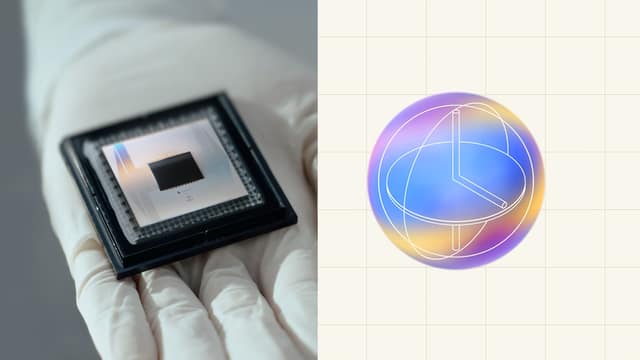
Google cultivates magic states on Willow

Google just demonstrated magic state cultivation on its Willow chip, cutting errors by about 40 times. It's published in Science. Why it matters: magic states are the bottleneck for universal, error-corrected quantum computing.

Google cultivates magic states on Willow
Image: Google · blog.google

Chemistry · Nobel

Nobel 2026: how a reaction picks one mirror image

The 2026 Nobel Prize in Chemistry goes to Henri Kagan and Kenso Soai. They explained how a reaction can choose just one of a molecule's two mirror-image forms. That matters for the origin of life, since biological molecules share one handedness, and for making drugs.

Nobel 2026: how a reaction picks one mirror image
Image: nobelprize.org

Biology

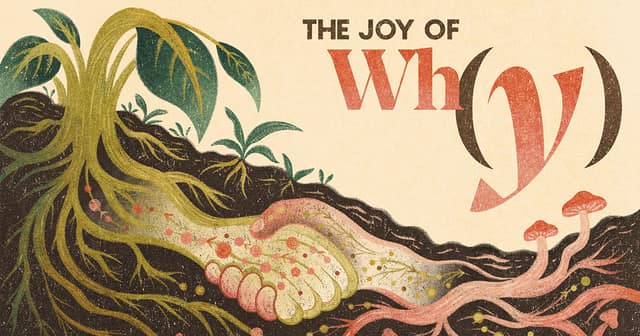
Fungi trade with plants, no brain needed

On a Quanta podcast, biologist Toby Kiers explains how soil fungi trade nutrients with plants, and pick the best partners, all without a brain.

Fungi trade with plants, no brain needed
Image: Chanelle Nibbelink / Quanta Magazine

AI

Making AI benchmarks a science

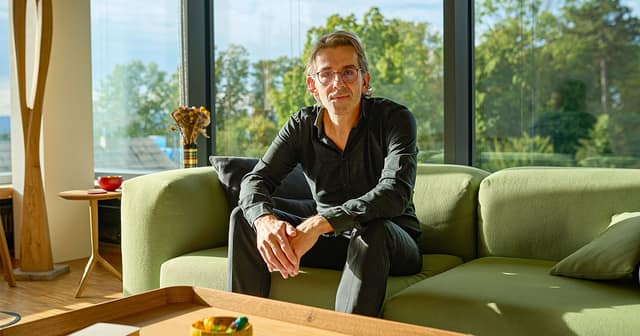
And in AI, Moritz Hardt calls benchmarks the error machine learning made, and explains how to make AI benchmarking a real science, not a dark art.

Making AI benchmarks a science
Photo: Jerrit Peinelt / Quanta Magazine

3 Ideas

Idea · Physics

Newton's third law: why the horse still moves

Newton's third law. When A pushes on B, B pushes back on A with an equal and opposite force, at the same instant, along the same line. The catch: the two forces act on different bodies, so they never cancel each other. Take the horse and cart. The cart speeds up because the horse's pull beats the friction on the cart. The horse moves forward because its hooves push the ground backward, and the ground pushes the horse forward. And, as Feynman shows, the third law plus the second gives you conservation of momentum.

Feynman Lectures, Vol. I, ch. 10

Diagram: own drawing

Idea · AI

Superposition and sparse autoencoders

Superposition. A language model must represent far more concepts than it has neurons, so it packs them as nearly orthogonal directions that overlap. That's why single neurons are polysemantic. A sparse autoencoder unpacks them into a much larger dictionary, where each unit tends to mean one thing. In Claude 3 Sonnet, Anthropic found a Golden Gate Bridge feature: clamp it at 10 times its maximum, and the model drifts to the bridge. The catch: in the 34 million feature version, about 65 percent of features were dead. And a new paper shows that features picked by correlation often fail to predict what an intervention does. Correlation isn't causation.

Anthropic 2024 · arXiv 2610.15850

Diagram: own drawing (schematic, not real data)

Idea · Psychology

Retrieval practice beats rereading

Retrieval practice. Pulling something out of memory strengthens it more than reading it again. Rereading feels like knowing. Retrieving forces you to rebuild. In Roediger and Karpicke's 2006 study, people read a text, then either reread it or wrote down everything they remembered. After five minutes, rereading won: 81 percent versus 75. After two days, testing won: 68 versus 54. After one week, testing again: 56 versus 42. What works in the short term is not what works in the long term.
Roediger & Karpicke 2006

RereadTest
5 minutes8175
2 days5468
1 week4256

Chart: own drawing from the paper's figures

Short term ≠ long term

  • Test-Enhanced Learning Psychological Science (author copy, Purdue Learning & Memory Lab) · 2006 · Primary · Roediger & Karpicke (2006)

Credits

  • Image: Google · blog.google
  • Image: nobelprize.org
  • Image: Chanelle Nibbelink / Quanta Magazine
  • Photo: Jerrit Peinelt / Quanta Magazine
  • Diagram: own drawing
  • Diagram: own drawing (schematic, not real data)
  • Chart: own drawing from the paper's figures

Voice: synthetic (neural text-to-speech).

Scripts written from the linked sources.

4 News 3 IdeasScienceAIQuantum ComputingNobel PrizePhysicsInterpretabilityLearning

Newsletter

The day's letter, by email.