News & Ideas is a daily letter for anyone who wants the day's science in one place, not a feed. Each day is 4 news items and 3 ideas across AI & Tech, Physics & Engineering, Biology & Nature, and Mind & Society, and every story names a primary source you can check. The Shorts use a declared synthetic voice.
One email a day. 4 science stories, 5 quick results, 1 idea. 3 minutes.
Plus a daily quiz: Answer & Learn. Free, unsubscribe anytime.
Issue
25 November 2026
2 min read · 1 Short
Mind & Society: pine tar and beeswax on a Roman ship, broad diets by choice 45,000 years ago, the enjoy-able effect, when mindfulness backfires. Then optimal diet, unskilled and unaware, the dark triad.
One email a day. 4 science stories, 5 quick results, 1 idea. 3 minutes.
Plus a daily quiz: Answer & Learn. Free, unsubscribe anytime.
Mind & Society
A Roman Ship Sealed With Pine Tar and Beeswax
Mind & Society: pine tar and beeswax on a Roman ship, broad diets by choice 45,000 years ago, the enjoy-able effect, when mindfulness backfires. Then optimal diet, unskilled and unaware, the dark triad.
Off the coast of Croatia, a Roman ship sank about 2,200 years ago. Chemists analyzed ten samples of its waterproof coating: mostly pine pitch, and one mix of pine tar and beeswax, a recipe Pliny the Elder described. Pollen trapped in the tar hints at where it was built or repaired.
Photo: Sailko · Wikimedia Commons (CC BY 3.0) · hull of the Roman ship Alkedo, Pisa, illustrative
One email a day. 4 science stories, 5 quick results, 1 idea. 3 minutes.
Plus a daily quiz: Answer & Learn. Free, unsubscribe anytime.
Archaeology · Diet
Broad Diets by Choice
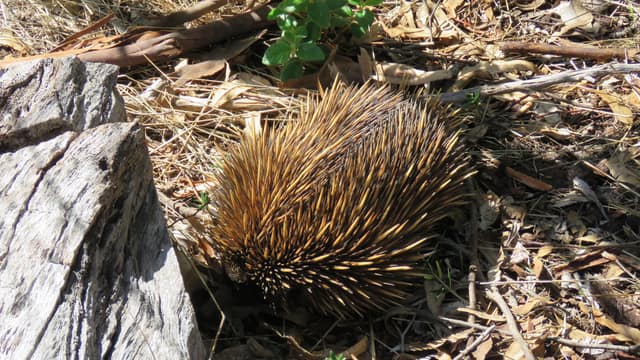
Did ancient hunters eat broadly only when food ran out? At Riwi, a rock shelter in northwestern Australia, people about 45,000 years ago ate wallabies, echidnas, possums, flying foxes, lizards and snakes. The team argues this broad diet was a flexible strategy for unpredictable rainfall, not a sign of scarcity.
Photo: Calistemon · Wikimedia Commons (CC BY-SA 4.0) · a short-beaked echidna, Western Australia
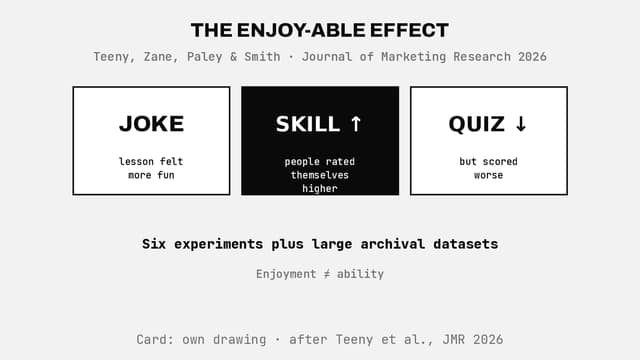
Do we think we're good at what we enjoy? In one experiment, people learned words inside jokes or plain sentences. The joke group enjoyed it more and rated their skill higher, yet scored worse on a quiz. Researchers call it the enjoy-able effect. Journal of Marketing Research.
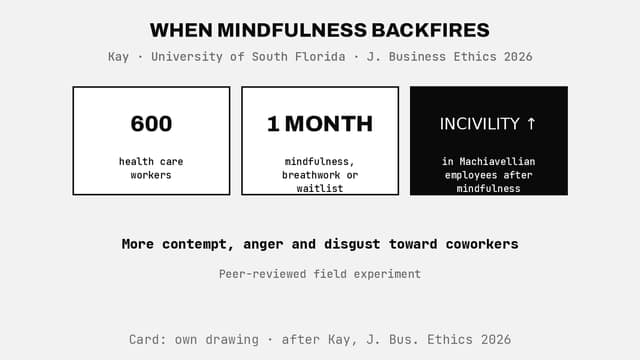
Can mindfulness training make some people ruder? In a monthlong field experiment, 600 health care workers did mindfulness, breathwork, or waited. Machiavellian employees who trained in mindfulness felt more contempt, anger and disgust toward coworkers, and acted with more incivility. Journal of Business Ethics.
Card: own drawing · after Kay, J. Bus. Ethics 2026
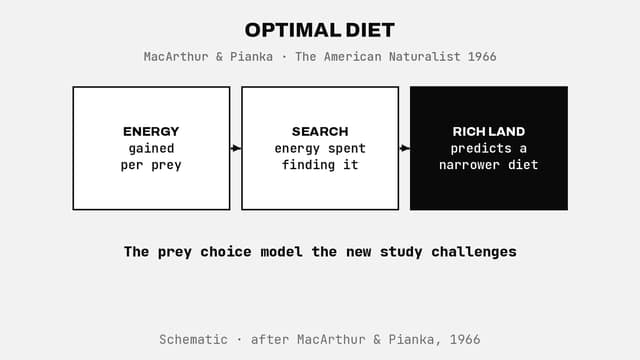
Optimal diet. In 1966, Robert MacArthur and Eric Pianka modeled a predator's menu as energy gained versus energy spent searching. One prediction: richer environments should mean narrower diets. Australia's broad, early diets push back on that logic.
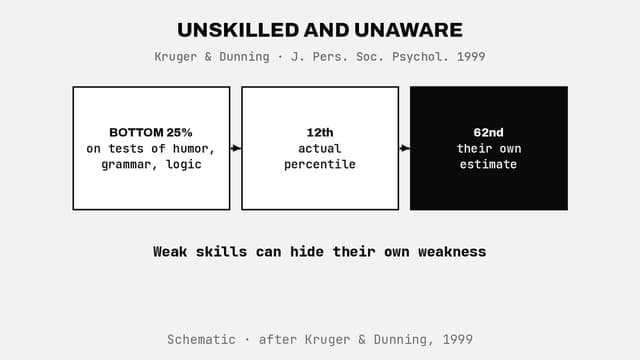
Unskilled and unaware. In 1999, Justin Kruger and David Dunning found that people scoring in the bottom quarter on grammar, logic and humor tests placed themselves around the 62nd percentile. Their actual average was the 12th.
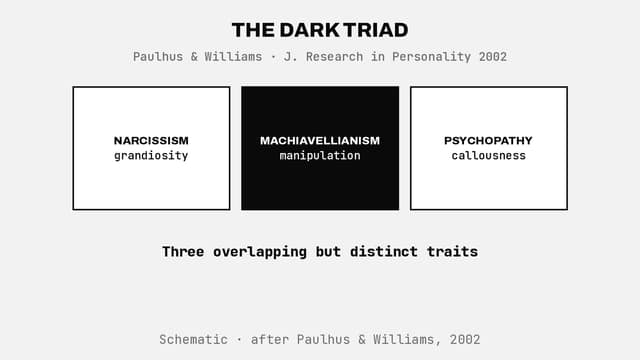
The dark triad. In 2002, Delroy Paulhus and Kevin Williams described three overlapping but distinct traits: narcissism, Machiavellianism and psychopathy. The mindfulness study focused on the middle one, the manipulative trait.