News & Ideas is a daily letter for anyone who wants the day's science in one place, not a feed. Each day is 4 news items and 3 ideas across AI & Tech, Physics & Engineering, Biology & Nature, and Mind & Society, and every story names a primary source you can check. The Shorts use a declared synthetic voice.
One email a day. 4 science stories, 5 quick results, 1 idea. 3 minutes.
Plus a daily quiz: Answer & Learn. Free, unsubscribe anytime.
Issue
3 November 2026
3 min read · 1 Short
Mind & Society: the brain tracks actions in a wildlife film, one weakened brain rhythm in schizophrenia, marriage rules that keep hunter-gatherer genes diverse, a dog's paw prints in a 4,000-year-old mudbrick. Then mirror neurons, exogamy, beta waves.
One email a day. 4 science stories, 5 quick results, 1 idea. 3 minutes.
Plus a daily quiz: Answer & Learn. Free, unsubscribe anytime.
Mind & Society
Your brain watches what animals do more than what they are
Mind & Society: the brain tracks actions in a wildlife film, one weakened brain rhythm in schizophrenia, marriage rules that keep hunter-gatherer genes diverse, a dog's paw prints in a 4,000-year-old mudbrick. Then mirror neurons, exogamy, beta waves.
Your brain watches what animals do more than what they are
Watching a nature film, the brain gives far more cortex to actions
In PNAS, a Dartmouth team scanned 18 adults with fMRI while they freely watched 63 minutes of the BBC series Life, narrated by David Attenborough. Every moment was annotated for actions, agents (the animals), scenes and low-level visual motion. In encoding models, actions uniquely explained the most activity over far more cortex, from inferior parietal to premotor areas; the authors estimate roughly 10 times the cortex of agents and scenes. In an independent dataset of 72 people watching 12 short films about humans, actions again explained more cortex than objects, scenes or agents. The main sample is small, and the model ignores the narration.
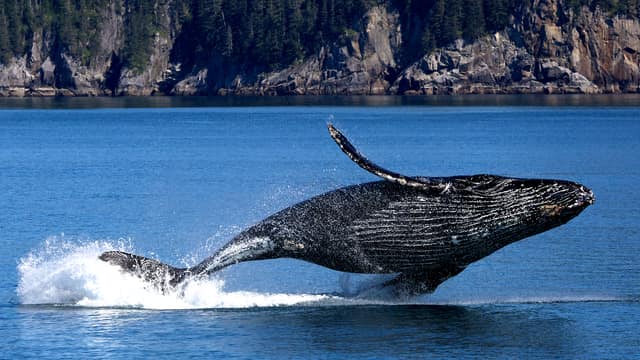
Photo: NPS / Kaitlin Thoreson · Wikimedia Commons (public domain) · not from the film
One email a day. 4 science stories, 5 quick results, 1 idea. 3 minutes.
Plus a daily quiz: Answer & Learn. Free, unsubscribe anytime.
Mind · Psychiatry
One weakened brain rhythm links several symptoms of schizophrenia
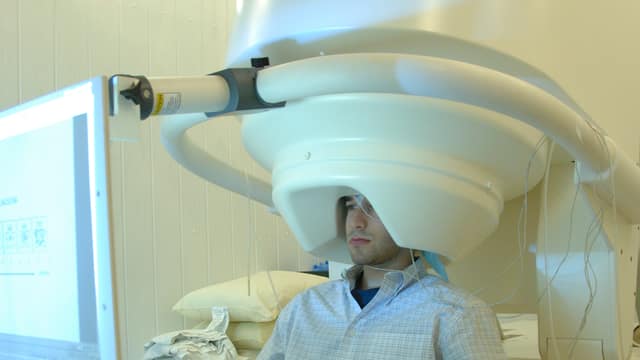
In Science Advances, a McGill team used magnetoencephalography to measure beta-band brain activity, 15 to 30 hertz, in 25 people with schizophrenia and 25 healthy controls, while they judged whether sounds and images were simultaneous, made movements and spoke freely. In patients, beta modulation was weaker and slower. Larger differences went with poorer audio-visual timing judgements, more disorganised speech and more severe symptoms. The first author calls it a first, modest-size study. Research, not medical advice.
Photo: NIMH · Wikimedia Commons (public domain) · a generic MEG scanner
Marriage rules and mobility keep hunter-gatherer genes diverse
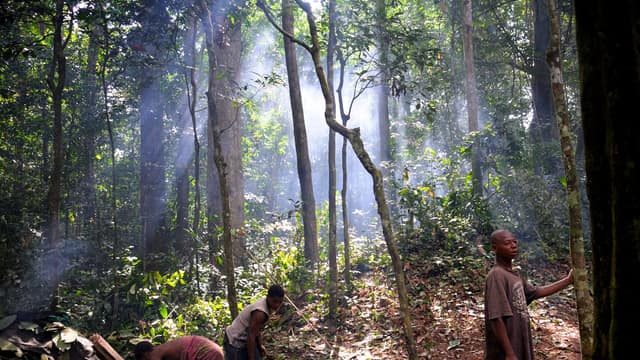
Combining genomic, demographic, mobility and ethnographic data from two BaYaka hunter-gatherer populations in Central Africa, a team led from the University of Tübingen found that even small increases in runs of homozygosity went with lower reproductive success. Both populations keep homozygosity equally low, by different routes: in one, strict exogamy and high lifetime mobility; in the other, looser rules but men who marry farther away. Two populations, observational design. Published in Science Advances.
Photo: JosepMGracia · Wikimedia Commons (CC BY-SA 4.0) · a BaAka camp in the Central African Republic, not the study communities
A dog's paw prints in a 4,000-year-old mudbrick (press release)
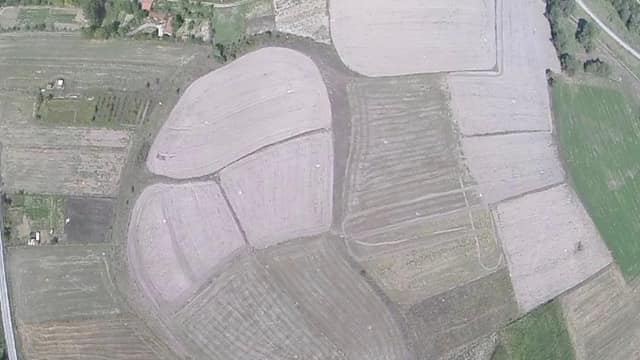
At Tavşanlı Höyük in western Türkiye, excavations led since 2021 by Erkan Fidan of Bilecik Şeyh Edebali University found the paw prints of a dog that walked across a mudbrick of earth, water and straw while it was drying. The brick went into a wall of a Bronze Age building that was later destroyed by fire, and lay in the debris for about 4,000 years. It records both how bricks were left to dry outdoors and the presence of dogs in the settlement. University press release; no paper yet.
Photo: Erkan Fidan · Wikimedia Commons (CC BY 4.0) · aerial view of the mound
In the premotor and parietal cortex of macaques, some neurons fire both when the monkey performs an action and when it watches another do it. Rizzolatti and Craighero made them the basis of a hypothesis: we understand others' actions partly by simulating them in our own motor circuits. The idea is still debated, especially in humans and in extensions to empathy and autism. In today's Dartmouth study, action features predicted activity across a wide band from inferior parietal to premotor cortex.
The Mirror-Neuron SystemAnnual Review of Neuroscience · 2004 · Primary · Rizzolatti & Craighero, Annual Review of Neuroscience 27 (2004); still debated in humans
Rules against marrying close kin are found in every culture. Mapping marriage customs onto genetic family trees of hunter-gatherer peoples, Walker, Hill, Flinn and Ellsworth reconstructed that arranged marriage goes back at least 50,000 years, and that exchanges between the two families, such as bride service or bride price, are the most likely ancestral state. Other primates lack this reciprocal exogamy, so kin lineages stay within single communities; human marriage links kin across many communities. In the BaYaka study, one population with strict exogamy and one with looser rules but more distant marriages reach the same low homozygosity.
Beta oscillations, roughly 13 to 30 hertz, are one of the waking brain's electrical rhythms, linked above all to movement control. Engel and Fries proposed that beta signals the maintenance of the current sensory or motor state: it rises when the brain holds its model steady and falls when it must change it. In the McGill study, weaker and slower beta modulation is read as less flexibility in updating internal models in schizophrenia.