Mind & Society: conspiracy believers misjudge consensus, AI psychosis, Big Tech ambivalence, profound autism. Then false consensus, pluralistic ignorance, speed vs accuracy.
Mind & Society
Conspiracy beliefs, AI psychosis, Big Tech, autism
Mind & Society: conspiracy believers misjudge consensus, AI psychosis, Big Tech ambivalence, profound autism. Then false consensus, pluralistic ignorance, speed vs accuracy.
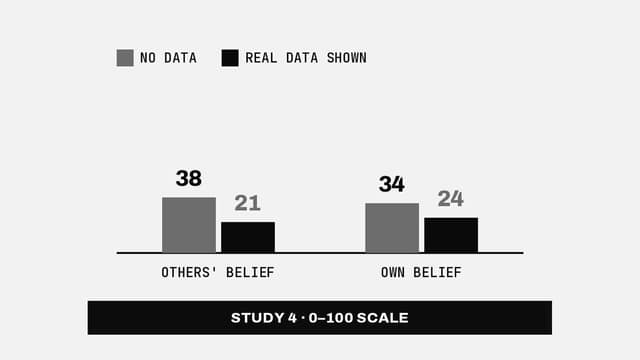
Across six studies with 2,906 people in the US and UK, conspiracy believers overestimated how many others agree with them. In one experiment, real data shown as bar charts cut the estimated belief of others from 38 to 21 on a hundred-point scale, and lowered people's own belief too. It worked in only one experiment.
Chart: own drawing from van Prooijen et al., EJSP 2026 (Study 4)
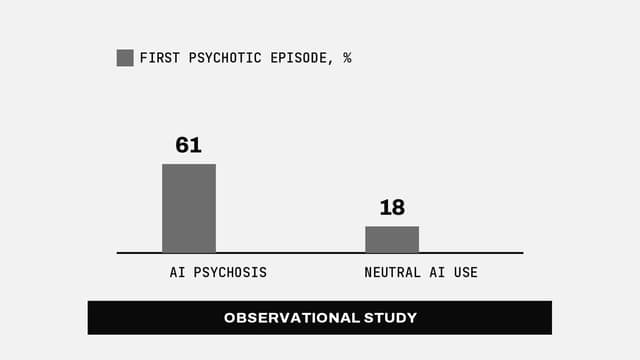
Vanderbilt researchers searched over half a million clinical notes from about 216,000 behavioural-health patients. They found 28 cases matching AI psychosis, about 0.013 percent. Sixty-one percent were first episodes, versus 18 percent among patients who mentioned AI neutrally. The study is observational and cannot show cause.
Chart: own drawing from Bergson et al., JAMA Psychiatry 2026
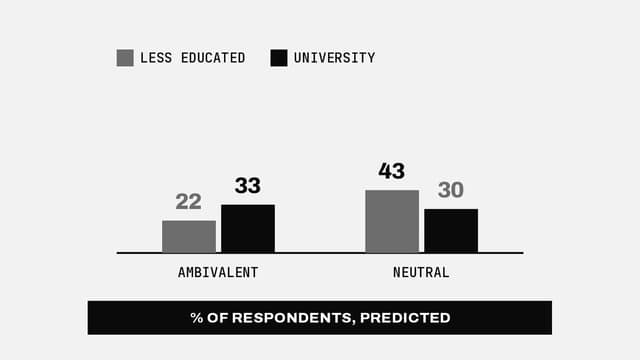
A survey of 19,800 people in Germany, Japan, Poland, Spain, Sweden and the US asked how they see Big Tech. University graduates were not its biggest fans, but its most conflicted public. The ambivalent share rises from 22 percent among the less educated to 33 percent among graduates, while support barely moves.
Chart: own drawing from Tober et al., Research & Politics 2026 · CC BY 4.0
A new definition lowers the profound autism estimate
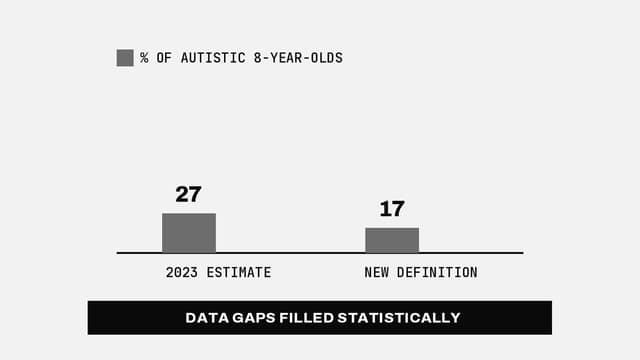
A CDC team using a new definition that adds adaptive skills puts it near 17 percent of autistic eight-year-olds in the US, down from 27 percent estimated in 2023. Only about half the records were complete, so gaps were filled statistically, and sites ranged from 10 to 35 percent.
Chart: own drawing from Shaw et al., JAACAP 2026 · The Transmitter
The false consensus effect. In 1977, Stanford students were asked to walk around campus wearing a sign saying Eat at Joe's. Those who agreed guessed that 62 percent of their peers would agree too. Those who refused guessed only 33 percent. Each side saw its own choice as the normal one. The same bias shows up in this week's conspiracy study.
Ross, Greene & House 1977 · JESP
Estimated % of peers who'd wear it
AGREED
62
REFUSED
33
Chart: own drawing from Ross et al. 1977, Study 4
Each side thinks it is normal
The 'false consensus effect'Journal of Experimental Social Psychology · 1977 · Primary · Ross, Greene & House (1977)
Idea · Social norms
Pluralistic ignorance
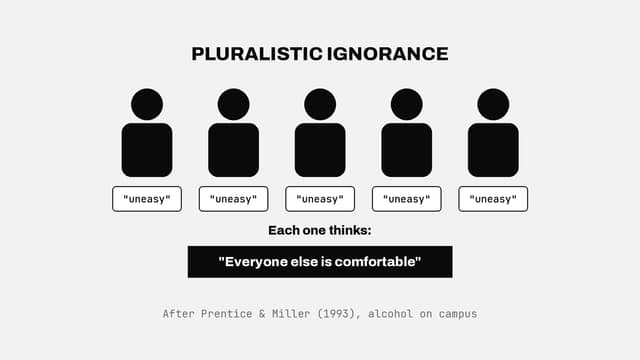
Pluralistic ignorance. In 1993, Princeton students turned out to be privately less comfortable with campus drinking than they believed the average student was. Everyone misread everyone else, so the norm survived. The fix tested in this week's conspiracy study is similar: show people the real numbers.
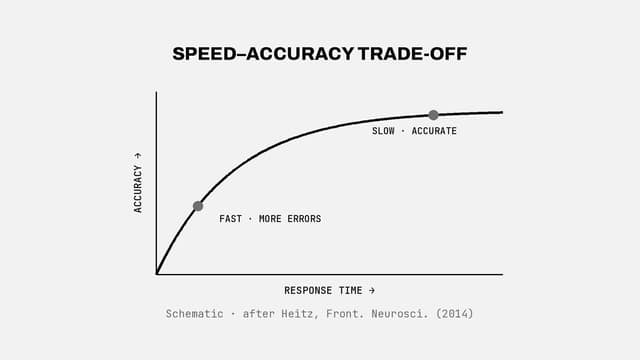
The speed–accuracy trade-off. From insects to primates, deciding faster usually means more mistakes. In common models, the brain gathers evidence until it reaches a threshold: lower the threshold and you answer quicker, but err more. That is why this week's crows are striking: about twice as fast as primates in earlier studies, with similar accuracy.