Mind & Society: electricity and sleep, the left-digit bias in used cars, fear of falling status, predictable elections. Then loss aversion, left-digit attention, light and the body clock.
Mind & Society
Sleep, used cars, status, elections
Mind & Society: electricity and sleep, the left-digit bias in used cars, fear of falling status, predictable elections. Then loss aversion, left-digit attention, light and the body clock.
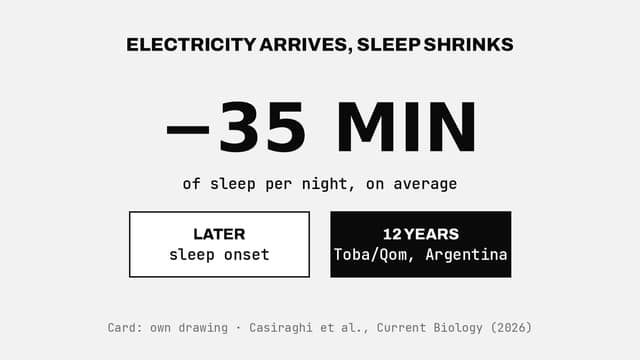
A 12-year study followed indigenous Toba Qom communities in Argentina as electricity arrived, and with it internet and smartphones. Residents slept on average 35 minutes less per night and fell asleep later, a change tracked in real time. Published in Current Biology.
Card: own drawing · Casiraghi et al., Current Biology 2026
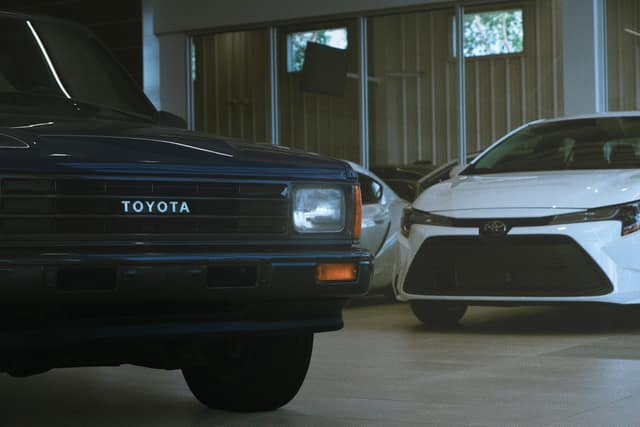
Researchers at Chicago Booth and the University of Texas studied Texas used-car sales from 2014 to 2021. Across fourteen mileage thresholds, cars 1,000 miles below a threshold earned dealers nearly 11 percent more profit than cars 1,000 miles above. Dealership buyers were about twice as inattentive as private buyers.
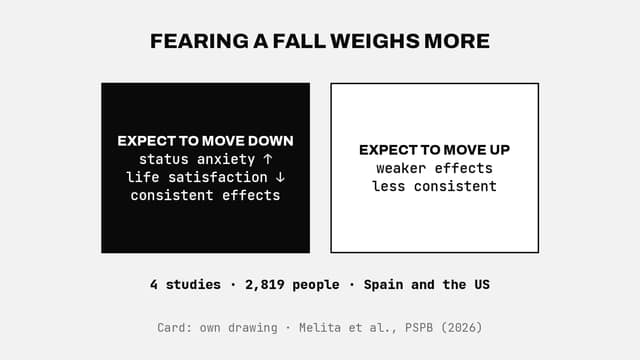
In four studies with 2,819 people in Spain and the United States, expecting to slide down the economic ladder raised status anxiety and lowered life satisfaction. Expecting to move up had weaker, less consistent effects. Some studies were correlational, and the experiments used an imaginary society. In Personality and Social Psychology Bulletin.
Elections are more predictable than they look (under review)
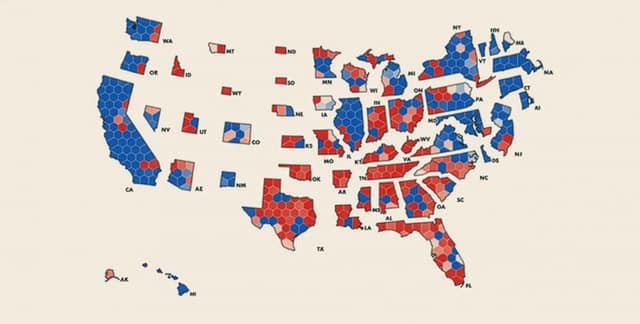
Caltech and Harvard researchers modelled every US House election since 1946 and Senate election since 1954, with no polls in the base version. The classic model treated some results as one-in-ten-thousand events, yet they showed up almost every other election cycle. The paper is still under review at Political Analysis.
Image: California Institute of Technology
Elections are more predictable than they lookCalifornia Institute of Technology via Phys.org · 23 Oct 2026 · Primary · 23 Oct 2026; Katz, Ebanks & King, paper under review at Political Analysis
3 Ideas
Idea · Decisions
Loss aversion
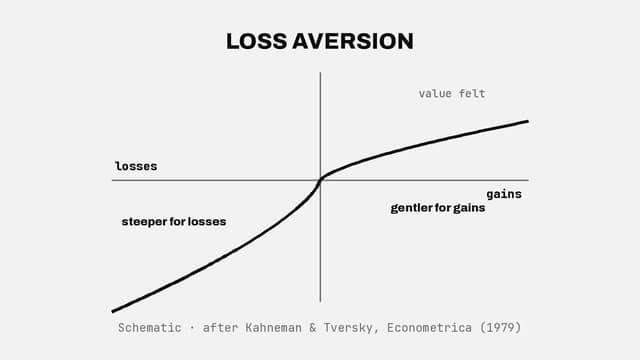
Loss aversion: a loss hurts more than an equal gain pleases. In their 1979 prospect theory, Kahneman and Tversky noted that most people turn down a fair coin flip to win or lose the same amount. The value curve is steeper for losses than for gains. Today's study on falling status fits that pattern.
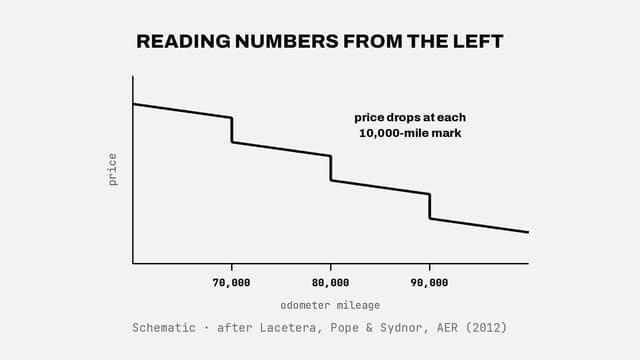
We read numbers from the left and pay less attention to the rest. In wholesale auctions of used cars, Lacetera, Pope and Sydnor found that prices drop sharply each time the odometer crosses a 10,000-mile mark, far more than an extra mile could justify. Attention is limited, and today's dealer study shows that someone profits from it.
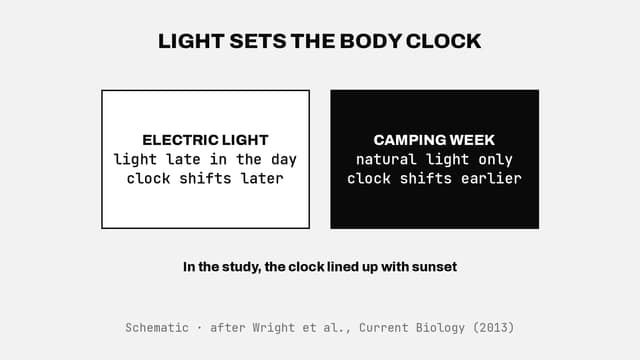
Our internal clock is set mainly by light, and artificial light late in the day pushes it later. In a 2013 study, people spent a week camping with only natural light, and their clocks shifted earlier, lining up with sunset. That helps explain how the arrival of electricity, as in today's Argentina study, can push sleep later.