News & Ideas is a daily letter for anyone who wants the day's science in one place, not a feed. Each day is 4 news items and 3 ideas across AI & Tech, Physics & Engineering, Biology & Nature, and Mind & Society, and every story names a primary source you can check. The Shorts use a declared synthetic voice.
One email a day. 4 science stories, 5 quick results, 1 idea. 3 minutes.
Plus a daily quiz: Answer & Learn. Free, unsubscribe anytime.
Issue
3 November 2026
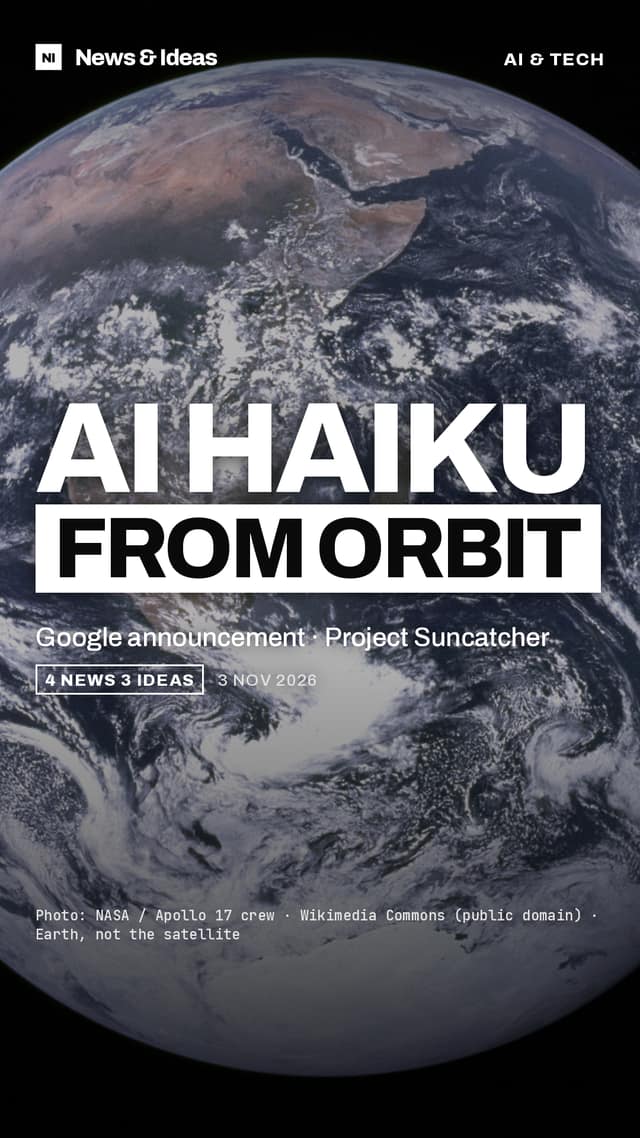
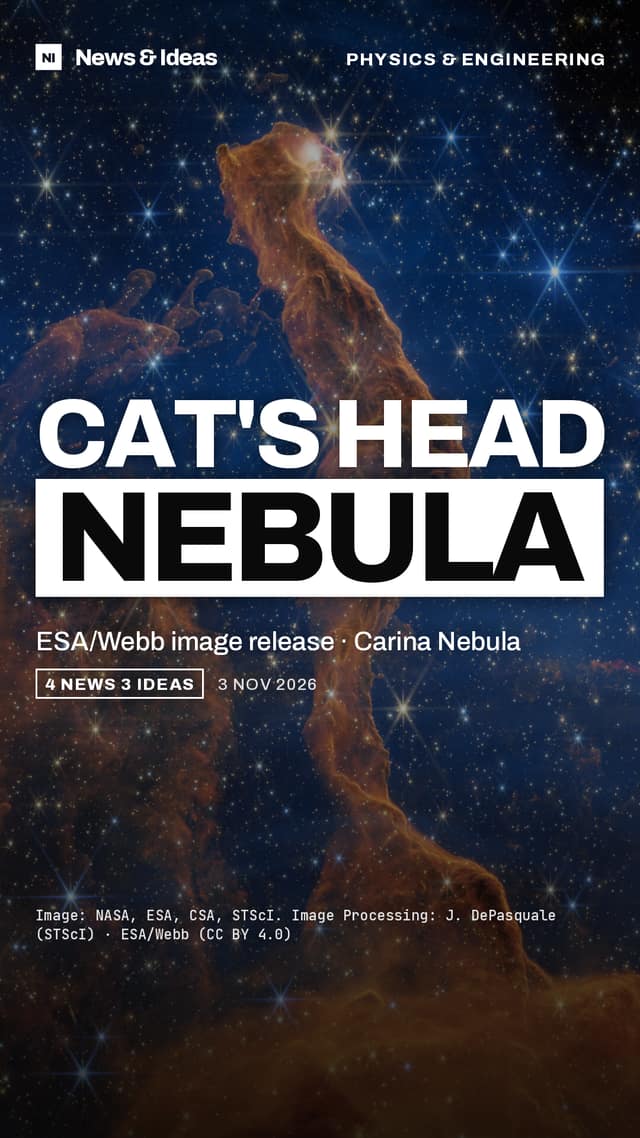
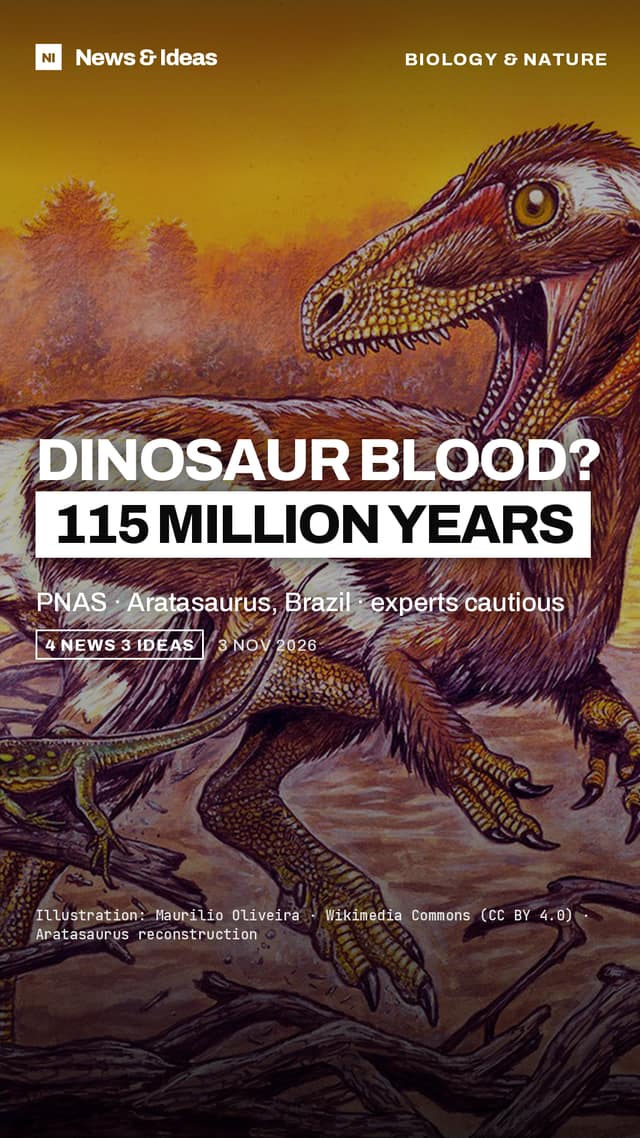
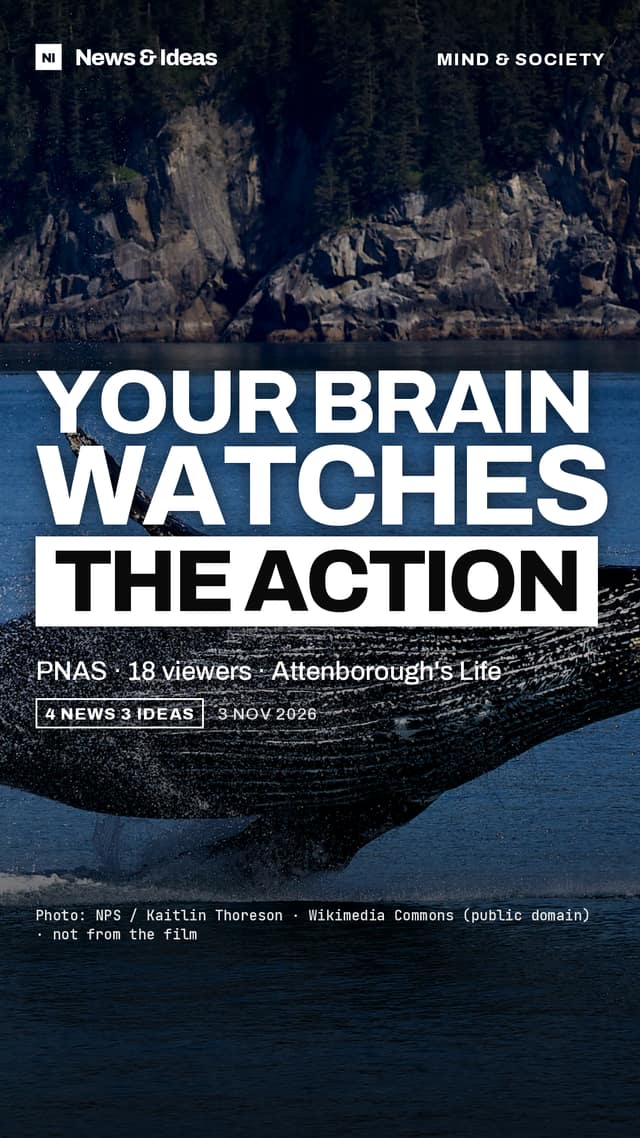
A haiku sent back by a Google satellite running an open AI model in orbit, and a cat-shaped pillar of dust imaged by Hubble and Webb in the Carina Nebula open this edition. Also in it: poisoning 0.1% of pretraining data to plant a backdoor in AI agents, fine-tuning data found by Claude that passes a filter but misaligns a model, SenseNova Loop running half its layers twice, pulsars setting first limits on giant black-hole binaries at cosmic dawn, a diamond laser that reads magnetic fields with 100% contrast, a university-built 15,000-volt silicon carbide switch, traces of heme in a 115-million-year-old dinosaur bone, which some experts still question, deep-sea mining scars still visible after 44 years, tame foxes with fewer "aggression" neurons, a liverwort that moves water uphill to bring sperm to the eggs, a brain that gives far more cortex to actions than to animals in a nature film, one weakened brain rhythm linked to several symptoms of schizophrenia, marriage rules and mobility that keep hunter-gatherer genes diverse and a dog's paw prints in a 4,000-year-old mudbrick, plus three ideas per track to keep. Google's Suncatcher result and SenseNova Loop are company announcements, the Claude study is company research, the poisoning study is a preprint, and the silicon carbide switch and the paw prints come from university press releases. Four tracks, four episodes, and sources on every page.