News & Ideas is a daily letter for anyone who wants the day's science in one place, not a feed. Each day is 4 news items and 3 ideas across AI & Tech, Physics & Engineering, Biology & Nature, and Mind & Society, and every story names a primary source you can check. The Shorts use a declared synthetic voice.
One email a day. 4 science stories, 5 quick results, 1 idea. 3 minutes.
Plus a daily quiz: Answer & Learn. Free, unsubscribe anytime.
Issue
16 November 2026
3 min read · 1 Short
Biology & Nature: a 30-kilo rodent from ancient Thailand, São Paulo's collapsing stream food webs, the social side of solitary black rhinos, coral larvae that grow up to explore. Then Cope's rule, complexity and stability, larval dispersal.
One email a day. 4 science stories, 5 quick results, 1 idea. 3 minutes.
Plus a daily quiz: Answer & Learn. Free, unsubscribe anytime.
Biology & Nature
A 30-Kilo Rodent From 34 Million Years Ago
Biology & Nature: a 30-kilo rodent from ancient Thailand, São Paulo's collapsing stream food webs, the social side of solitary black rhinos, coral larvae that grow up to explore. Then Cope's rule, complexity and stability, larval dispersal.
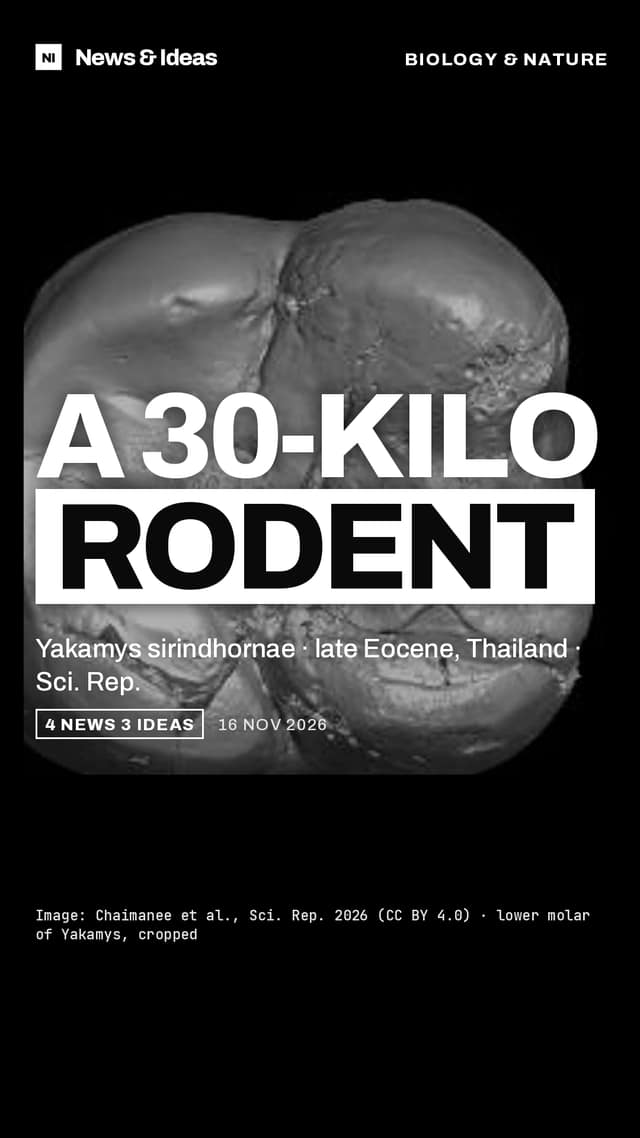
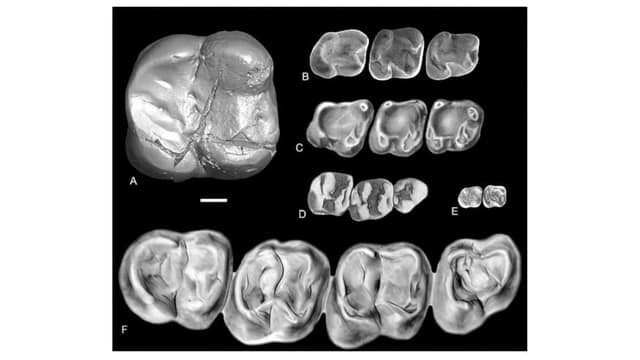
Paleontologists from Thailand's Department of Mineral Resources, McGill University, CNRS and the University of Poitiers described Yakamys sirindhornae, a giant ischyromyid rodent from the late Eocene (about 34 million years ago) of the Krabi Basin, southern Thailand. It is known from a lower second molar and an associated lower incisor found in the Bang Mark pit of the Krabi lignite mine. Seven allometric equations give 21.4 to 47.3 kg (mean 31.6, median 28.6); the authors use about 30 kg as a rounded figure, around twice other known rodents of the time, and stress the large uncertainty of estimates from teeth. The find suggests rodent gigantism appeared early and outside South America. Scientific Reports, open access (CC BY 4.0).
Image: Chaimanee et al. · Sci. Rep. 2026 (CC BY 4.0) · Yakamys molar vs other rodents
One email a day. 4 science stories, 5 quick results, 1 idea. 3 minutes.
Plus a daily quiz: Answer & Learn. Free, unsubscribe anytime.
Ecology · Cities
São Paulo's Stream Food Webs Collapse
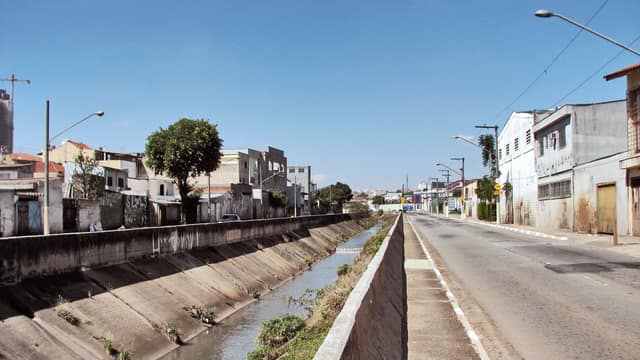
Victor Saito (UFSCar), Luis Schiesari (USP) and colleagues sampled fish and invertebrates in headwater streams of 30 micro-watersheds in the São Paulo metropolitan region, from fully forested to fully urbanised. Biodiversity loss was not random with respect to body size: very small, moderately large and large taxa disappeared, leaving small-bodied communities and compressing size ranges by four orders of magnitude. Food web complexity fell from over 150 trophic links to as few as 3, and estimated energy flow dropped 1,446-fold. According to the authors, collapse appeared even at early stages of urbanisation. Nature Cities, 14 Aug 2026; FAPESP release 14 Nov 2026.
Photo: Gabriel Fernandes · Wikimedia Commons (CC BY-SA 2.0) · urban stream, São Paulo; illustrative
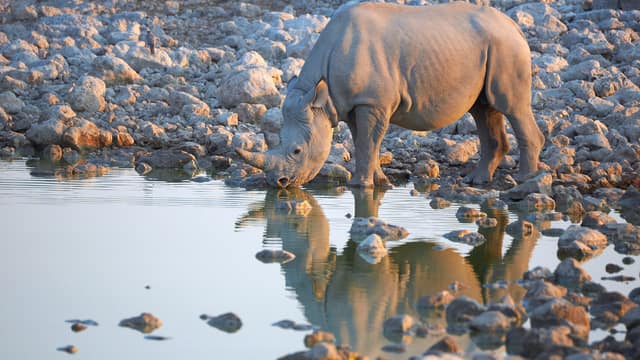
Rachel Stein and Adrian Shrader (University of Pretoria) analysed 69,920 sightings of 542 black rhinos in 14 reserves of the Black Rhino Range Expansion Project in southern Africa. 69.2% of sightings were single animals, 22.7% pairs (mostly mothers with young) and 8.1% groups of 3 to 7. Association rates depended on age, sex and familiarity: rhinos mostly associated with individuals they had met before and avoided adult males. Associations had costs: calves that associated at higher rates, and adults that associated with more males, had higher mortality risk, likely due to aggression. The authors suggest moving animals with existing relationships during translocations. Oikos, 7 May 2026 (open access, CC BY 4.0); The Conversation, 12 Nov 2026.
Photo: Axel Tschentscher · Wikimedia Commons (CC BY-SA 4.0) · black rhino, Etosha
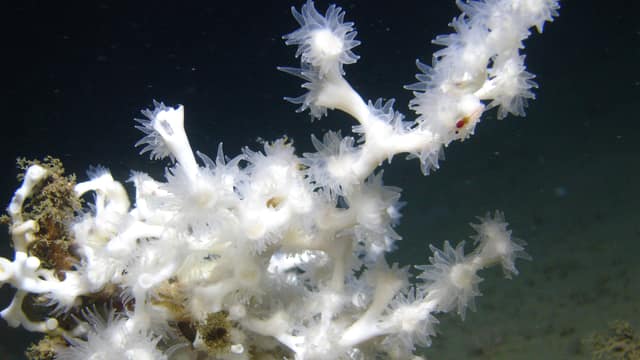
Marte Lønnum, Lena van Giesen and colleagues at the Norwegian University of Science and Technology described larval behaviour and anatomy at several developmental stages of the cold-water coral Lophelia pertusa and the sea anemone Nematostella vectensis. Younger larvae swam little; older larvae were active, showed more complex behaviour and had more nerve cells and sensory receptors. The two species differ: Lophelia can disperse over long distances, Nematostella stays local. The authors describe dispersal as a regulated process shaped by stage, senses and ecology. iScience (2026); a companion coral study is a bioRxiv preprint.
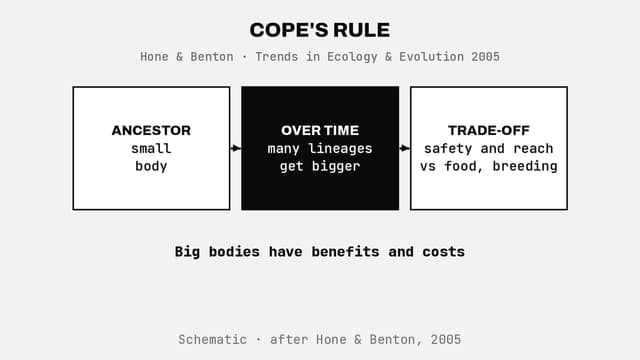
Cope's rule is the tendency of many animal lineages to increase in body size over evolutionary time. Hone and Benton review how it may work: larger size can bring advantages (defence against predators, success with rivals and mates, wider foraging, tolerance of lean times) but also costs (more food needed, longer development, fewer offspring). Whether a lineage follows the trend depends on these trade-offs. The Eocene giant Yakamys shows rodents reached large size early.
Hone & Benton · Trends in Ecology & Evolution 2005
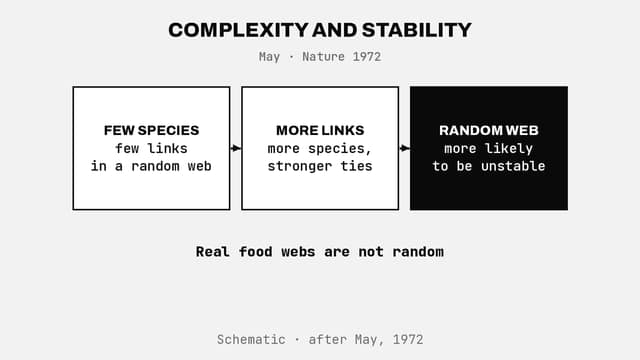
Robert May's 1972 Nature paper analysed randomly assembled model communities and showed that, beyond a threshold, more species, more connections or stronger interactions make the system less likely to be stable. That contradicted the intuition that complexity brings stability and started a long debate on which non-random structures let real food webs persist. Today's São Paulo streams show the opposite problem: webs simplified to a few links.
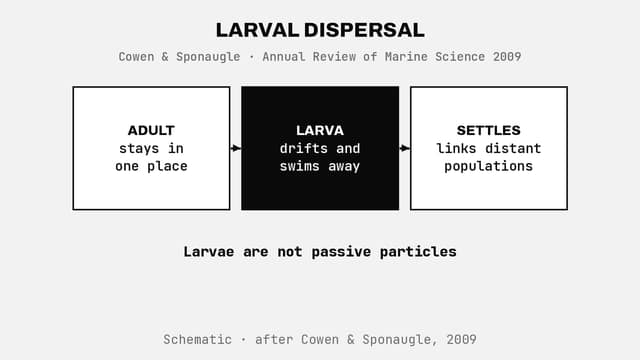
For many marine species with sedentary adults, the larval stage is the main way to move between habitats. Cowen and Sponaugle review how larval duration, behaviour and ocean currents determine dispersal distances and the connectivity between populations, which matters for replenishment after disturbance and for designing marine reserves. Larvae are not passive particles: their swimming and sensing affect where they end up.
Cowen & Sponaugle · Annual Review of Marine Science 2009