News & Ideas is a daily letter for anyone who wants the day's science in one place, not a feed. Each day is 4 news items and 3 ideas across AI & Tech, Physics & Engineering, Biology & Nature, and Mind & Society, and every story names a primary source you can check. The Shorts use a declared synthetic voice.
One email a day. 4 science stories, 5 quick results, 1 idea. 3 minutes.
Plus a daily quiz: Answer & Learn. Free, unsubscribe anytime.
Issue
26 November 2026
2 min read · 1 Short
Biology & Nature: seabirds hear hidden boats, porcupines that glow, dinosaur teeth that saw, a slime mold that takes the least action. Then glowing mammals, the slime mold railway, fishing’s footprint.
One email a day. 4 science stories, 5 quick results, 1 idea. 3 minutes.
Plus a daily quiz: Answer & Learn. Free, unsubscribe anytime.
Biology & Nature
Seabirds Hear Boats That Tracking Misses
Biology & Nature: seabirds hear hidden boats, porcupines that glow, dinosaur teeth that saw, a slime mold that takes the least action. Then glowing mammals, the slime mold railway, fishing’s footprint.
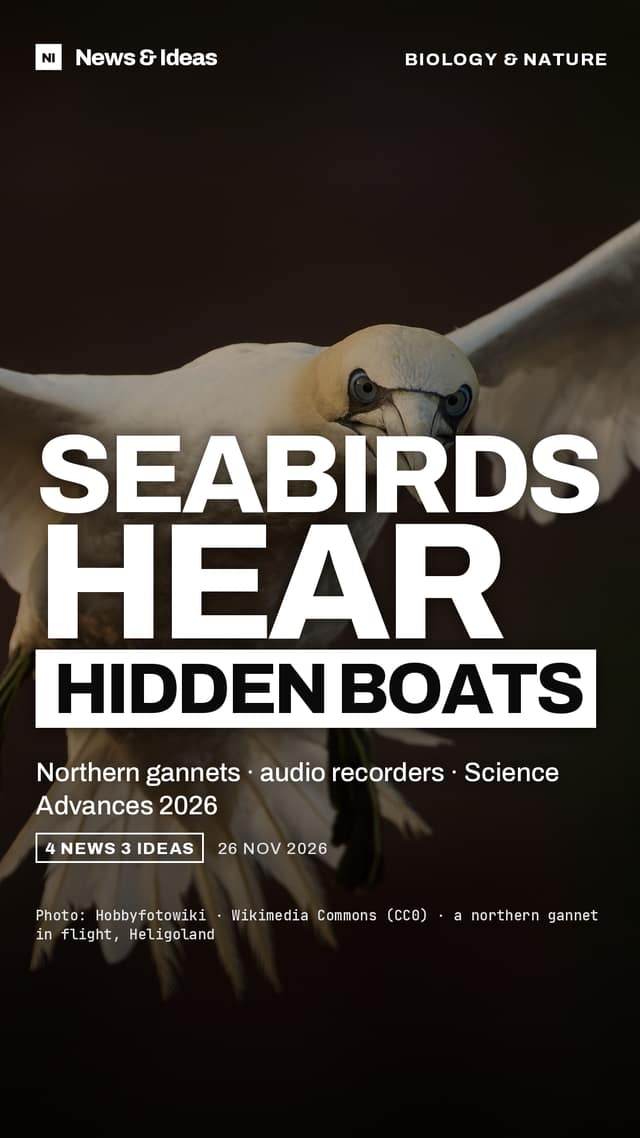
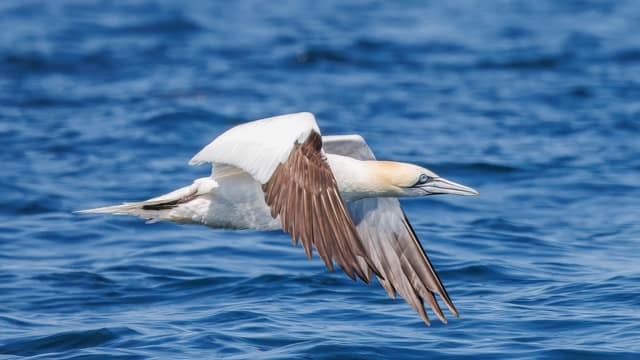
Oxford researchers fitted gannets, Balearic shearwaters and Westland petrels with audio recorders. For gannets, at least a third of the boats they heard had no matching public tracking signal. For the critically endangered Balearic shearwater, more than one in ten. Bycatch risk is likely underestimated.
Photo: Charles J. Sharp · Wikimedia Commons (CC BY-SA 4.0) · a northern gannet, Strangford Lough
One email a day. 4 science stories, 5 quick results, 1 idea. 3 minutes.
Plus a daily quiz: Answer & Learn. Free, unsubscribe anytime.
Zoology · Fluorescence
Porcupines That Glow
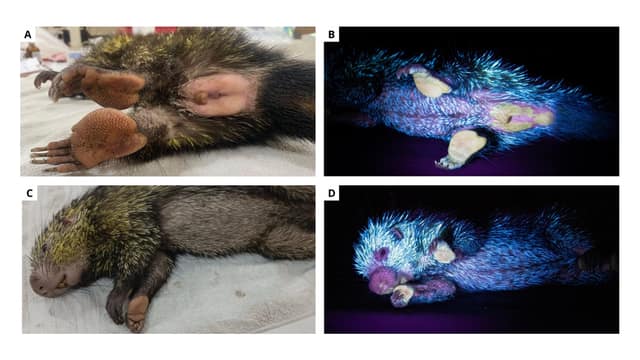
In Chetumal, Mexico, scientists shone ultraviolet light on 20 rescued Mexican hairy dwarf porcupines. Every one glowed, in blue, green and yellow, brighter than museum specimens. On night walks with a UV lamp, they spotted 20 porcupines in the wild. Why they glow is still unknown.
Figure: Pérez-Flores et al., Neotropical Biology and Conservation 2026 (CC BY 4.0) · porcupines in visible and UV light
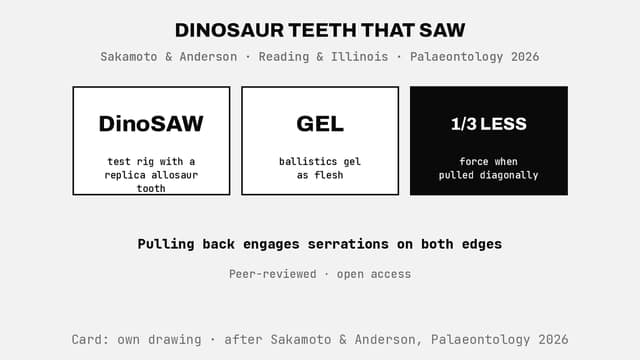
Did meat-eating dinosaurs stab like daggers or saw like steak knives? Researchers built a rig called DinoSAW and drove a replica allosaur tooth into ballistics gel. Pulling diagonally backward, using serrations on both edges, took about a third less force than pushing straight down.
Card: own drawing · after Sakamoto & Anderson, Palaeontology 2026
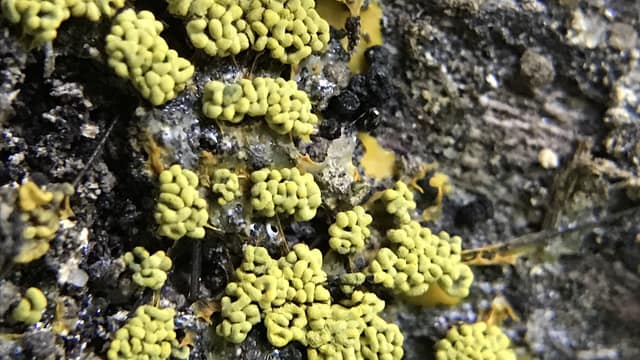
How does a brainless slime mold solve mazes? Researchers in Barcelona modeled its network of tubes and found that the best routes emerge from a principle of least action: the organism minimizes the energy lost moving fluid. The model matched experiments on ring, tree and lattice shapes.
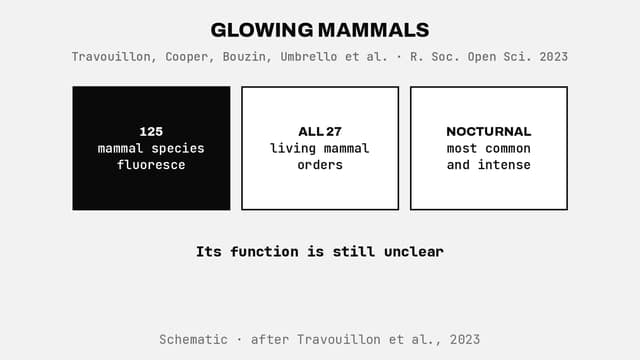
Glowing mammals. In 2023, Kenny Travouillon and colleagues shone UV light on museum specimens and found fluorescence in 125 mammal species, from all 27 living mammal orders. It was most common in nocturnal animals. Whether it has any purpose is still unclear.
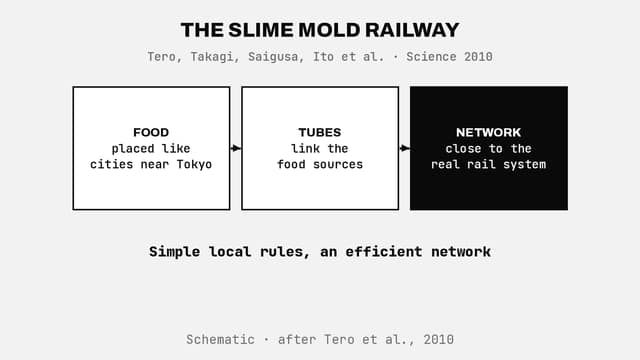
The slime mold railway. In 2010, Atsushi Tero and colleagues placed food in the pattern of cities around Tokyo. The slime mold linked them with a network strikingly similar to the region's real rail system. Simple local rules built an efficient, robust design.
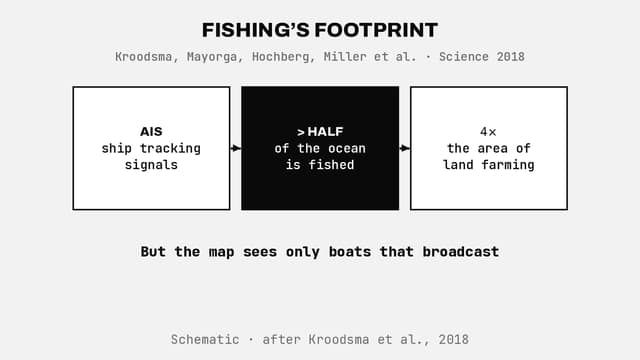
Fishing's footprint. In 2018, David Kroodsma and colleagues used ship tracking signals to map industrial fishing. It covered more than half of the ocean. But that map only sees boats that broadcast, which is why the seabirds matter.