News & Ideas is a daily letter for anyone who wants the day's science in one place, not a feed. Each day is 4 news items and 3 ideas across AI & Tech, Physics & Engineering, Biology & Nature, and Mind & Society, and every story names a primary source you can check. The Shorts use a declared synthetic voice.
One email a day. 4 science stories, 5 quick results, 1 idea. 3 minutes.
Plus a daily quiz: Answer & Learn. Free, unsubscribe anytime.
Issue
31 October 2026
2 min read · 1 Short
Biology & Nature: barn owls and their extinct Caribbean giants, crocodiles that followed the warmth, a decaying chromosome in the cuckoo finch, 107,356 traded species. Then niche conservatism, genetic hitchhiking, the island rule.
One email a day. 4 science stories, 5 quick results, 1 idea. 3 minutes.
Plus a daily quiz: Answer & Learn. Free, unsubscribe anytime.
Biology & Nature
Metre-tall barn owls, crocodiles
Biology & Nature: barn owls and their extinct Caribbean giants, crocodiles that followed the warmth, a decaying chromosome in the cuckoo finch, 107,356 traded species. Then niche conservatism, genetic hitchhiking, the island rule.
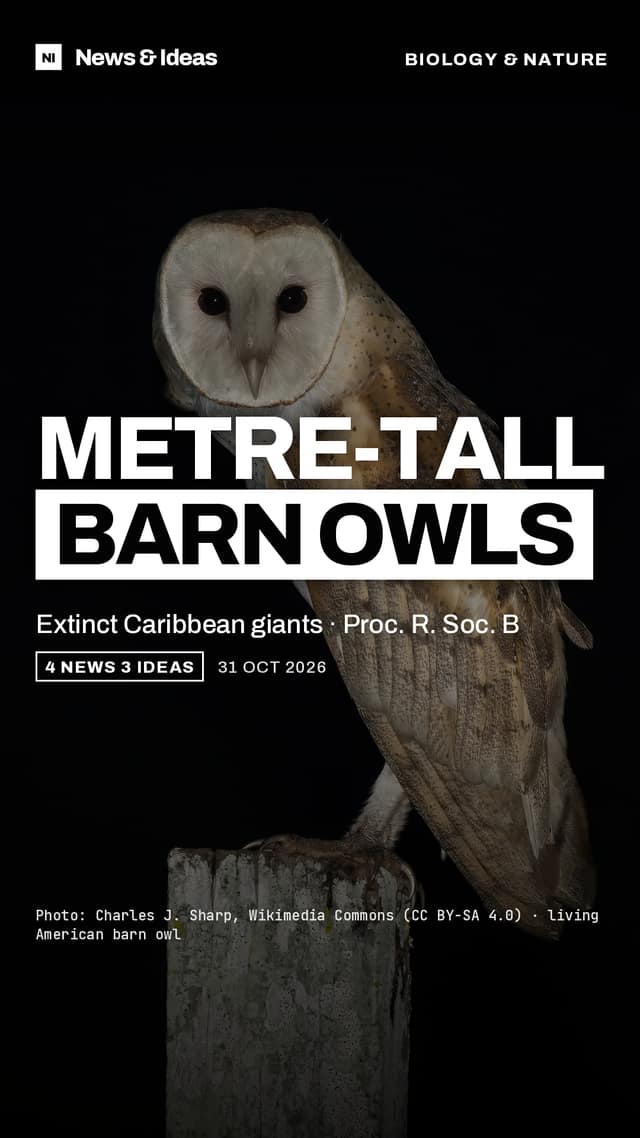
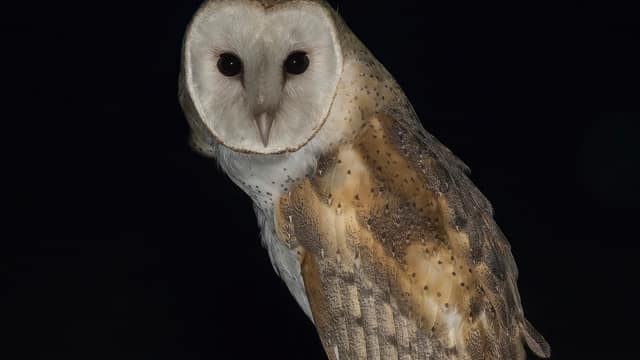
A Florida Museum team read barn owl DNA from 11 museum collections. Barn owls likely reached the Caribbean from Eurasia, probably across the Atlantic, and only later the mainland. At least nine island species went extinct, including Tyto pollens, about one metre tall. Published in Proceedings of the Royal Society B.
Photo: Charles J. Sharp · Wikimedia Commons (CC BY-SA 4.0) · living American barn owl
One email a day. 4 science stories, 5 quick results, 1 idea. 3 minutes.
Plus a daily quiz: Answer & Learn. Free, unsubscribe anytime.
Biology · Palaeontology
Crocodiles survived by following the warmth
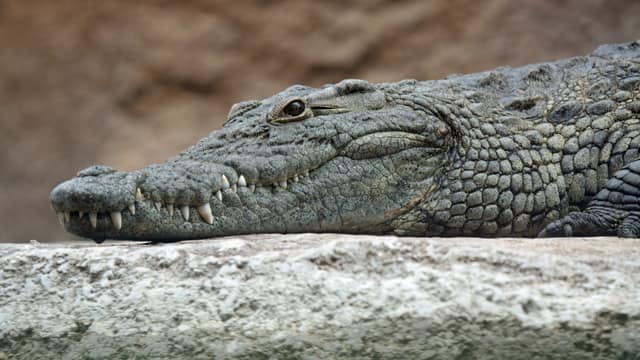
UCL researchers compared more than 7,000 fossils of the crocodile line with climate over 245 million years. Crocodiles followed warmth rather than adapting. After the asteroid, simulations with 5 to 10 percent less sunlight left the tropics suitable; a 15 percent cut did not. Published in Science Advances.
Photo: Leigh Bedford · Wikimedia Commons (CC BY 2.0) · Nile crocodile
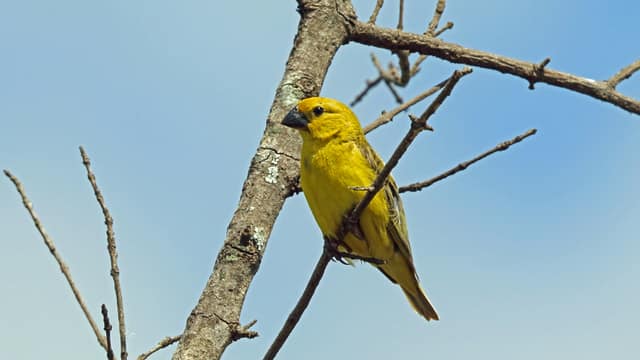
In the cuckoo finch, host-mimicking egg colours are inherited through the mother, tying the female W chromosome to that selection. Harmful mutations hitch a ride: the W lost about 900,000 more DNA letters than in related brood parasites. Published in Nature Ecology and Evolution.
Photo: terathopius · Wikimedia Commons (CC BY 4.0) · male cuckoo finch
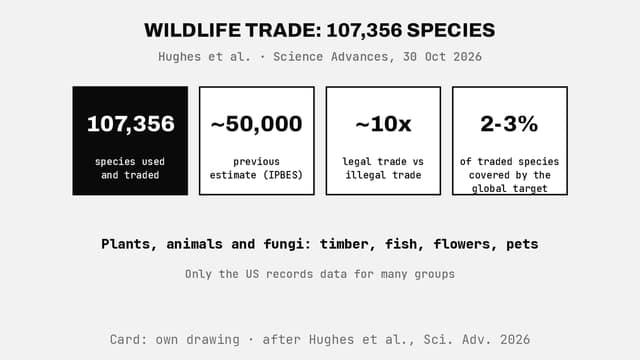
A University of Melbourne-led study counted 107,356 wild species used and traded, from timber and fish to fungi, more than double the previous estimate of about 50,000. For most, no one records how many are traded or where from. Published in Science Advances.
Card: own drawing · after Hughes et al., Science Advances 2026
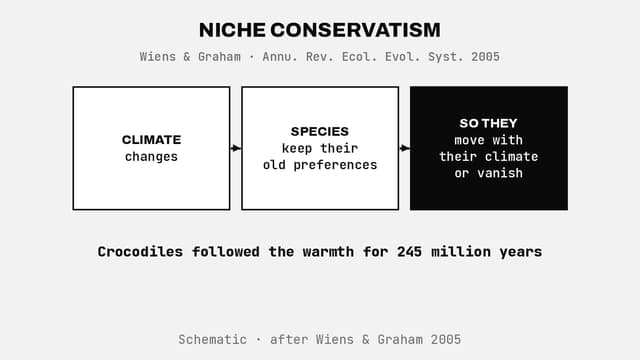
Niche conservatism. Species tend to keep the same climate preferences over evolutionary time. When the climate changes, they often move rather than adapt, and if they cannot move, they risk extinction. Crocodiles show it over 245 million years.
Wiens & Graham · Annu. Rev. Ecol. Evol. Syst. 2005
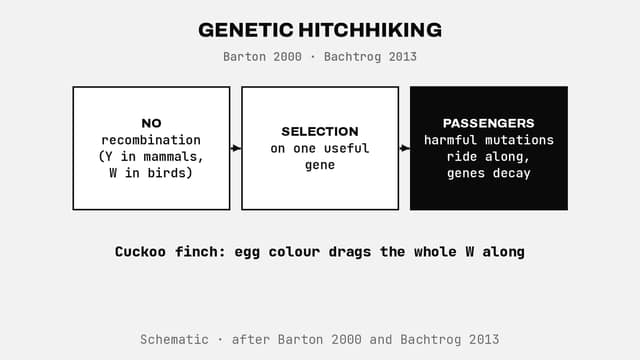
Genetic hitchhiking. Where chromosomes do not recombine, like the Y in mammals or the W in birds, harmful mutations cannot be separated from useful ones. They get dragged along, pile up, and the chromosome slowly loses genes.
Genetic hitchhikingPhilosophical Transactions of the Royal Society B (PMC) · 29 Nov 2000 · Primary · Barton, Phil. Trans. R. Soc. B 355 (2000)
Idea · Evolution
The island rule
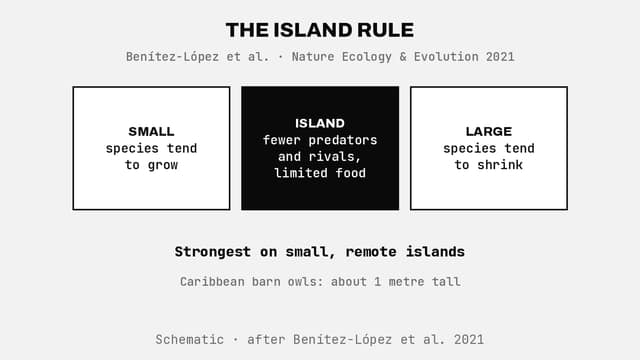
The island rule. On islands, small species tend to grow larger and large species smaller, with fewer predators and limited resources. A 2021 analysis found it across mammals, birds and reptiles. The Caribbean's metre-tall barn owls fit the pattern.