News & Ideas is a daily letter for anyone who wants the day's science in one place, not a feed. Each day is 4 news items and 3 ideas across AI & Tech, Physics & Engineering, Biology & Nature, and Mind & Society, and every story names a primary source you can check. The Shorts use a declared synthetic voice.
One email a day. 4 science stories, 5 quick results, 1 idea. 3 minutes.
Plus a daily quiz: Answer & Learn. Free, unsubscribe anytime.
Issue
27 October 2026
2 min read · 1 Short
Biology & Nature: a fruit-eating dinosaur, conductive cable bacteria, plant mating, young reed warblers. Then convergence, electron cables, map and compass.
One email a day. 4 science stories, 5 quick results, 1 idea. 3 minutes.
Plus a daily quiz: Answer & Learn. Free, unsubscribe anytime.
Biology & Nature
A fruit-eating dinosaur, cable bacteria, warblers
Biology & Nature: a fruit-eating dinosaur, conductive cable bacteria, plant mating, young reed warblers. Then convergence, electron cables, map and compass.
Infernogallus: a small dinosaur with a parrot-like jaw
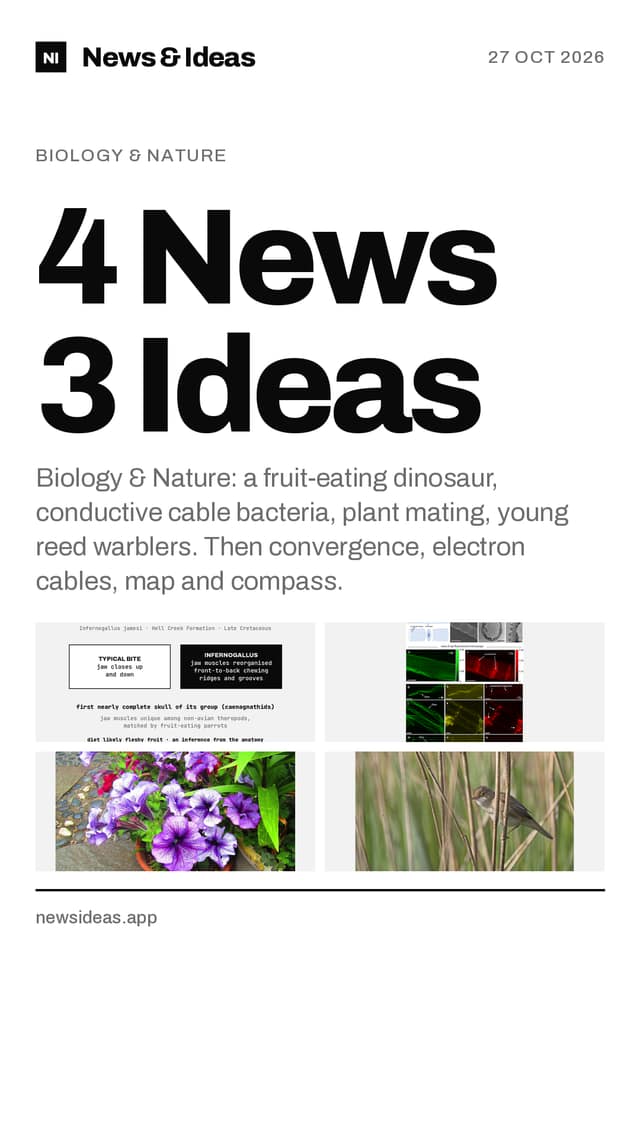
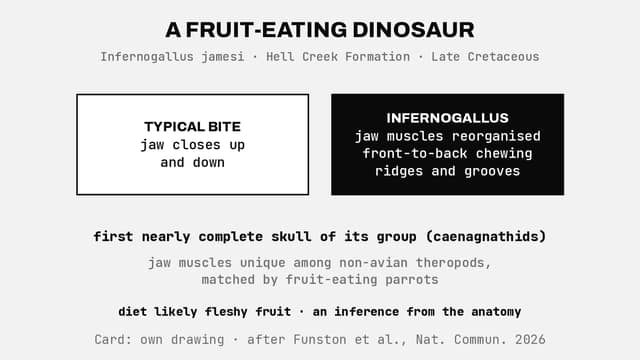
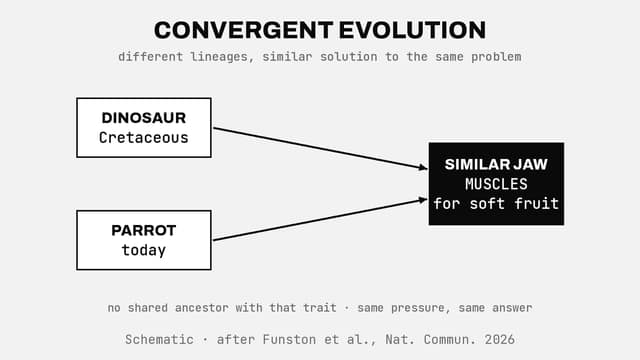
Infernogallus jamesi was a small caenagnathid dinosaur from the Late Cretaceous. A new, nearly complete skull shows jaw muscles unlike other non-avian theropods, but similar to fruit-eating parrots, and a front-to-back chewing motion. The authors infer a diet largely of fleshy fruit. Published in Nature Communications.
Card: own drawing · after Funston et al., Nat. Commun. 2026
One email a day. 4 science stories, 5 quick results, 1 idea. 3 minutes.
Plus a daily quiz: Answer & Learn. Free, unsubscribe anytime.
Biology · Microbiology
Cable bacteria build a nickel framework
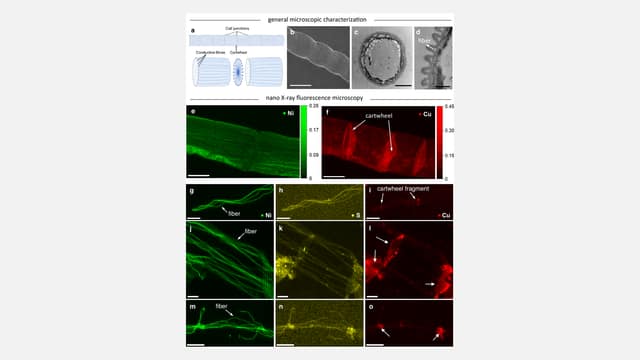
Cable bacteria carry electrons for centimetres through sediment. A new study finds how: each filament contains a nickel-based metal-organic framework, built from nanoribbons with nickel linked by dithiolene ligands. It is the first microorganism reported to make such a framework. Published in Nature Communications.
Figure: Meysman et al., Nat. Commun. 2026 · CC BY-NC-ND 4.0
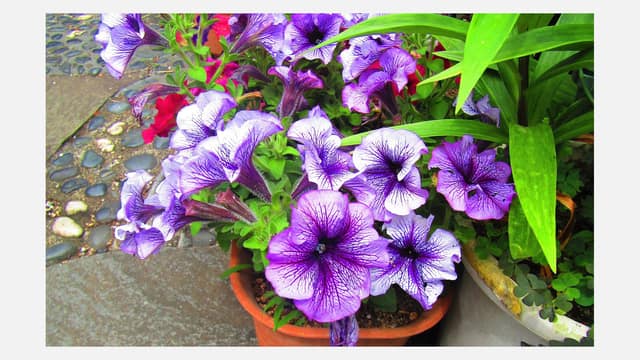
Many flowering plants can fertilize themselves or cross with others, and populations often mix both. A model of plant mating shows that promiscuous recognition, with molecular locks that fit many keys, lets the system evolve without losing function, and lets both strategies coexist, even without outside noise. A Viewpoint accompanies the paper.
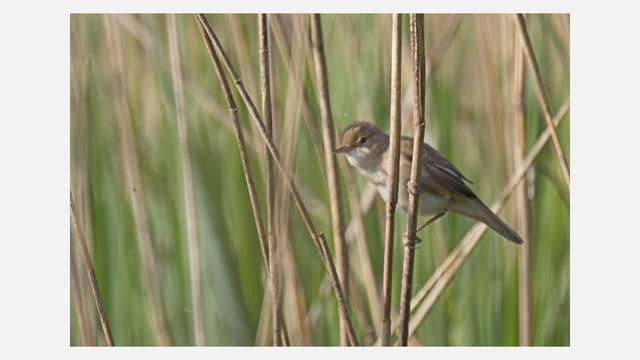
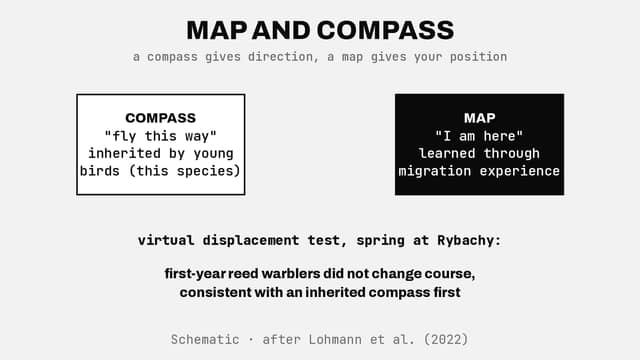
Do young migratory birds carry a map, or only a compass? Researchers tested juvenile reed warblers in spring at Rybachy, then under a virtual magnetic displacement to Keele, in the UK. The birds did not change orientation. They found no evidence of a map under these conditions, suggesting the first migration relies on an inherited compass.
Convergent evolution. Unrelated lineages can reach similar solutions when they face similar problems. Infernogallus and fruit-eating parrots, tens of millions of years apart, ended up with comparable jaw muscles. Similar shape does not mean shared ancestry. It often means shared demands.
Funston et al. 2026 · Nat. Commun.
Schematic · after Funston et al., Nat. Commun. 2026
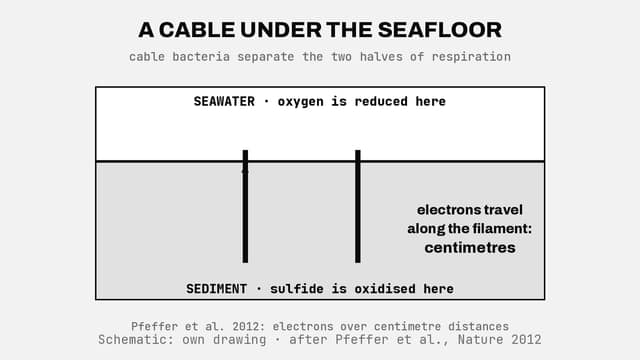
Long-distance electron transport. Cable bacteria split respiration in two. Sulfide is oxidised deep in the sediment, oxygen is reduced near the surface, and a filament carries the electrons between them. In 2012, researchers showed this over centimetre distances.
Pfeffer et al. 2012 · Nature
Schematic: own drawing · after Pfeffer et al., Nature 2012
Map and compass. Navigating needs two things: a compass for direction, and a map for position. A displacement experiment separates them. If a bird corrects after being moved, it has a map. If it keeps its heading, it follows its compass.