News & Ideas is a daily letter for anyone who wants the day's science in one place, not a feed. Each day is 4 news items and 3 ideas across AI & Tech, Physics & Engineering, Biology & Nature, and Mind & Society, and every story names a primary source you can check. The Shorts use a declared synthetic voice.
One email a day. 4 science stories, 5 quick results, 1 idea. 3 minutes.
Plus a daily quiz: Answer & Learn. Free, unsubscribe anytime.
Issue
28 November 2026
2 min read · 1 Short
Biology & Nature: Denisovans in southern China, the zigzag road to upright legs, fertile young killifish that live longer, a worm named for Dolly Parton. Then Denisovans from DNA, Carrier’s constraint, the disposable soma.
One email a day. 4 science stories, 5 quick results, 1 idea. 3 minutes.
Plus a daily quiz: Answer & Learn. Free, unsubscribe anytime.
Biology & Nature
Denisovans in Southern China
Biology & Nature: Denisovans in southern China, the zigzag road to upright legs, fertile young killifish that live longer, a worm named for Dolly Parton. Then Denisovans from DNA, Carrier’s constraint, the disposable soma.
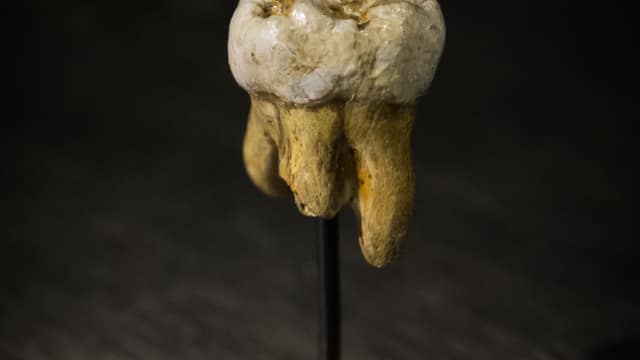
Four fossil teeth from two caves in southern China are roughly 43,000 to over 100,000 years old. Enamel proteins and tooth shape link one cave's teeth to Denisovans, with a molar much like one from Siberia's Denisova Cave. The other cave's teeth belong to an unresolved archaic human lineage.
Photo: Thilo Parg · Wikimedia Commons (CC BY-SA 3.0) · replica of a Denisovan molar from Denisova Cave
One email a day. 4 science stories, 5 quick results, 1 idea. 3 minutes.
Plus a daily quiz: Answer & Learn. Free, unsubscribe anytime.
Evolution · Mammals
The Zigzag Road to Upright Legs
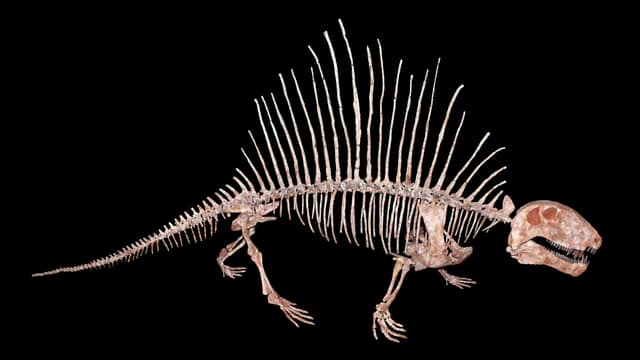
Lizards sprawl, mammals stand with legs beneath the body. Harvard researchers built muscle-and-skeleton simulations of extinct mammal relatives, like Dimetrodon, and made them walk. The shift to upright posture took over 100 million years, and even reversed for a while before fully erect walking appeared.
Photo: H. Zell · Wikimedia Commons (CC BY-SA 3.0) · a Dimetrodon skeleton, Karlsruhe, illustrative
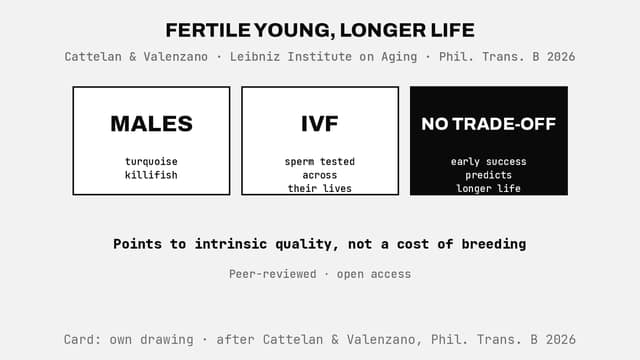
Does breeding early cost years later? In turquoise killifish, a fish that lives only a few months, researchers in Jena tested males' sperm by in vitro fertilization throughout their lives. Males with more early success lived longer, not shorter. The authors point to intrinsic quality, not a reproductive trade-off.
Card: own drawing · after Cattelan & Valenzano, Phil. Trans. B 2026
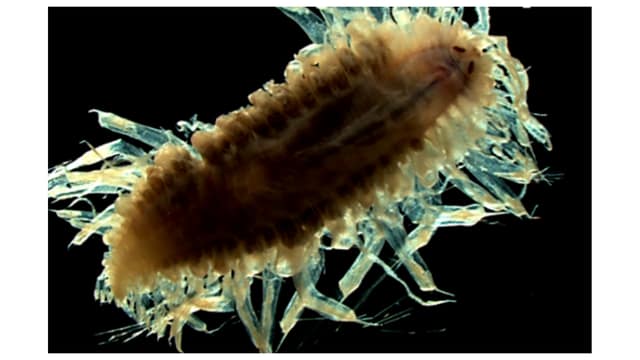
A new deep-sea scale worm from the Amundsen Sea, off West Antarctica, is named after Dolly Parton. Its long, pale appendages reminded the team of her blond hair. It's only 14 millimeters long, was purple when collected in 2008, and its DNA turned up again about 4,000 kilometers away.
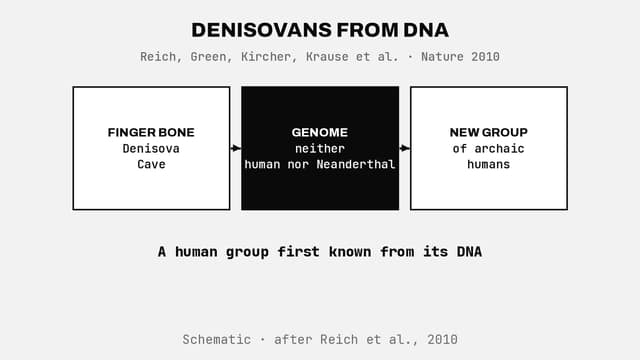
Denisovans from DNA. In 2010, David Reich and colleagues analyzed the genome from a finger bone found in Denisova Cave in Siberia. It was neither modern human nor Neanderthal, but a distinct archaic group. Denisovan fossils are still rare, so every tooth matters.
Carrier's constraint. In 1987, David Carrier proposed that early sprawling animals may not have been able to run and breathe at the same time, because bending side to side squeezed their lungs unevenly. Modern lizards breathe less while running. Upright posture may have helped get around it.
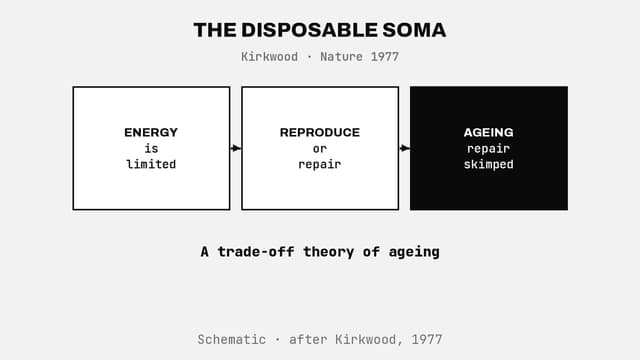
The disposable soma. In 1977, Thomas Kirkwood proposed that with limited energy, bodies trade repair for reproduction, so aging is partly the price of breeding. That predicts a trade-off. The killifish study found the opposite between individuals: the best early breeders lived longest.
Kirkwood · Nature 1977
Schematic · after Kirkwood, 1977
Evolution of ageingNature · Nov 1977 · Primary · Kirkwood, Nature 270, 301 (1977)
Credits
Photo: Thilo Parg · Wikimedia Commons (CC BY-SA 3.0) · replica of a Denisovan molar from Denisova Cave
Photo: H. Zell · Wikimedia Commons (CC BY-SA 3.0) · a Dimetrodon skeleton, Karlsruhe, illustrative
Card: own drawing · after Cattelan & Valenzano, Phil. Trans. B 2026