News & Ideas is a daily letter for anyone who wants the day's science in one place, not a feed. Each day is 4 news items and 3 ideas across AI & Tech, Physics & Engineering, Biology & Nature, and Mind & Society, and every story names a primary source you can check. The Shorts use a declared synthetic voice.
One email a day. 4 science stories, 5 quick results, 1 idea. 3 minutes.
Plus a daily quiz: Answer & Learn. Free, unsubscribe anytime.
Issue
2 November 2026
2 min read · 1 Short
Biology & Nature: jet-lagged seabirds that fly off course, deep-sea life in the Gulf crashed after Deepwater Horizon, coral bacteria that make steroids in the heat, late migrant birds that only partly catch up. Then the sun compass, the holobiont, the biggest daily migration.
One email a day. 4 science stories, 5 quick results, 1 idea. 3 minutes.
Plus a daily quiz: Answer & Learn. Free, unsubscribe anytime.
Biology & Nature
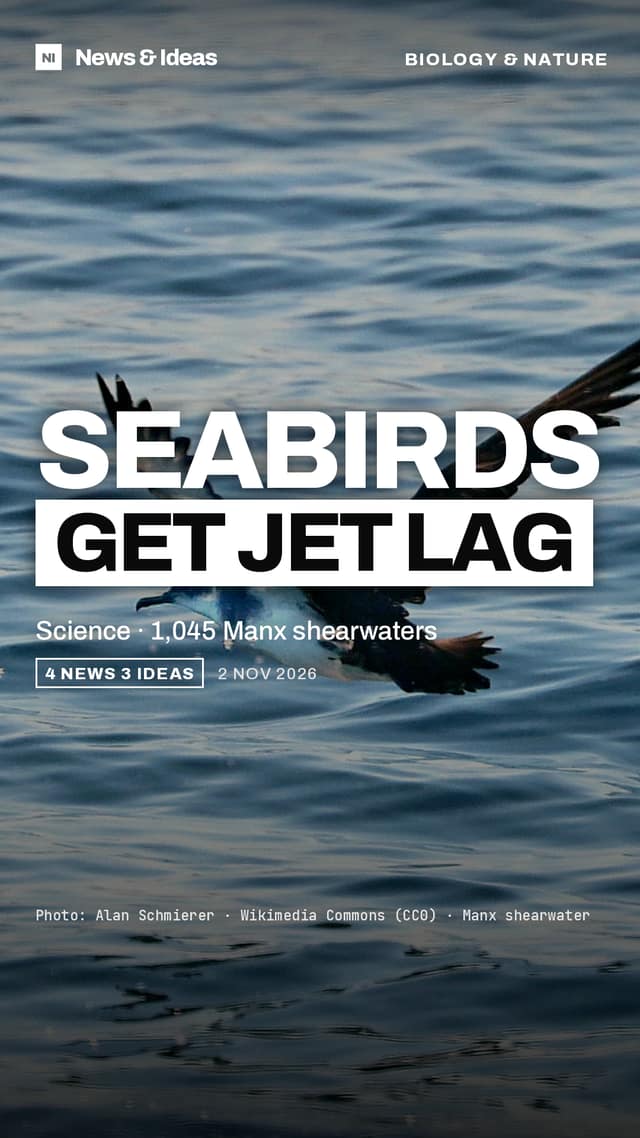
Seabirds get jet lag and fly off course
Biology & Nature: jet-lagged seabirds that fly off course, deep-sea life in the Gulf crashed after Deepwater Horizon, coral bacteria that make steroids in the heat, late migrant birds that only partly catch up. Then the sun compass, the holobiont, the biggest daily migration.
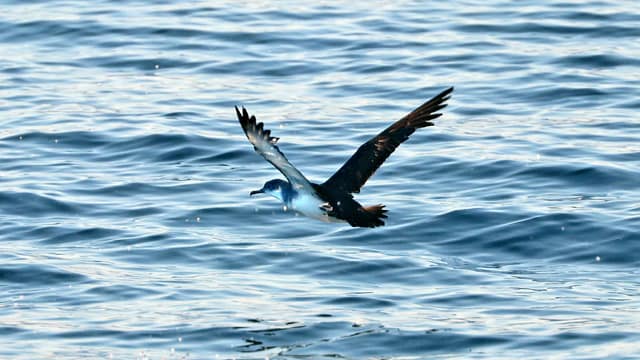
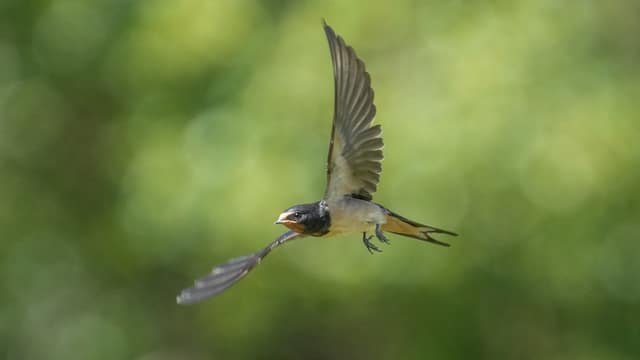
An Oxford-led team analysed 20 years of GPS tracks from 1,045 Manx shearwaters, including 1,837 non-stop flights home of up to about 1,000 kilometres. After fast eastward flights, the birds' internal clock lagged local sun time by up to about an hour, and their routes bent clockwise by up to about 15 degrees, as a sun compass predicts. For adults the cost is about 5 extra kilometres; for young first-time migrants it could reach hundreds. Published in Science.
Photo: Alan Schmierer · Wikimedia Commons (CC0) · photographed off Maine
One email a day. 4 science stories, 5 quick results, 1 idea. 3 minutes.
Plus a daily quiz: Answer & Learn. Free, unsubscribe anytime.
Ecology · Deep sea
Deep-sea life in the Gulf crashed after Deepwater Horizon
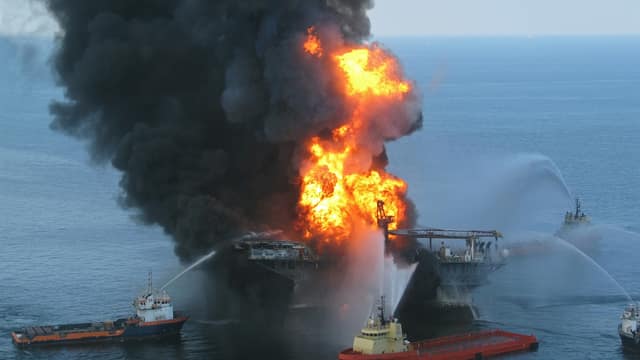
The DEEPEND consortium compared deep-sea sampling in the Gulf from 2011 with surveys up to 2023: more than 2,000 trawls down to 1,500 metres. Fish fell by 63.5 percent, lanternfish by 62.9 and krill by 72.8 percent. The authors ruled out heatwaves, low oxygen and food shortage, and point to the 2010 oil spill as the most plausible explanation, without proof of cause. Published in PNAS.
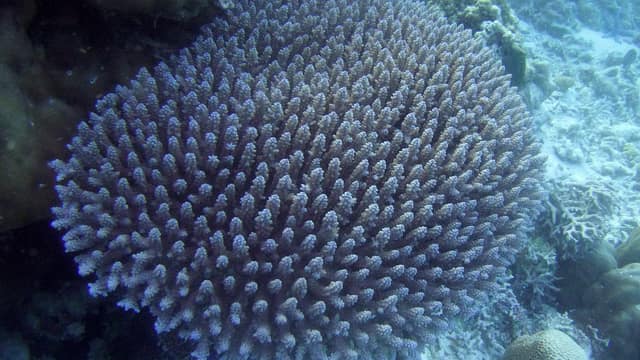
NYU Abu Dhabi researchers studied the coral Acropora pharaonis in the Arabian Gulf. Under heat stress, its partner bacterium Endozoicomonas turns cholesterol into testosterone and progesterone. These hormones strengthened the coral's immune response and helped its cells survive. Published in Nature Microbiology.
Photo: Akram AB · Wikimedia Commons (CC BY-SA 4.0) · a tabular Acropora, not the species studied
Tracking data from 2,324 birds of 83 species on six continents show that a 10-day late start shrinks by only about 6 days on the autumn journey and about 4 in spring. The delay is wiped out during roughly five months at the non-breeding grounds, like a seasonal reset. Led by Charles University; published in Nature Ecology & Evolution.
To use the sun as a compass, an animal must know the time, because the sun's direction shifts by about 15 degrees an hour. It reads the time from its circadian clock. In classic experiments, pigeons whose clock was shifted by six hours flew off by about 90 degrees. The jet-lagged shearwaters show the same effect in the wild.
Guilford & Taylor, Animal Behaviour 2014
The sun compass revisitedAnimal Behaviour · 2014 · Primary · Guilford & Taylor, Animal Behaviour 2014
Idea · Microbiome
The holobiont: an organism is a team
An animal or a plant together with its microbes works as one biological unit, the holobiont, and evolution can act on the whole. The coral in the heat study is an example: its bacterium makes hormones that help the coral survive heat stress.
Every night, huge numbers of lanternfish, krill and squid rise from the depths to feed, and sink again at dawn. Sonar sees them as the deep scattering layer. One study estimated that mesopelagic fish biomass may be about ten times higher than earlier estimates. This is the community that crashed in the deep Gulf.