News & Ideas is a daily letter for anyone who wants the day's science in one place, not a feed. Each day is 4 news items and 3 ideas across AI & Tech, Physics & Engineering, Biology & Nature, and Mind & Society, and every story names a primary source you can check. The Shorts use a declared synthetic voice.
One email a day. 4 science stories, 5 quick results, 1 idea. 3 minutes.
Plus a daily quiz: Answer & Learn. Free, unsubscribe anytime.
Issue
27 November 2026
2 min read · 1 Short
Biology & Nature: waves that may fool predators, dragonflies that eat on the move, more room for peregrines, gorillas that bounce back. Then the Vicsek model, insect bioflows, MaxEnt.
One email a day. 4 science stories, 5 quick results, 1 idea. 3 minutes.
Plus a daily quiz: Answer & Learn. Free, unsubscribe anytime.
Biology & Nature
Waves That May Fool Predators
Biology & Nature: waves that may fool predators, dragonflies that eat on the move, more room for peregrines, gorillas that bounce back. Then the Vicsek model, insect bioflows, MaxEnt.
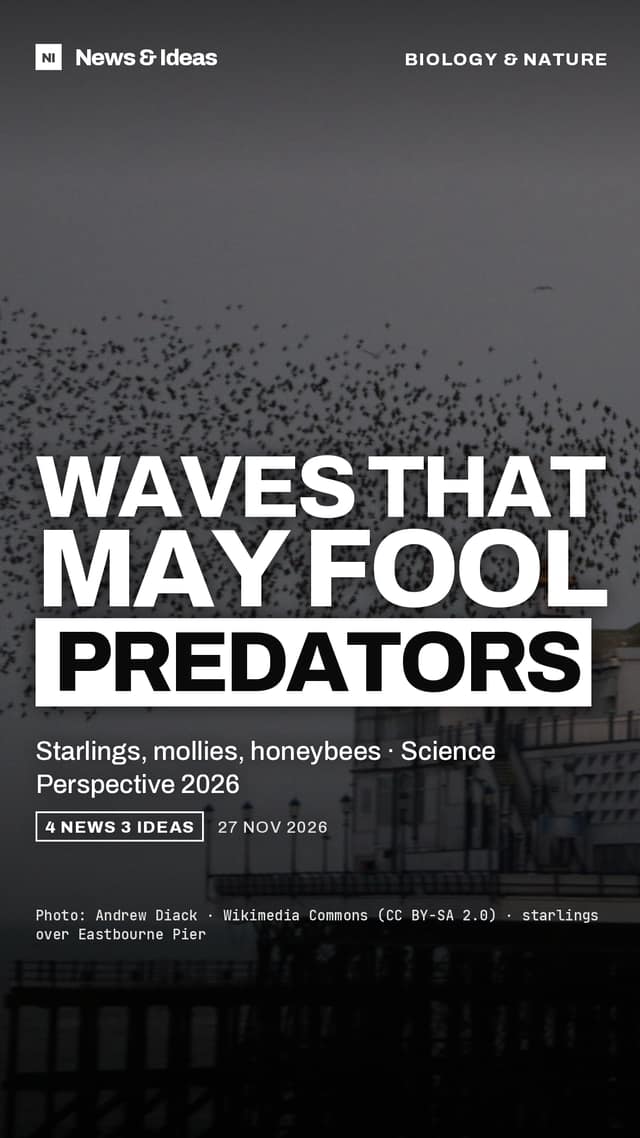
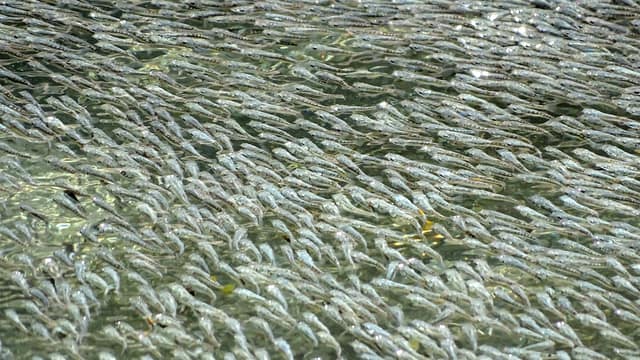
When a peregrine falcon attacks starlings, dark bands sweep through the flock about every three-quarters of a second. Sulphur mollies dive in waves, giant honeybees shimmer. In Science, Eduardo Sampaio and Iain Couzin argue these waves may have evolved to deceive predators' eyes. Experiments still have to test it.
Photo: Juliane Lukas · Wikimedia Commons (CC BY-SA 4.0) · a school of sulphur mollies, Tabasco, Mexico
Deception in motionScience · 26 Nov 2026 · Primary · Sampaio & Couzin, Science (2026), Perspective
One email a day. 4 science stories, 5 quick results, 1 idea. 3 minutes.
Plus a daily quiz: Answer & Learn. Free, unsubscribe anytime.
Ecology · Migration
Dragonflies Eat on the Move
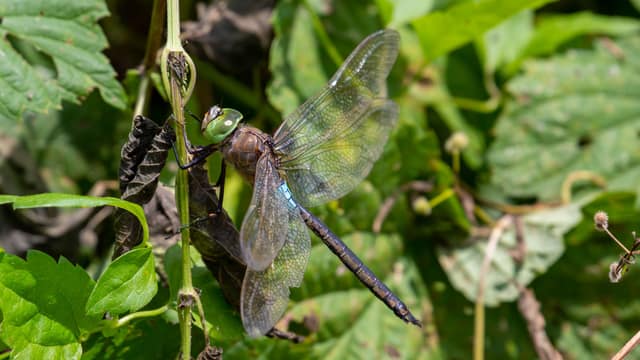
Millions of insects funnel through a narrow Pyrenean pass every autumn. Exeter researchers caught migrating dragonflies there and read the DNA in their guts: 87 prey species, mostly flies. Lesser emperors often ate migrating prey, including smaller darter dragonflies on the same route.
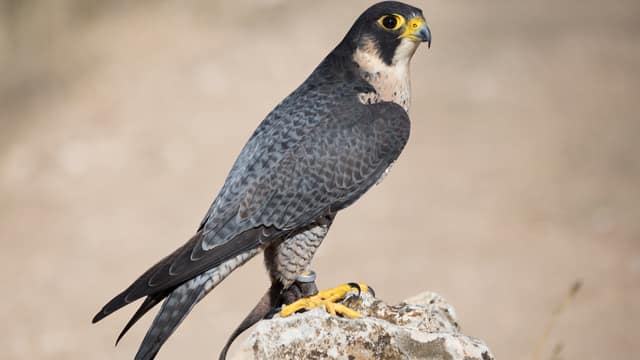
The peregrine falcon, the fastest animal on Earth, may gain ground in Britain. A University of Nottingham model found the UK area suitable for peregrines could grow about 74 percent by 2080 under high emissions, while white-tailed eagles lose out. Suitable land doesn't guarantee more birds.
Photo: Carlos Delgado · Wikimedia Commons (CC BY-SA 4.0) · a captive peregrine falcon, Madrid, illustrative
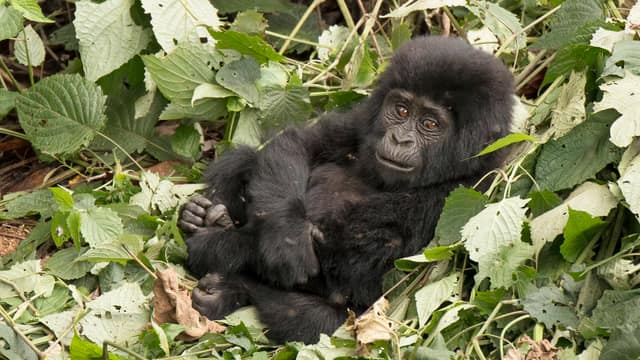
Does a hard childhood leave a gorilla lonely? Researchers drew on 17 years of records of mountain gorillas in Rwanda. Losing a mother or growing up with few playmates left little sign of later isolation, and some survivors spent more time near others. Only gorillas that reached age six were counted.
Photo: Charles J. Sharp · Wikimedia Commons (CC BY-SA 4.0) · a young mountain gorilla, Bwindi, Uganda, illustrative
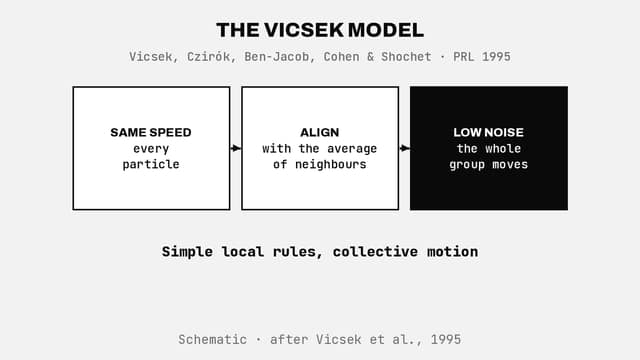
The Vicsek model. In 1995, Tamás Vicsek and colleagues simulated particles moving at the same speed, each aligning with its neighbors' average direction, plus some noise. Below a critical noise level, the whole group moves together. Flocks don't need a leader to make waves.
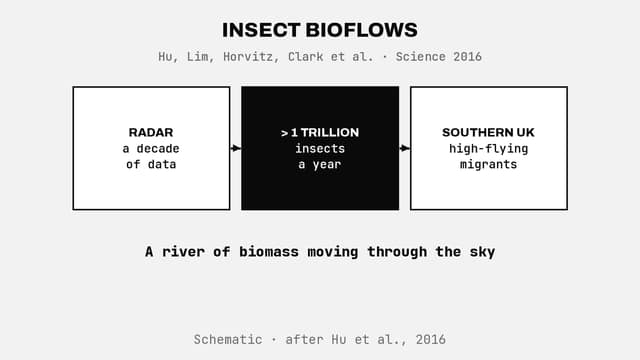
Insect bioflows. In 2016, Gao Hu and colleagues used a decade of radar data over the southern United Kingdom and found more than a trillion insects migrating high overhead each year. That's a river of biomass in the sky, and dragonflies feed on it.
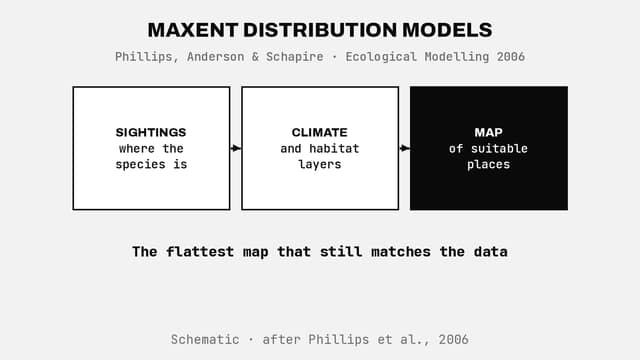
MaxEnt. In 2006, Steven Phillips, Robert Anderson and Robert Schapire proposed mapping a species' range from sightings and environmental layers, picking the most spread-out distribution that still matches the data. It's the method behind the peregrine projections, and it maps suitable places, not birds.