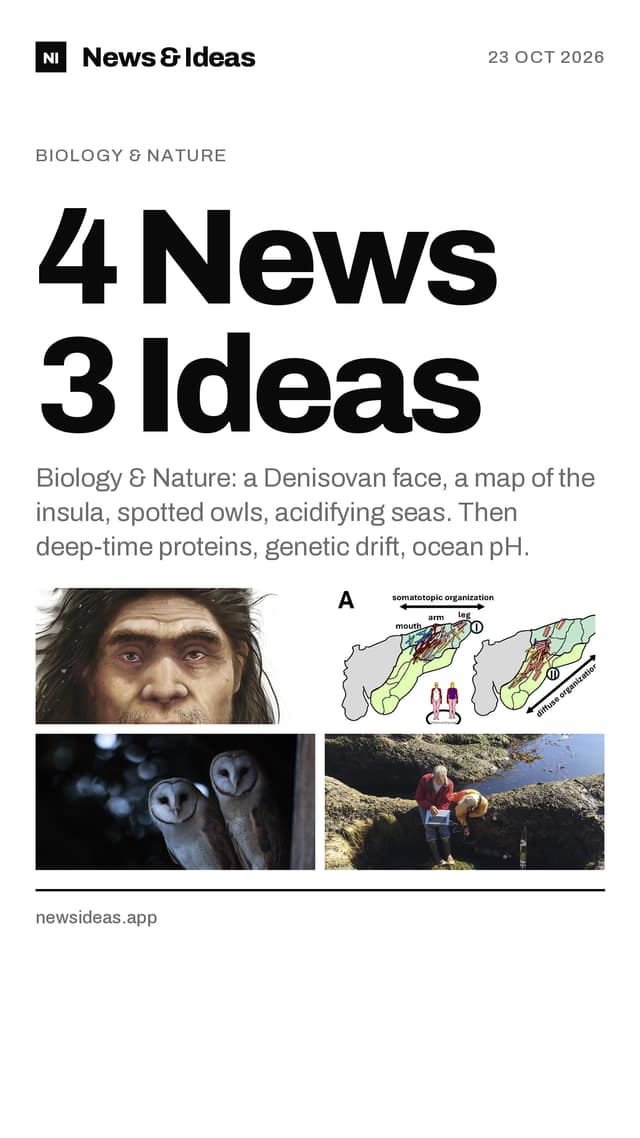
In Nature, Qiaomei Fu's team in Beijing found a Denisovan-only collagen mutation in Chinese fossils up to 200 thousand years old. Now we know their shared look: a low skull, a massive brow, flat cheeks.
Illustration: IVPP / Chinese Academy of Sciences · via Nature
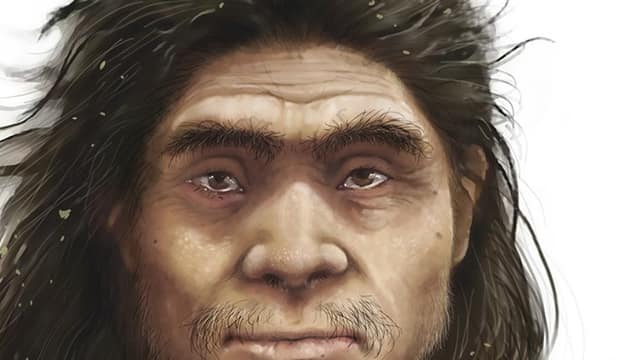
Stanford's Josef Parvizi and team mapped the human insula in Nature, using electrodes in 87 neurosurgery patients. Two back regions handle pain, heat and touch, one handles nausea and anxiety, and the front one steers the rest.
Figure: Quabs et al. · Research Square preprint, CC BY 4.0
Functional architecture of the human insulaResearch Square (preprint) · 21 Oct 2026 · Primary · Quabs et al. (Stanford University); published in Nature, 21 Oct 2026; free preprint, CC BY 4.0
Evolution · Birds
Swiss barn owls are evolving, fast
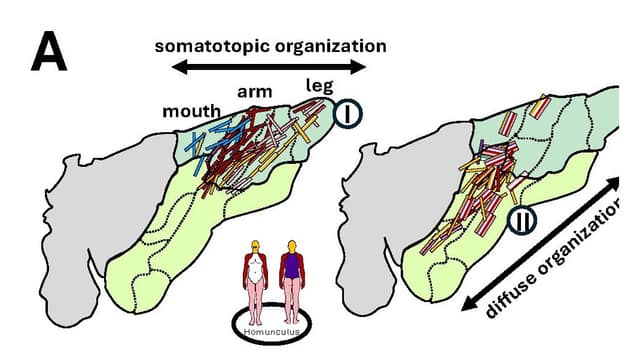
Over 30 years, Swiss barn owls got darker and more spotted. University of Lausanne researchers sequenced 3,102 owl genomes, in Nature Communications. At one key gene, chance alone can't explain the shift: selection is at work.
Barn owls are gradually changing colourUniversity of Lausanne · 21 Oct 2026 · Primary · University of Lausanne press release; paper: Cumer et al., Nature Communications 2026
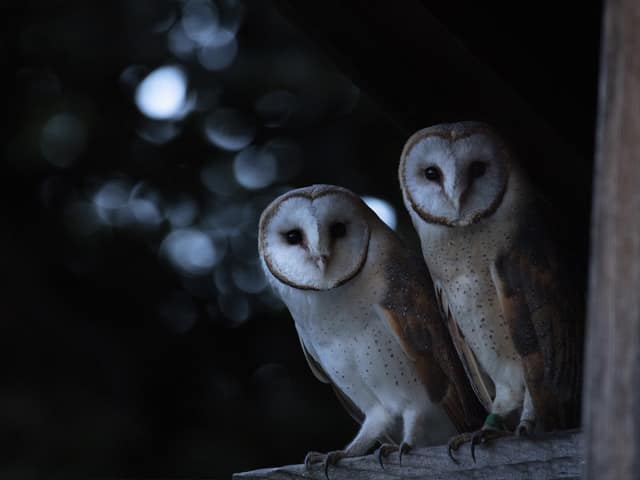
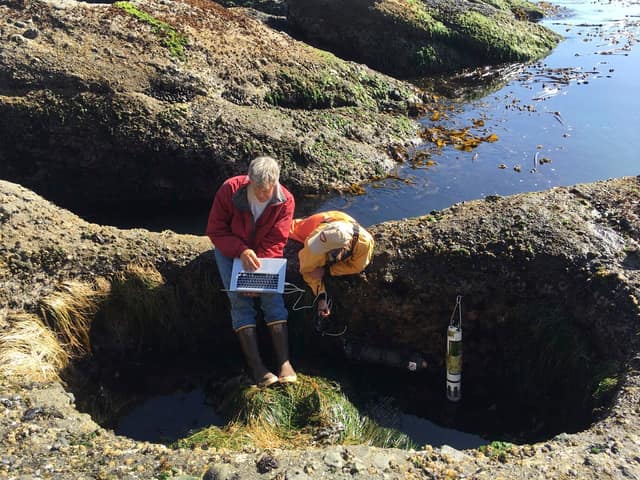
With decades of data from Tatoosh Island, Washington, University of Chicago ecologists report in Nature Communications: as seawater acidified, dissolved silicon and chlorophyll fell. Diatoms, up to 40 percent of ocean productivity, need silicon for their glass shells.
Why did proteins, not DNA, reveal that face? DNA is a long, fragile chain that breaks apart with time and heat. Proteins in bone and tooth enamel are tougher, and their amino acids still carry a trace of the genes behind them. The oldest DNA read so far, from Greenland sediments, is about two million years old. Proteins from rhino enamel in Canada's Arctic: over twenty-one million. Ten times deeper.
Kjær et al., Nature 2022 · Paterson et al., Nature 2025
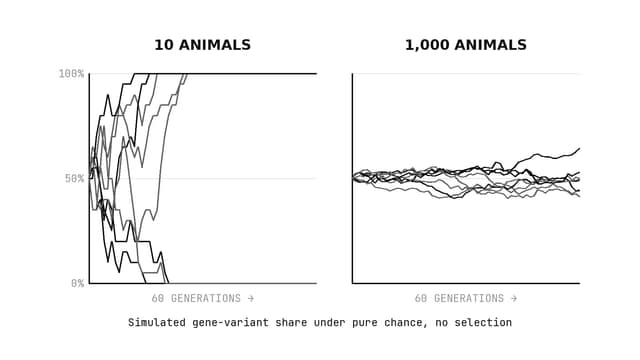
Not every change in a species is adaptation. Some is luck. Each generation, some individuals leave more offspring by chance, not because they are better. That is genetic drift, and it rules small populations. Simulate ten animals with a gene variant at fifty percent: within a few dozen generations it is lost, or everywhere. With a thousand animals, it barely moves. So the owl team tested their data against drift: only a shift bigger than chance means selection.
Understanding Evolution, UC Berkeley
Chart: own simulation (random sampling, no selection)
Genetic driftUnderstanding Evolution, UC Museum of Paleontology, UC Berkeley · Primary · UC Museum of Paleontology
Idea · Ocean chemistry
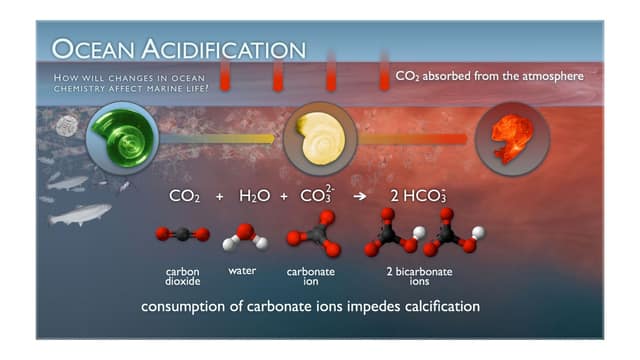
What ocean acidification really means
The ocean absorbs about 30 percent of the carbon dioxide we release. With water, it forms carbonic acid, which frees hydrogen ions, and more hydrogen ions means lower pH. Since the industrial revolution, surface pH has dropped by just 0.1, to about 8.1. Tiny? The scale is logarithmic: that is about 30 percent more acidity. The sea is still alkaline, but fewer carbonate ions are left for shell builders.