News & Ideas is a daily letter for anyone who wants the day's science in one place, not a feed. Each day is 4 news items and 3 ideas across AI & Tech, Physics & Engineering, Biology & Nature, and Mind & Society, and every story names a primary source you can check. The Shorts use a declared synthetic voice.
One email a day. 4 science stories, 5 quick results, 1 idea. 3 minutes.
Plus a daily quiz: Answer & Learn. Free, unsubscribe anytime.
Issue
1 November 2026
2 min read · 1 Short
AI & Tech: robots moved by lab-grown muscle, search without a vector database, NVIDIA Nemotron Transcribe, Meta JiTTests. Then body-brain co-evolution, mutation testing, the model as index.
One email a day. 4 science stories, 5 quick results, 1 idea. 3 minutes.
Plus a daily quiz: Answer & Learn. Free, unsubscribe anytime.
AI & Tech
Robots Powered by Real Muscle, AI That Catches Bugs Before Code Ships
AI & Tech: robots moved by lab-grown muscle, search without a vector database, NVIDIA Nemotron Transcribe, Meta JiTTests. Then body-brain co-evolution, mutation testing, the model as index.
Robots Powered by Real Muscle, AI That Catches Bugs Before Code Ships
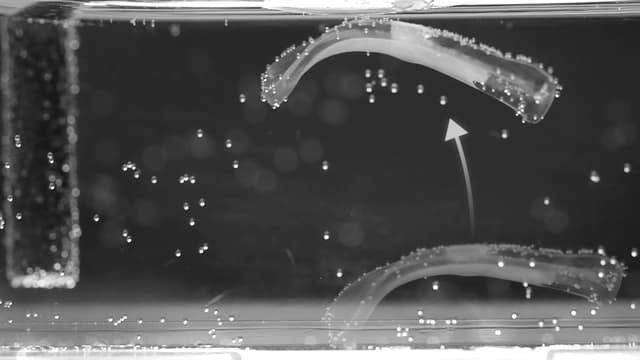
At ETH Zurich, researchers grew muscle from mouse cells on a hydrogel scaffold, designing both together in simulation. The 1.5-centimetre actuators reach up to 11 times the range of motion of similar earlier systems. One robot jumps about 5 millimetres in one contraction. They still need a nutrient bath.
Photo: Balciunaite et al., Nature Communications 2026 (CC BY 4.0)
One email a day. 4 science stories, 5 quick results, 1 idea. 3 minutes.
Plus a daily quiz: Answer & Learn. Free, unsubscribe anytime.
AI · Search
Search without a vector database (preprint)
In a preprint, Cornell and ASAPP researchers drop the vector database: a decision model walks down the corpus, from document to section to paragraph. On 2.68 million Wikipedia passages, it scored 65.4 Hit at 1, against 48 for dense search, and beat GPT-5 reranking.
NVIDIA announced Nemotron 3.5 Transcribe, an open-weight model that transcribes, translates and tells speakers apart, in 40 languages. NVIDIA claims a 4.71 percent word error rate in English, and six times fewer errors on names. Company figures.
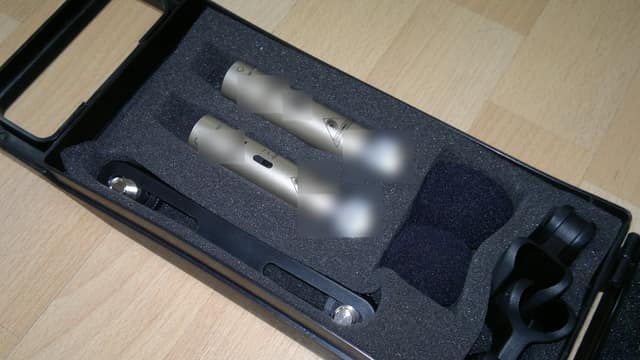
Photo: Tim Walker · Wikimedia Commons (CC BY 2.0) · illustration, labels blurred
Meta says it uses AI-written tests for single code changes, designed to fail if the change breaks something; an engineer checks the alarms. Meta's figures: 589 engineers involved, and 74 severe privacy bugs stopped before landing in the first half of 2026. Company announcement.
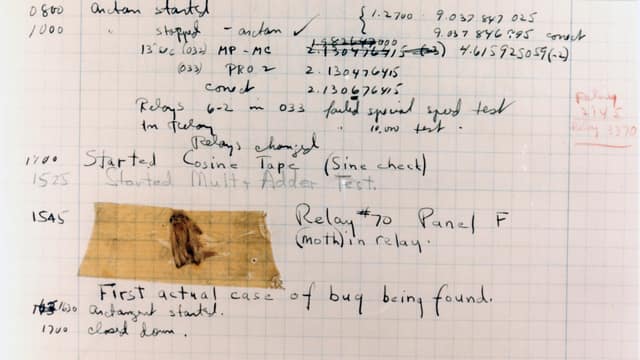
Photo: Naval Surface Warfare Center, Dahlgren · Wikimedia Commons (public domain) · the 1947 "first bug"
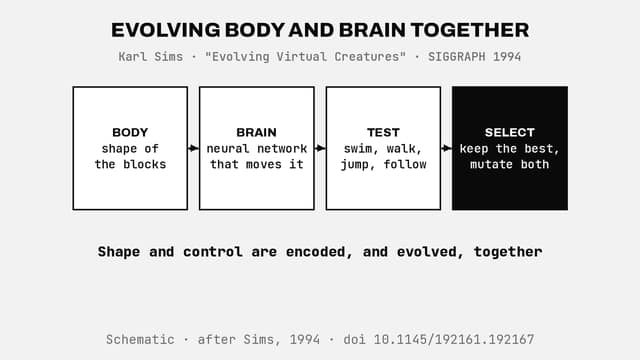
Co-evolving body and brain. Instead of designing a body, then teaching it to move, optimize both together. In 1994, Karl Sims evolved virtual creatures whose shape and control evolved as one; they found ways to swim, walk and jump. ETH does this with living muscle.
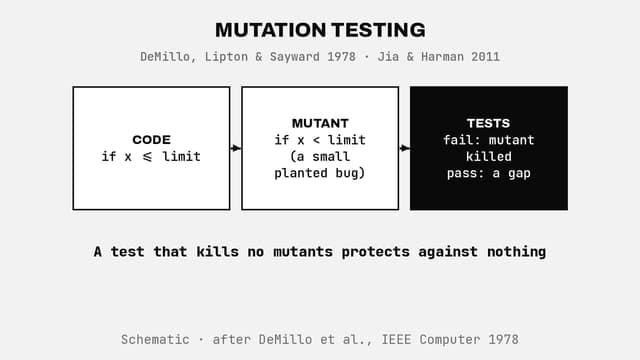
Mutation testing. A test is only useful if it fails when the code is wrong. So you plant small bugs, like a less-than in place of less-or-equal, and count how many the tests catch. One of Meta's methods uses mutations too.
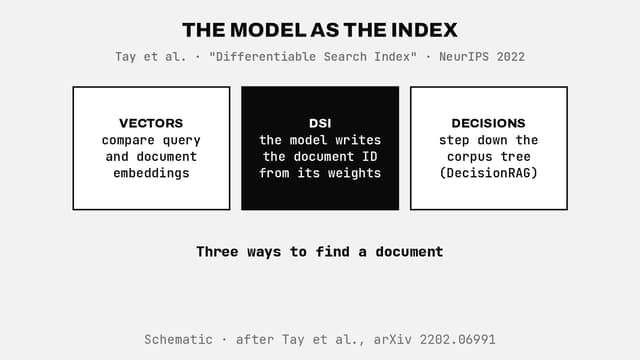
The model as the index. Classic search compares vectors. The 2022 Differentiable Search Index stored a corpus in a Transformer's weights, and answered with a document ID. DecisionRAG is a third way: the model decides, step by step, where to go.